For an everyday snack when you have diabetes, you could consider unsalted peanuts with no added sugar. However, check the total carbohydrate content and how much you eat, too. diabetes.nl presents this as general dietary guidance, not personalised treatment advice. Weighing out a portion from a larger pack gives you control, while a small bag takes less preparation but isn’t automatically a suitable single serving. Compare nutritional values based on the amount you’ll actually eat, and take salt, allergens and your personal dietary arrangements into account.
Who might find this choice relevant?
Mindful snackers with diabetes
You’re looking for peanuts for an everyday snack and want to consider the ingredients, carbohydrates and salt, without treating packaging claims as medical guarantees. This general dietary guidance is in line with information from diabetes.nl and product details from Albert Heijn, Jumbo and PLUS.
On the go with no preparation
You want to take a sealed bag with you, but also want to know whether its contents match the amount you plan to eat. The pack sizes and portion information from Albert Heijn, Jumbo and Duyvis make this distinction relevant.
Preparing portions in advance
You can weigh out portions at home and divide a larger pack into portions to take with you. Check the nutritional values for the exact variety and follow the storage advice; Voedingscentrum recommends storing nuts in a tightly sealed container in a dry place.
What should you look for when choosing?
The points below are based on an everyday snack to take with you. Your own dietary arrangements and the label for the exact variety should always guide your choice.
| What to consider |
What should you check? |
Who is this important for? |
| Ingredients and nutrition |
Read the ingredients and compare the total carbohydrates and salt in the exact variety; don’t look at sugar alone. |
If you want to know what you’re eating as an everyday snack, check the full ingredients list and nutritional information. Around 36% of consumers say ingredients and composition are their top priority. |
| Deciding your portion in advance |
Check the net weight, stated serving size and number of servings; weigh out a portion if you want to take a specific amount with you. |
If you want to know the amount of peanuts and corresponding nutritional values in advance, weighing out a portion can help. Around 29% of consumers prioritise portion control. |
| Taking them with you and storage |
Check whether it’s a small bag or a larger pack, and seal a larger pack securely after opening. |
If you want to take something with you on the go without much preparation, the pack size matters. For around 21% of consumers, convenience when taking food out is the main consideration. |
| Cost per portion |
Compare the current price per kilogram and calculate the cost for the same portion weight; include any delivery charges. |
If you buy peanuts regularly, you’ll want to compare the cost for the amount you actually eat. Around 14% of consumers prioritise cost per portion. |
Common pitfalls
-
Assuming a small bag is automatically one suitable portion
The pack may contain more than you plan to eat. Duyvis confirms that its salted bag contains 60 g; Albert Heijn and Jumbo list serving sizes of 25 g and 30 g respectively for their unsalted varieties.
Decide in advance how much you want to eat and compare the nutritional values for that weight, rather than looking only at the whole bag.
-
Looking only at sugar
No added sugar doesn’t mean a product contains no total carbohydrates. Albert Heijn lists 11 g of carbohydrates per 100 g for its unsalted peanuts. Added salt also varies between salted and unsalted varieties.
Check the ingredients and total carbohydrates for the exact variety, and consider the salt content separately.
-
Treating coated peanuts like plain peanuts
A batter coating can add extra carbohydrates and calories. diabetes.nl advises choosing peanuts coated in chocolate or sugar less often.
Compare the nutritional information for the exact variety, and don’t assume the values for plain peanuts apply to coated products.
-
Taking a large bag with you without portioning it or sealing it properly
A larger pack doesn’t automatically give you portion control. Voedingscentrum recommends storing nuts in a tightly sealed container in a dry place.
Weigh out the portion you’ll take with you, seal the larger pack after use, and use a well-sealed container when you’re out and about.
Brands to consider
Duyvis
Duyvis lists plain salted and unsalted peanuts, including a 60 g salted pack and a 235 g unsalted pack.
- For its unsalted variety, the manufacturer lists peanuts and sunflower oil; salt is added to the salted variety.
- A 60 g pack isn’t automatically one serving. The manufacturer’s claim that it’s a ‘responsible snack’ isn’t evidence that it treats diabetes.
Albert Heijn
AH Unsalted Peanuts 250 g is a larger pack that you can portion yourself.
- Albert Heijn lists a 25 g serving and ten servings, as well as ingredients and nutritional values.
- The bag isn’t a single snack portion. No added sugar doesn’t mean the product contains no naturally occurring sugars or carbohydrates.
Jumbo
Jumbo Unsalted Peanuts 250 g is designed to be portioned at home, with nutritional information per 100 g and per 30 g.
- The product specifications list 99.5% peanuts and sunflower oil.
- The stated 30 g serving differs from Albert Heijn’s 25 g serving; compare products using the same amount eaten. The product information lists peanuts and says it may contain nuts.
Lidl
Lidl lists unsalted peanuts in a 285 g pack.
- The larger pack can be divided into portions that you weigh out yourself.
- The pack size isn’t a confirmed individual snack portion; on its own, this information doesn’t provide a nutritional comparison with other brands.
Aldi
Aldi lists Trader Joe’s roasted, unsalted peanuts in a 250 g pack.
- The product listing confirms that these are roasted, unsalted peanuts and gives the pack size.
- The larger pack isn’t a confirmed single portion to take with you. The Nutri-Score shown isn’t individual approval for people with diabetes.
PLUS
PLUS Unsalted Peanuts 250 grams is a larger pack for portions you weigh out yourself.
- PLUS lists 99% peanuts, sunflower oil and nutritional values per 100 g.
- The product may contain cashew nuts. Check the exact variety: different pack sizes may have a different composition or nutritional information.
Peanuts at Joybuy
These product options include larger packs for portioning yourself, as well as varieties that are salted or still in their shells. Check the exact variety of each product and decide for yourself how much you want to take with you.
 No image available
g'woon Unsalted Peanuts, 250 g
An unsalted larger pack for weighing out a portion to take with you.
Ingredients: 99% peanuts and sunflower oil. May contain cashew nuts.
Joybuy
 No image available
Verse Extra Large Roasted Peanuts, 210 g
A roasted, unsalted variety for anyone looking for plain peanuts with no added salt.
The product information lists 100% peanuts and nutritional values per 100 g.
Joybuy
 No image available
g'woon Peanuts in Shell, 500 g
The peanuts are in their shells, so bear in mind that you’ll need to shell them before eating.
The product information lists peanuts and nuts. Check the ingredients and allergen information on the pack.
Joybuy
 No image available
Duyvis Salted Peanuts, 235 g
A salted variety for anyone who wants to take added salt into account when choosing.
The product information lists 0.73 g of salt per 100 g and 7–8 servings of 30 g. Contains peanuts and may contain nuts.
Joybuy
 No image available
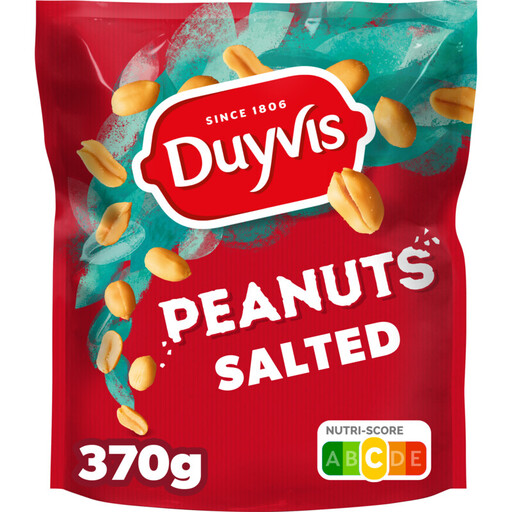
Duyvis Salted Peanuts, 370 g
A larger pack of salted peanuts to portion yourself if you want to decide the amount in advance.
The product information lists 0.73 g of salt per 100 g. Contains peanuts and may contain nuts.
Joybuy
Frequently asked questions
Does ‘no added sugar’ mean peanuts contain no carbohydrates?
No. AH Unsalted Peanuts 250 g lists no added sugar, but does contain 11 g of total carbohydrates per 100 g. Calculate the amount based on the portion you actually eat.
What portion size should I have?
There’s no universal portion size for everyone; distinguish between the serving size on the label and your personal dietary arrangements. Albert Heijn uses a 25 g serving and Jumbo uses 30 g. diabetes.nl gives general advice of around 30 g, or around 15 g if your aim is to lose weight. If needed, discuss a suitable amount for you with your dietitian or care team.
Are peanuts suitable for treating a hypo?
Don’t use a bag of peanuts instead of following your agreed hypo treatment plan. diabetes.nl discusses glucose as a fast-acting option for a hypo. Keep your everyday snack separate from the treatments you use for a hypo as agreed with your care team.
How should I store portions I’ve weighed out to take with me?
Put them in a well-sealed container and follow the storage advice on the label. Voedingscentrum recommends storing nuts in a sealed container in a dry place, preferably somewhere cool. AH advises sealing the pack securely after use and storing it somewhere cool, dark and dry.
What should I look for if I have a peanut or nut allergy?
Check the allergen information for the exact variety and follow your medical advice about allergies. The products reviewed contain peanuts; PLUS Unsalted Peanuts 250 g may also contain cashew nuts. A warning about other nuts isn’t the same as a peanut allergy, so don’t treat the warnings as interchangeable.


