
Diabetes-conscious snack shoppers
You’re looking for peanuts with no added salt or sugar, and want to check the total carbohydrates and your own portion size. diabetes.nl recommends unsalted nuts with no added sugar.


Choose unsalted peanuts with no added sugar, and check the total carbohydrate and energy values on the label too: unsalted does not mean carbohydrate-free. A large bag is most suitable if your household uses peanuts regularly and you can store them in a dry, well-sealed container. Otherwise, a smaller pack may be a better fit for how much you use.
You’re looking for peanuts with no added salt or sugar, and want to check the total carbohydrates and your own portion size. diabetes.nl recommends unsalted nuts with no added sugar.
You use peanuts regularly and want to choose a pack size that suits how much your household actually gets through.
You want an amount that suits your portions and can be stored in a well-sealed container after opening. The Netherlands Nutrition Centre recommends storing nuts in a dry, airtight container.
| What to consider | What should you check? | Who should give this more weight? |
|---|---|---|
| Nutrition and ingredients | Diabetes.nl recommends unsalted nuts with no added sugar. Albert Heijn lists 11 g of carbohydrates per 100 g for its 500 g AH bag; Jumbo lists 12 g per 100 g for its 500 g unsalted bag. | If I’m keeping an eye on what I eat, I want to be able to check the ingredients and nutritional values rather than relying on the word ‘unsalted’. Around 50% of consumers prioritise nutritional suitability and safety. |
| Portion size and energy | Compare labels using the same quantity. Albert Heijn uses a 25 g serving and Jumbo a 30 g serving; their per-100 g nutritional values make it possible to compare them on a like-for-like basis. | If I want to weigh my portion carefully, I don’t want different serving sizes on the labels to make comparisons confusing. Around 30% of consumers prioritise portion control. |
| Pack size and storage | Choose the net weight based on how much you use at home, and follow the storage advice on the packaging. The Netherlands Nutrition Centre recommends storing nuts in a dry, airtight container. | If how much we use varies, I want to avoid leaving a large supply open for a long time. Around 20% of consumers focus mainly on choosing a suitable stock quantity and keeping the product in good condition. |
Unsalted peanuts can still contain carbohydrates and energy. The nutrition table provides this information per 100 g.
Check the total carbohydrates and energy, then calculate the amount for the portion you weigh out.
ALDI’s listing for Trader Joe’s describes the 500 g pack as roasted and salted; the separate 250 g variety is roasted and unsalted.
Read the full product name and label before choosing based on pack size.
A pack contains several portions. Serving sizes on labels can also vary, as they do on the AH and Jumbo bags.
Weigh out an amount that suits your needs, then seal the rest securely again.
The Netherlands Nutrition Centre recommends storing nuts in a dry, airtight container. If an opened bag is not stored properly, a large pack may not be the best choice.
Choose an amount that suits how much you use and follow the storage instructions on the packaging.
The Dutch unsalted variety is available in a 235 g pack.
The 500 g unsalted AH bag is an option for households looking for a larger pack.
The unsalted value pack contains 500 g.
Dutch product listings describe unsalted peanuts in 200 g and 285 g packs.
The Dutch range lists Trader Joe’s 250 g roasted unsalted peanuts and a 500 g XXL variety of roasted salted peanuts.
PLUS Unsalted Peanuts are listed in 250 g and 500 g bags.
The range includes peanuts in different forms and pack sizes. Check the preparation method, ingredients and storage instructions for each product.
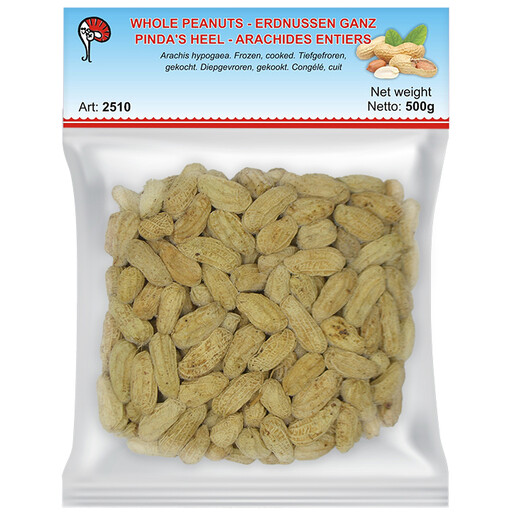 No image available
The product information describes whole boiled peanuts to enjoy as a snack or use as an ingredient in dishes.
Keep frozen until use. Once defrosted, store in the fridge, consume within the stated period and do not refreeze.
 No image available
The 250 g pack is a smaller quantity of unsalted peanuts.
The product information lists peanuts and sunflower oil as ingredients, with 13.5 g of carbohydrates and 2690 kJ per 100 g. Seal the pack securely after opening.
 No image available
This pack contains peanuts in their shells, so bear this in mind when deciding how much to use.
The product information lists 7.1 g of carbohydrates and 0.12 g of salt per 100 g. Store in a cool, dry place and seal the pack securely after opening.
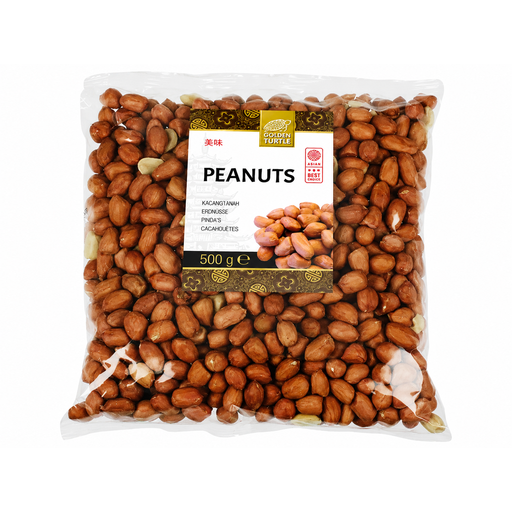 No image available
The product name describes raw peanuts with skin in a 500 g pack, for snacking or adding to dishes.
The product information lists 16 g of carbohydrates and 567 kcal per 100 g.
No. Don’t use that claim as a substitute for checking the ingredients and nutritional values. The Netherlands Food and Consumer Product Safety Authority states that voluntary food information must not be misleading, confusing or ambiguous.
Compare the products per 100 g or work out the values for the same quantity on both labels. Albert Heijn lists 11 g of carbohydrates per 100 g for its 500 g AH bag; 25 g works out to 2.75 g of carbohydrates. A serving size on a label is not automatically the right dietary advice for you.
No. Albert Heijn lists 0 g of added sugars for its 500 g AH bag, but also 5.4 g of sugars and 11 g of total carbohydrates per 100 g. So check both the ingredients list and the full nutrition table.
Read the allergen information on the exact pack, including warnings about other nuts. The Netherlands Food and Consumer Product Safety Authority says allergens must be clearly stated; the AH, Jumbo and PLUS bags examined contain peanuts and may contain other nuts.
Store peanuts in a dry, airtight container and follow the storage instructions on the pack. The Netherlands Nutrition Centre recommends storing nuts in a dry, airtight container; the Duyvis product information examined recommends keeping an opened bag in a light- and airtight container.