If you can eat peanuts, start with unsalted varieties with no added sugar, and compare the total carbohydrates per 100 g with the amount you actually eat. If you also need to avoid gluten or lactose, check the wording on the exact packaging. This does not make peanuts free from allergens, nor does it change anything about a peanut allergy.
Who is this choice relevant to?
Snack shoppers counting carbohydrates
You want to assess a snack by its total carbohydrates, not just a sugar claim. Compare the same quantity and bear in mind the portion you actually eat. Diabetes.nl explains why knowing the carbohydrate content matters when you have diabetes.
Peanut lovers with an additional dietary restriction
You can eat peanuts but also need to avoid, for example, gluten or lactose. Look for a clear statement relating to the specific restriction. A peanut allergy rules out this product category; ‘gluten-free’ or ‘lactose-free’ does not change that. Stichting Voedselallergie provides information about peanuts as an allergen.
Shoppers who want to plan portions
You want to keep an eye on how much you eat and choose a pack that suits your needs. The Netherlands Nutrition Centre advises storing unsalted peanuts in a tightly sealed container in a cool, dark and dry place.
What should you look out for in peanuts if you have diabetes or need ‘free from’ options?
| What to consider |
What to look for |
Who is this most relevant to? |
| Total carbohydrates |
Compare carbohydrates and sugars per 100 g, then work out the figures for your own portion. |
If I want to assess the carbohydrates in my snack, I look at the total, not just the sugars. Around 31% of consumers say total carbohydrates are their top purchasing priority. |
| The right ‘free from’ statement |
Identify the substance you need to avoid, then check the claim, ingredients and allergen information on the exact packaging. |
When a specific dietary restriction or allergy determines my choice, I check the label for that particular substance. Around 31% of consumers put their specific restriction first. |
| Salt and other added ingredients |
Check whether salt, sugar, honey or a coating has been added; look at the ingredients for flavoured varieties. |
If I’m looking for a simple, unsalted snack without a sweet or crunchy coating, I check the full ingredients list. Around 19% of consumers make avoiding these additions their top priority. |
| Portion and packaging |
Compare the nutritional values for your own portion, the pack size and the storage instructions. |
For me, it matters whether I can plan a portion and store the rest of the pack properly. Around 19% of consumers prioritise portion planning and a practical supply to keep at home. |
Common mistakes when choosing
-
Assuming ‘free from’ means allergen-free
A ‘gluten-free’ or ‘lactose-free’ statement does not mean a product is free from peanuts. Peanuts are an allergen in their own right.
Check which substance you need to avoid and read the allergen information on the exact packaging. If you have a peanut allergy, do not choose peanuts, regardless of any other dietary statements.
-
Comparing only the ‘of which sugars’ figure
The total amount of carbohydrates may be higher than the sugar figure. For example, the 250 g PLUS variety lists 13.5 g of carbohydrates and 4.7 g of sugars per 100 g, according to PLUS.
Compare total carbohydrates for the same quantity and work out the figure for your own portion. Don’t use a sugar claim as a substitute for this comparison.
-
Treating a large bag as one snack portion
The contents of a pack are not the same as the amount you eat. A larger supply also needs to be sealed and stored properly.
Portion out what you want to eat and seal the rest carefully. The Netherlands Nutrition Centre advises storing peanuts in a cool, dark and dry place.
A supply that doesn’t suit your needs may go unused or lose quality.
Brands to compare
Duyvis
The 235 g unsalted variety is a useful point of comparison with seasoned and coated peanuts.
- Duyvis publishes ingredients and nutritional values, and offers different preparation methods.
- The manufacturer calls the product a ‘responsible snack’, subject to conditions around a varied, balanced diet and healthy lifestyle. This is not an independent assessment for people with diabetes. The variety contains peanuts and carries a warning about nuts.
Albert Heijn
The AH Unsalted Peanuts 300 g variety reviewed here is labelled gluten-free and lactose-free, as well as providing nutritional information.
- The product page lists 0 g of added sugars and 0 g of added salt for this variety.
- The peanuts contain peanuts, and the page carries a warning about several types of nuts. These dietary statements do not make the product allergen-free.
Jumbo
The 250 g unsalted own-brand variety provides nutritional information per 100 g and per 30 g portion.
- The portion table makes it possible to calculate the values for a different quantity.
- Jumbo lists 12.0 g of carbohydrates per 100 g. The ingredients are peanuts and sunflower oil; the product page warns that the product may contain nuts.
PLUS
The 250 g unsalted variety is worth considering if you want to compare nutritional values and allergen information with other own-brand products.
- PLUS lists 0 g of added sugars and gives the total carbohydrate and sugar values per 100 g.
- The variety lists 13.5 g of carbohydrates and 4.7 g of sugars per 100 g. Comparing only the sugar figure therefore doesn’t give you the full picture. PLUS lists cashew nuts as a possible source of cross-contamination.
Lidl
Lidl Netherlands lists 285 g packs of unsalted peanuts for in-store purchase.
- The product name and pack size are shown on the Dutch range page.
- Check the exact packaging and the nutritional and allergen information in store. ‘Unsalted’ alone says nothing about whether the product is suitable for someone with diabetes or an allergy.
ALDI
The Dutch ALDI page lists Trader Joe’s 250 g roasted, unsalted peanuts.
- The product name makes the preparation method and pack size clear.
- An ‘unsalted’ label does not guarantee that a product is suitable for someone with a specific allergy or for your personal carbohydrate plan. Check the pack label.
Peanuts at Joybuy
A selection of peanut products at Joybuy. Check the ingredients, nutritional values and allergen information on the packaging for each variety.
 No image available
g’woon unsalted peanuts 250 g
Suitable if you’re looking for unsalted peanuts with a simple ingredients list; not suitable for anyone with a peanut allergy.
The product information on Joybuy lists the ingredients as 99% peanuts and sunflower oil, and gives 13.5 g of carbohydrates and 4.7 g of sugars per 100 g. Check the current packaging.
The product information warns that the product may contain cashew nuts.
View at Joybuy
 No image available
g’woon peanuts in shells 500 g
This in-shell variety may suit you if you’re looking for this style and want to factor the 500 g pack into your storage plans.
The product information on Joybuy lists peanuts as an ingredient and warns of possible traces of nuts. Check the nutritional values and allergen information on the packaging.
View at Joybuy
 No image available
Fresh roasted, unsalted peanuts 210 g
The title describes roasted, unsalted peanuts, making this an option to compare if that’s the preparation you’re looking for.
The product information on Joybuy lists 100% peanuts as the ingredients. Check the nutritional values and allergen information for this variety on the packaging.
View at Joybuy
 No image available
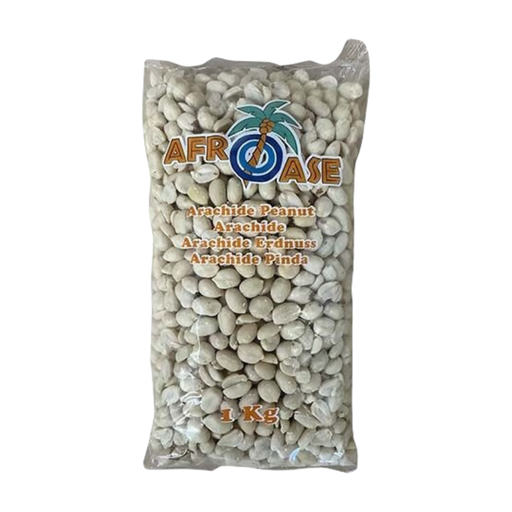
White Peanuts 1 kg
The product name indicates that these are peanuts and that the pack contains 1 kg. Consider whether this quantity suits your needs.
Check the ingredients, nutritional values and allergen information on the exact packaging before choosing this variety.
View at Joybuy
Frequently asked questions
Do you need to buy special ‘diabetic-friendly’ peanuts if you have diabetes?
Don’t base your choice on a label like this alone: compare the ingredients, total carbohydrates and your own portion. Diabetes.nl advises choosing unsalted nuts with no added sugar; this does not prove that an individual product treats diabetes.
Does ‘sugar-free’ mean the same as ‘no added sugars’?
No. According to the Netherlands Nutrition Centre, the ‘sugar-free’ claim allows a maximum of 0.5 g of sugars per 100 g or 100 ml. ‘No added sugars’ means that no sugars or other foods used for their sweetening properties have been added; the product may still contain naturally occurring sugars and other carbohydrates.
Can you eat gluten-free or lactose-free peanuts if you have a peanut allergy?
No. These statements relate to other substances and do not remove the peanut allergen. Stichting Voedselallergie states that heating does not make the peanut allergen harmless.
What does ‘may contain’ mean on a Dutch label?
This warning refers to an allergen that may be present unintentionally as a result of cross-contamination; it is not the same as an intentionally added ingredient. The NVWA states that new rules for these warnings have applied in the Netherlands since 1 January 2026, based on risk assessments and reference values.
How should you store peanuts after opening?
Store them in a cool, dark and dry place in an airtight container, and follow the instructions on the packaging. The Netherlands Nutrition Centre notes that peanuts are susceptible to mould.


