What should you look for when buying?
First compare the nutritional information per 100 g, then decide on a standard portion. Also check allergens, salt levels and what’s practical when serving.
| What to consider |
What to look for |
Who is this important for? |
| Energy per portion |
Compare kcal per 100 g and weigh out your chosen portion; calculate the energy for the same amount. |
If I want to limit the energy served during each break, I need to weigh portions and compare labels on the same basis. Around 33% of consumers who prioritise energy per snack portion pay closest attention to this. |
| Allergens |
Check the ingredients and warnings on the pack you receive, and make sure the information is available at the buffet. |
If I’m welcoming guests with different dietary needs, I want to be able to clearly state which allergens are listed for each variety. Around 27% of consumers who prioritise allergen information consider this the most important factor. |
| Salt and ingredients |
Read the ingredients list and compare the salt content per 100 g; ‘unsalted’ says nothing about the energy content. |
If I’m looking for a snack with no added salt or a simple list of ingredients, I check the ingredients and nutritional information. Around 20% of consumers who prioritise salt and ingredients pay closest attention to this. |
| Portioning and storage |
Match the net weight to the number of portions and follow the storage instructions on the pack once it’s opened. |
If I’m planning stock for several serving occasions, I want to know how many portions I can weigh out and how to store what’s left. Around 20% of consumers who prioritise practical considerations pay closest attention to this. |
Peanuts at Joybuy
This selection includes plain unsalted, roasted, shell-on and salted peanuts that you can portion yourself. Check the nutritional information and allergens on each pack before choosing a variety for the buffet.
 No image available
g’woon unsalted peanuts, 250 g
A good choice if you want to weigh out loose peanuts and are looking for an unsalted variety.
Ingredients: 99% peanuts and sunflower oil. Stated energy: 2690 kJ per 100 g. May contain cashew nuts.
Buy at Joybuy
 No image available
Verse Extra Large roasted peanuts, 210 g
An option if you want to serve roasted, unsalted peanuts in portions you’ve weighed out yourself.
The product information lists 100% peanuts and 626 kcal per 100 g.
Buy at Joybuy
 No image available
g’woon peanuts in shells, 500 g
This could work if you want to divide a 500 g pack into portions; bear in mind that guests will need to shell the peanuts first.
Stated energy: 2515 kJ per 100 g. The product information notes that it may contain traces of nuts.
Buy at Joybuy
 No image available
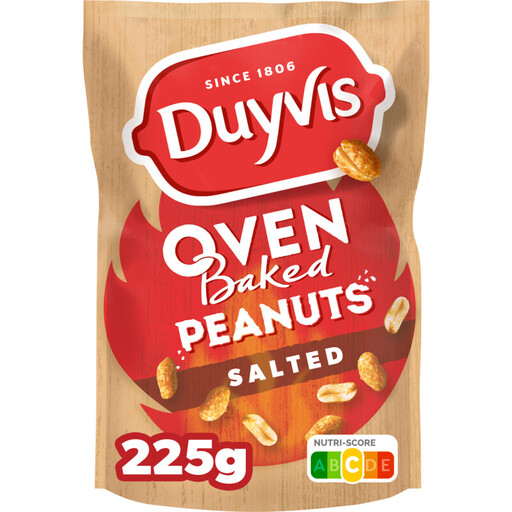
Duyvis roasted peanuts, 225 g
An option if you want to divide roasted peanuts into your own snack portions.
The product information lists 606 kcal and 1,4 g salt per 100 g, and notes that it may contain traces of nuts.
Buy at Joybuy
 No image available
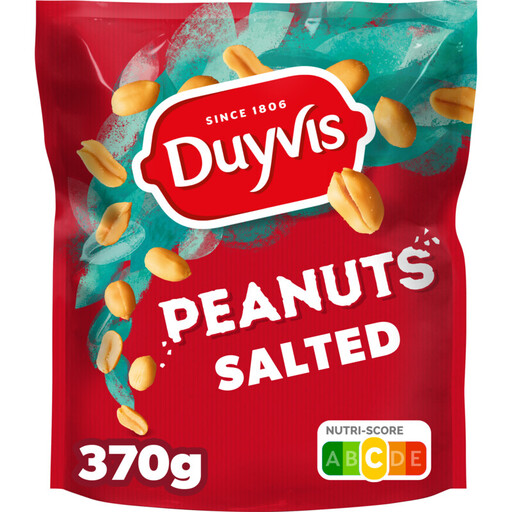
Duyvis salted peanuts, 370 g
An option if a salty flavour suits your catering menu and you want to weigh out portions yourself.
Ingredients: peanuts, sunflower oil and salt. Stated values: 613 kcal and 0,73 g salt per 100 g.
Buy at Joybuy
Frequently asked questions
Can you describe a small portion of peanuts as low calorie?
No. A small portion doesn’t change the threshold for a nutrition claim per 100 g. For solid foods, the European Commission sets a maximum of 40 kcal per 100 g for a claim meaning ‘low calorie’. You can, however, transparently state the calculated energy for a clearly specified portion without calling the product low calorie.
How should allergen information be made available for unpackaged peanuts?
Information about unpackaged products must be available to guests. According to the NVWA, staff can provide it verbally if they can give it directly before purchase, if it is also available to staff and inspectors in writing or electronically, and if there is a clearly visible notice for guests.
What does ‘may contain nuts’ mean alongside ‘contains peanuts’?
‘Contains peanuts’ identifies an ingredient or allergen that is present; ‘may contain’ warns of possible unintended presence. Copy both statements from the pack of the variety you’re serving.
How many portions can you get from a 250 g bag?
At 15 g per portion, 250 g works out to sixteen full portions, with 10 g left over. This is an example for planning purposes; when buying, also allow for extra consumption and waste.
How should you store peanuts after portioning them?
Follow the storage instructions on the pack and seal the remaining stock securely after use. The Netherlands Nutrition Centre advises storing nuts in a sealed container in a dry place; for the AH variety reviewed, Albert Heijn advises storing it in a cool, dark, dry place.


