Who is this choice relevant to?

Buyer with a fat-reduction target

You’re looking for peanuts for conference breaks and want to distinguish between less fat per 100 g, a smaller portion and a nutrition claim. The European Commission sets out the conditions for nutrition claims, including the threshold for describing a product as low-fat.

Caterer responsible for allergen information

You serve peanuts to conference guests and need to have the allergen information for the exact variant available, even when you serve the peanuts out of their original packaging. The NVWA explains the information requirements for non-prepacked products.

Event organiser planning portions and stock

You match pack sizes to serving portions and follow storage advice once a pack has been opened. Fat per portion and fat per 100 g are separate criteria to consider when choosing a product.

What should you look for when buying?

What to consider What to look for when buying Who is this important to?
Fat content and claims Compare the fat per 100 g on the label of the exact variant. The European Commission sets a maximum of 3 g of fat per 100 g for solid foods to qualify for the low-fat claim. As a buyer, I want to offer demonstrably less fat per 100 g during a conference break and assess claims carefully; around 33% of consumers rank reducing fat as their top purchasing priority.
Allergen information when serving Check the ingredients and allergen information for each variant. The NVWA explains how this information must also be available for non-prepacked products. As a caterer, I want to give guests clear information when peanuts are served in bowls; around 27% of consumers rank allergen management as their top priority.
Portions, packaging and storage Match the net weight to your chosen portion size and the number of portions you need. Follow the storage advice for the specific variant, including after opening. As an organiser, I want to know in advance how many portions I can get from my order and how to store opened bags; around 20% of consumers rank practical portion and stock planning as their top priority.
Salt and flavour Compare salt per 100 g and ingredients separately from the fat content. Unsalted does not, by itself, tell you how much fat a product contains. As an organiser, I want to choose a peanut variant that suits the event’s flavour preferences without confusing salt with fat; around 20% of consumers rank salt and flavour as their top priority.

Common pitfalls

  • Assuming oven-roasted or unsalted means low-fat

    The PLUS product page lists 50 g of fat per 100 g for Duyvis Oven roasted original and 51.3 g for PLUS Unsalted Peanuts. Both are above the European Commission’s maximum of 3 g per 100 g for solid foods to qualify for the low-fat claim.

    Check the nutrition table for the exact variant, and assess fat, salt and preparation method separately.

  • Using general nutrition data as the label for a branded product

    Category information from the Voedingscentrum does not automatically describe the nutritional value of a specific branded variant. Recipes and nutritional values can vary from product to product.

    When buying, use the nutrition table for the exact variant you want to order.

  • Throwing away the packaging before recording allergen information

    For non-prepacked catering, allergen information must be made available in an appropriate way. The NVWA provides guidance on this; information for another peanut variant cannot be used interchangeably without checking.

    Record the information from the current label before transferring the peanuts to serving bowls, and follow your food safety procedures.

    Finding and recording the information takes extra preparation before serving.

Brands to compare

Duyvis

Worth considering if you’re looking for a roasted peanut variant for conference breaks.

  • For Duyvis Oven roasted original 225 g, the Dutch product page lists 50 g of fat and 1.4 g of salt per 100 g.
  • This exact variant is therefore not a low-fat choice; that does not automatically apply to every product from the brand.

Albert Heijn

A supermarket own-brand option to assess based on the exact peanut variant.

  • The product page reviewed is for AH Salted Peanuts.
  • Check the current label, as ingredients and nutritional values can change.

Jumbo

The Jumbo Kingsize Peanuts Sea Salt & Herbs reviewed are a seasoned variant to consider when choosing flavours.

  • The Dutch product page confirms the product name and 350 g pack size.
  • Sea salt and herbs are not evidence of a reduced fat content.

Lidl

The product page reviewed lists 285 g of unsalted peanuts.

  • This variant is worth considering if you’re looking to assess unsalted peanuts.
  • Unsalted does not automatically mean low-fat; the product page states that it is sold in store.

ALDI

The product page reviewed lists Trader Joe's unsalted peanuts, sold at ALDI.

  • The product page confirms the variant and a pack size of 250 g.
  • Trader Joe's is the product brand; do not attribute the peanuts to a manufacturer called ALDI.

PLUS

The PLUS variants reviewed include unsalted and dry-roasted peanuts.

  • PLUS Unsalted Peanuts 300 g lists 0 g of salt per 100 g; storage advice is available for PLUS Dry roasted 200 g.
  • The unsalted variant also lists 51.3 g of fat per 100 g. This product information does not prove that the brand as a whole offers reduced-fat products.

Joybuy products for portion planning

The products below are standard peanut variants you can assess for portion planning; don’t describe them as low-fat based on their preparation method or flavour.

g’woon unsalted peanuts, 250 g

g’woon unsalted peanuts, 250 g

An unsalted variant to consider when you want to measure out your own serving portions; unsalted does not automatically mean lower in fat.

Pack size: 250 g. Contains peanuts; may contain cashew nuts.

View at Joybuy
Duyvis salted peanuts, 235 g

Duyvis salted peanuts, 235 g

A salted variant to weigh up against the event’s flavour preferences; check the fat and salt content on the label.

Pack size: 235 g. Contains peanuts and may contain traces of other nuts.

View at Joybuy
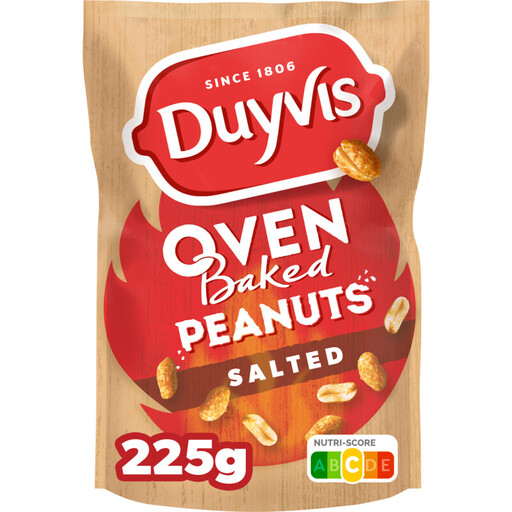
Duyvis roasted peanuts, 225 g

Duyvis roasted peanuts, 225 g

The roasted variant may suit you if you want to measure out your own portions; the preparation name does not mean the peanuts are low-fat.

Pack size: 225 g. Contains peanuts and may contain other nuts.

View at Joybuy
Duyvis honey and lightly salted oven-roasted peanuts

Duyvis honey and lightly salted oven-roasted peanuts

A honey and salt variant to assess for flavour; check the nutritional values and ingredients on the exact pack.

Contains peanuts, wheat and gluten; may contain other nuts.

View at Joybuy
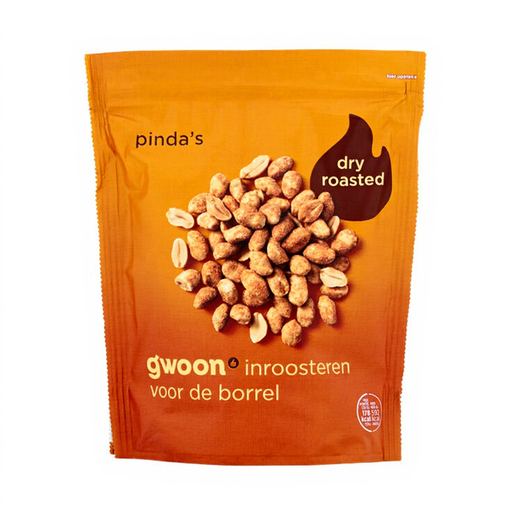
g’woon dry-roasted peanuts, 200 g

g’woon dry-roasted peanuts, 200 g

The dry-roasted variant is an option to consider for its flavour; use the nutrition table for this exact variant when calculating portions.

Pack size: 200 g. Contains peanuts and may contain traces of nuts.

View at Joybuy

Frequently asked questions

Can you describe standard oven-roasted peanuts as low-fat?

Not based on the preparation name. For solid foods, the European Commission sets a maximum of 3 g of fat per 100 g as a condition for the low-fat claim; the Dutch PLUS product page lists 50 g per 100 g for Duyvis Oven roasted original.

How do I calculate the fat per serving?

Multiply the fat per 100 g by the portion weight in grams, then divide by 100. For example, at 50 g of fat per 100 g, a portion you choose to weigh out at 20 g contains 10 g of fat; this is a calculation, not a recommended portion size.

Does allergen information need to be available when serving peanuts in bowls?

Yes. Allergen information must also be available when catering products are offered unpackaged. The NVWA explains how to inform guests; use the information for the exact variant you’re serving.

How should I store opened bags of peanuts?

Follow the instructions for the specific variant. For Duyvis Oven roasted original, the Dutch product page advises storing it in a cool, dry place and keeping an opened bag in a light- and airtight container. PLUS Dry roasted 200 g should be stored in a dry, dark place.

When does a caterer need a food safety plan?

According to the NVWA, businesses that prepare, process or sell food must work with an HACCP food safety plan. Following an appropriate hygiene code can be one way to do this; this is a business requirement, not a nutritional characteristic of the peanuts.
