What should you look for in peanuts to go with coffee on the go?
Start with how much you want to eat. Then compare the figures per 100 g and consider separately whether the ingredients, salt, packaging and cost suit your needs.
| What to consider |
What should you check? |
Who should bear this in mind? |
| Energy per portion |
Compare kcal per 100 g and use the same portion weight for each product. |
If I want to know how much energy is in my snack, I weigh out the amount rather than comparing the portions shown on the labels. Around 36% of consumers in this breakdown put energy control first. |
| Ingredients and salt |
Read the ingredients and check the salt content per 100 g. |
If I want to avoid added salt, I also check how the peanuts are prepared and whether they contain oil. Around 29% of consumers in this breakdown make avoiding added salt their top priority when choosing a product. |
| Portioning and storage |
Check the net weight and follow the storage instructions on the packaging. |
If I want to prepare an amount at home to take with me, I need to know how to store the rest. Around 21% of consumers in this breakdown prioritise preparation and storage. |
| Cost and packaging |
Compare the price per kilogram of the same variety and check the pack weight. |
If cost is my main concern, I compare the same product variety and check how much is in the pack. Around 14% of consumers in this breakdown prioritise cost. |
Peanuts on Joybuy
These Joybuy products are peanut varieties for an on-the-go snack. Check the ingredients, nutritional information and quantity for each pack; a label such as ‘unsalted’ doesn’t automatically mean a product is low in calories.
 No image available
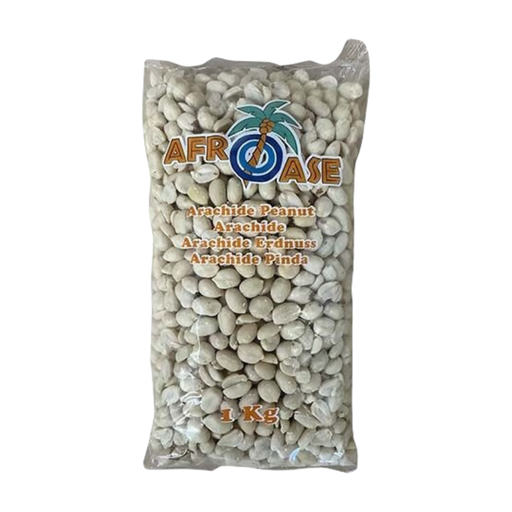
White Peanuts 1 kg
The product title lists peanuts in a 1 kg pack; compare the nutritional information on the packaging with the amount you want to take with you.
View at Joybuy
 No image available
g’woon Unsalted Peanuts 250 g
This variety may suit you if you’re looking for unsalted peanuts and want to measure out your own portion.
The product information lists 99% peanuts, sunflower oil, 0.02 g of salt and 2690 kJ per 100 g.
View at Joybuy
 No image available
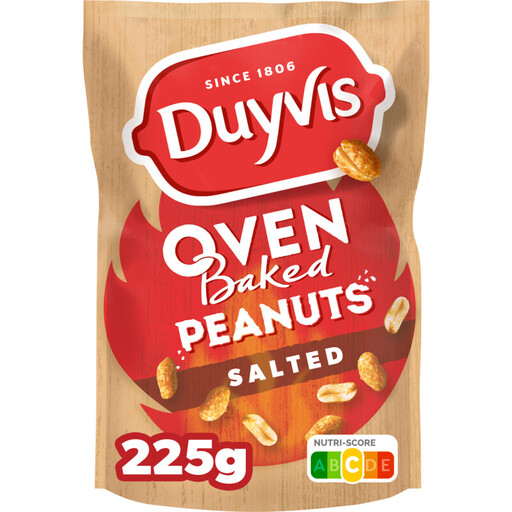
Duyvis Roasted Peanuts 225 g
This roasted variety may suit you if you’re looking for a ready-to-eat peanut snack; check the salt and flavourings if they’re important to your choice.
The product information lists 606 kcal per 100 g, 97% peanuts and 1.4 g of salt per 100 g.
View at Joybuy
 No image available
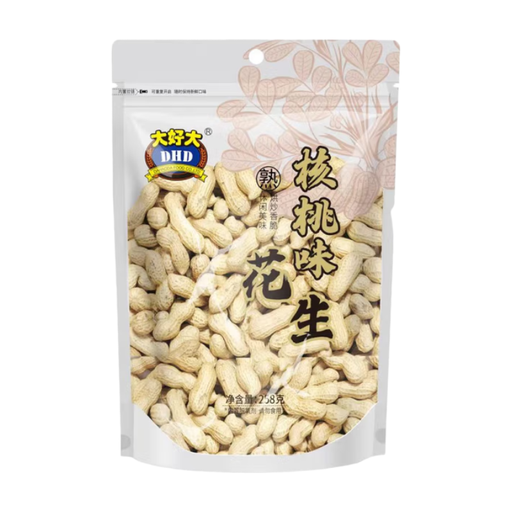
Dahaoda Walnut Flavour Peanuts 258 g
The product information mentions individual packs, which may be useful if you want to take separate portions with you.
The ingredients list sugar, salt and walnut flavouring; the energy content is 2420 kJ per 100 g.
View at Joybuy
 No image available
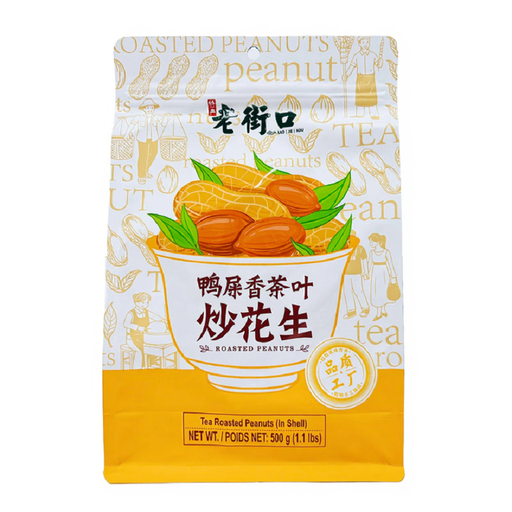
Lao Jie Kou Yashi Xiang Tea-Infused Roasted Peanuts 500 g
These tea-infused roasted peanuts come in a 500 g pack; check the figures per 100 g if you’re comparing energy and salt.
The product information lists 544 kcal and 1.37 g of salt per 100 g.
View at Joybuy
Frequently asked questions
Does a small portion of peanuts make them low in calories?
No. A smaller amount contains less energy, but it doesn’t change the energy per 100 g of the product. The Netherlands Nutrition Centre says that a claim of low energy value for solid food requires less than 40 kcal per 100 g; at 602–625 kcal per 100 g, the four unsalted products compared here with usable figures are well above that. The European Commission explains that nutrition claims must meet official requirements.
How do I compare peanuts when the portions on the labels are different?
First compare the energy per 100 g, then use the same weight for every variety. This helps you avoid mistaking a difference between, for example, a 25 g labelled portion and a 30 g one for a difference in energy per equal amount.
What information matters if you have a peanut or nut allergy?
Check the allergen information on the exact pack. The Netherlands Food and Consumer Product Safety Authority lists peanuts and nuts as separate allergens and says that prepacked products must display allergen information. Also check the warnings for other allergens on the variety you choose.
Are whole peanuts suitable for young children?
The Albert Heijn and PLUS product pages warn that young children can choke on peanuts. Treat this as a separate question of suitability; an unsalted label says nothing about that risk.
Does the AH recall apply to all AH peanuts?
No. Albert Heijn specifically names AH Pinda’s extra groot gezouten in a tub with a best-before date of 04-11-2026, due to possible metal fragments, and asks customers not to eat the contents of that pack. The warning doesn’t apply to the 300 g AH Ongezouten peanuts and shouldn’t be extended to all AH peanuts.


