What should you look for when choosing?
Start by comparing the energy per 100 g, then decide how much you want to serve. Whether peanuts are unsalted, roasted or coated in a crispy shell doesn’t, in itself, tell you how much energy an equal-sized portion provides.
| What to consider |
What should you check? |
Who is this important for? |
| Energy per portion |
Check the kcal per 100 g, weigh your portion and calculate the energy in proportion. The Netherlands Nutrition Centre uses 25 g as an example of a handful of unsalted peanuts. |
If you want to know how much energy your portion provides, weighing it helps you keep track of how much you eat. Around 42% of consumers prioritise calories per portion. |
| Salt and ingredients |
Check the added salt, total salt content and ingredients for the exact product. ‘Unsalted’ doesn’t mean fewer calories. |
If you’re mainly looking for an unsalted product or specific ingredients, you’ll want to make that choice separately from the energy content. Around 25% of consumers make this their top priority. |
| Suitability for guests |
Keep the pack with its allergen information by the serving bowl. Separately consider whether whole peanuts are suitable if young children are present. |
If you’re expecting guests with allergies or young children, you’ll want to consider the ingredients and the form of the snack in advance. Around 17% of consumers put guest safety first. |
| Packaging and storage |
Compare the net weight with the number of portions you need. Follow the storage advice after opening; the Netherlands Nutrition Centre recommends storing unsalted peanuts in a cool, dark and dry place. |
If you’re buying for several guests, you’ll want to serve enough without opening more than you need. Around 16% of consumers prioritise portion planning and storage. |
Peanuts on Joybuy
This Joybuy selection includes plain and roasted peanuts, including unsalted options. Check the packaging for the energy information and the quantity it applies to, then calculate the value for the portion you want to serve.
 No image available
g'woon unsalted peanuts, 250 g
A plain, unsalted option to weigh out and serve if you’re after that classic peanut flavour.
The product information lists peanuts and sunflower oil as ingredients and states an energy value of 2690 kJ. Check the quantity on the label to calculate the value for your portion.
The product information says that the product may contain cashew nuts. Peanuts are an allergen too, so keep the packaging available for your guests.
View on Joybuy
 No image available
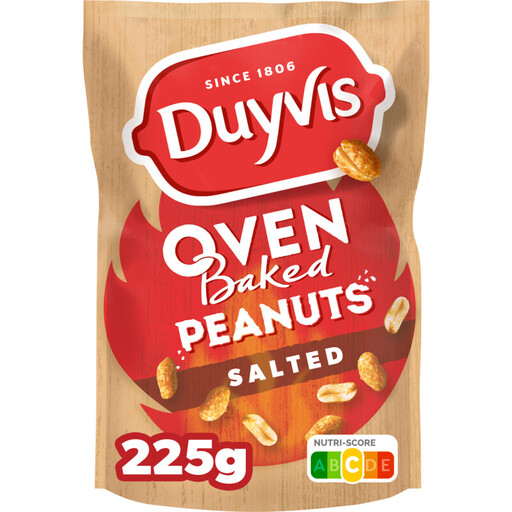
Duyvis roasted peanuts, 225 g
A roasted option for anyone looking for this preparation method and savoury flavour to enjoy with drinks at a party.
The product information states an energy value of 606 kcal and 1.4 g of salt; check the packaging to see what quantity these values apply to.
The product information warns that traces of nuts may be present. Peanuts are an allergen, so keep the packaging available for your guests.
View on Joybuy
 No image available
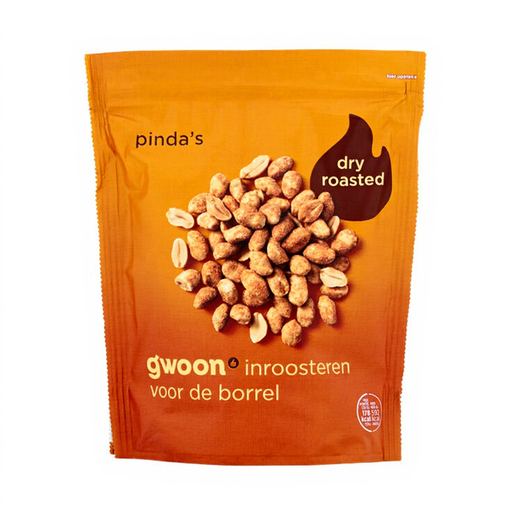
g'woon dry-roasted peanuts, 200 g
A seasoned, dry-roasted option to consider if you’re looking for a spiced flavour.
The product information states an energy value of 590 kcal and 1.5 g of salt; check the nutrition table to see what quantity these values apply to. The description mentions a resealable bag.
The product information warns that traces of nuts may be present. Peanuts are an allergen, so keep the packaging available for your guests.
View on Joybuy
 No image available
g'woon peanuts in shells, 500 g
An in-shell option if you want to serve peanuts this way and decide on the portion sizes yourself.
The pack contains 500 g. The product information lists peanuts as an ingredient, an energy value of 2515 kJ and 0.12 g of salt; check the label to see what quantity the nutritional values are based on.
Peanuts are an allergen, so keep the packaging available for your guests.
View on Joybuy
 No image available
VERSE Extra Large roasted unsalted peanuts, 210 g
A roasted, unsalted option if you’re looking for this combination and want to weigh out your own portion.
The pack contains 210 g. The product information lists peanuts as an ingredient and states an energy value of 626 kcal; check the label to see what quantity this value applies to.
Peanuts are an allergen, so keep the packaging available for your guests.
View on Joybuy
Frequently asked questions
Can you describe plain peanuts as low-calorie in the Netherlands?
Not just because the portion is small or the peanuts are described as unsalted. For solid foods, the European Commission sets a maximum of 40 kcal (170 kJ) per 100 g for a ‘low energy’ claim. The plain, unsalted peanuts included in this comparison are well above that limit. So focus on portion-conscious wording and serving, rather than claiming that the product is low in calories.
Is a portion on the pack always the same as a handful?
No, portion sizes can vary. Albert Heijn gives 25 g per portion for the product included in this comparison, while Jumbo shows nutritional values per 30 g and per 100 g. Compare products per 100 g first, then calculate the values for the same portion weight.
Which allergens should I check for a party table?
Check the packaging for the exact product and keep it by the serving bowl. Peanuts are an allergen that must be declared on pre-packed foods; Duyvis also lists milk and gluten in its Borrelnootjes Cocktail.
Are whole peanuts suitable for young children?
Consider this separately from the calorie content: the Netherlands Nutrition Centre warns against giving whole peanuts to young children because of the risk of choking and suffocation. So don’t assume that a standard party snack is automatically suitable for young children.
How should I store leftover unsalted peanuts?
Follow the advice on the packaging. The Netherlands Nutrition Centre recommends storing unsalted peanuts in a cool, dark and dry place; an airtight container can help.


