What should you look for when choosing?
First check that peanuts, and the way you plan to serve them, are suitable for the children attending. Then compare the nutritional values for the exact variety and work out the quantity based on the portions you want to serve.
| What to consider |
What to look for |
Who is this important for? |
| Age and allergies |
Check whether whole peanuts are suitable for the children’s ages and eating skills; read the allergen information on the exact packaging. |
When I’m buying for a group of children, I want to know whether everyone can eat the snack safely and whether peanuts could be a problem. This matters to around 36% of consumers who put group safety first. |
| Protein per portion |
Compare protein per 100 grams and calculate how much that is for the portion you actually intend to serve. |
When I’m keeping an eye on protein, I want to know what the chosen portion provides, not just what a bag lists per 100 grams. Around 29% of consumers say protein content is their top priority. |
| Salt and ingredients |
Compare salt per 100 grams and check whether the peanuts are plain, salted, marinated or coated. |
When I’m looking for a particular flavour or recipe, I don’t want to assume that every variety from a brand is the same. For around 21% of consumers, ingredients or salt content comes first. |
| Quantity and storage |
Match the pack size to the portions you’re planning and follow the storage instructions on the exact packaging. |
When I want to limit leftovers, I want to buy the right amount and know how to store an opened bag. This matters to around 14% of consumers who put quantity and storage first. |
Peanuts at Joybuy
These Joybuy products give you options for comparing peanuts by ingredients, pack size and, where listed, protein and salt content. Always check whether whole peanuts are suitable for the children’s ages and eating skills.
 No image available
g'woon unsalted peanuts, 250 g
A 250 g pack to match the amount you want to serve.
The product information lists 27 g of protein and 0.02 g of salt per 100 g, and 99% peanuts with sunflower oil.
Contains peanuts and is not suitable for a guest with a peanut allergy.
View at Joybuy
 No image available
g'woon peanuts in shell, 500 g
The pack contains 500 g of peanuts in their shells; check whether this form suits the way you plan to serve them.
Contains peanuts and is not suitable for a guest with a peanut allergy. The product title does not list nutritional values.
View at Joybuy
 No image available
Verse Extra Large roasted peanuts, 210 g
The 210 g pack is an option to consider alongside the amount you’re planning for the party.
The product information lists roasted, unsalted peanuts, with 26 g of protein and 0.02 g of salt per 100 g.
Contains peanuts and is not suitable for a guest with a peanut allergy.
View at Joybuy
 No image available
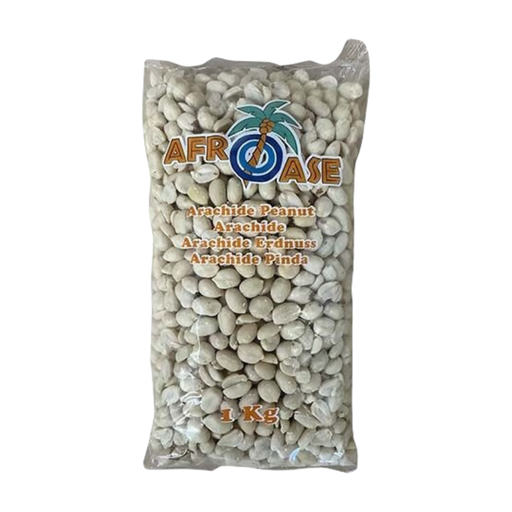
White Peanuts, 1 kg
The title lists a 1 kg pack; compare this size with what you want to serve and store.
Contains peanuts and is not suitable for a guest with a peanut allergy. The product title does not list nutritional values or further information about the ingredients.
View at Joybuy
Frequently asked questions
Can a child aged 4 or over automatically eat whole peanuts?
No, turning 4 doesn’t automatically mean whole peanuts are suitable. The Netherlands Nutrition Centre advises against giving whole peanuts to children under 4 and warns that older children can choke on them too. Make sure children eat calmly at the table and stay with them; if in doubt, choose another suitable form.
Is peanut butter a solution if a guest has a peanut allergy?
No, peanut butter still contains peanuts. Changing the form doesn’t remove the peanut allergen; check the ingredients and allergen warnings on the exact packaging, and discuss the choice with the child’s parent or carer.
How do I work out the protein content without making up a child-sized portion?
Multiply the stated amount of protein per 100 grams by the number of grams in the portion you actually choose, then divide by 100. For example, at 27 g of protein per 100 g, 10 g of peanuts provides 2.7 g of protein; 10 g is just a calculation example, not a recommended portion for a child.
Are special protein products needed after an active children’s party?
An active party on its own is not a reason to recommend special protein products or promise recovery benefits. In its general sports guidance, the Netherlands Nutrition Centre says that recreational athletes do not need special protein shakes or bars; the examples given are not portion guidance for children.
How should I store an opened bag of peanuts?
Follow the storage instructions on the pack you’ve bought. For its 500 g unsalted variety, Albert Heijn advises storing it in a cool, dark, dry place and sealing the bag tightly after use; for its 250 g unsalted variety, PLUS advises storing it in a dry, dark place.


