What should you look for when choosing?
First, check whether the treat is suitable for the children and complies with the setting’s rules. Then decide whether you’re mainly looking for less fat, less salt or easy portioning; these are different things to consider.
| What to consider |
What should you check? |
Who is this important for? |
| Making sure they’re safe to hand out |
Check school rules and allergens. The Dutch Nutrition Centre advises against giving whole peanuts to children under 4. |
If I’m making treats for a group, I want to know whether all the children can have them and whether the school allows peanuts. Around 36% of consumers put safe participation first. |
| Verified lower-fat claim |
Compare the exact claim and fat content on the same basis. For a ‘low fat’ claim on solid foods, the European Commission sets a maximum of 3 g of fat per 100 g. |
If I’m specifically looking for less fat, I want a claim that genuinely relates to the product’s composition, not just how it was prepared. Around 29% of consumers give verified fat reduction top priority. |
| Salt and ingredients |
Read the ingredients list and compare the salt content per 100 g for the exact variant. Unsalted doesn’t automatically mean no added oil. |
When filling treat bags, I want to know exactly what’s in the chosen variant and how much salt it contains. Around 21% of consumers put salt and ingredients at the top of their list. |
| Portioning and storage |
Plan the amount per bag and follow the storage instructions on the packaging. A manufacturer’s portion size isn’t necessarily a child’s portion. |
If I’m filling several bags, I want to be able to plan the amount in advance and store the opened pack correctly. Around 14% of consumers give portioning and planning top priority. |
Peanut snacks at Joybuy
These peanut snacks offer options to compare, including unsalted, roasted and products you can portion yourself; on their own, they don’t prove that a product is lower in fat.
 No image available
g’woon unsalted peanuts, 250 g
An unsalted peanut snack to compare if you’re mainly watching added salt; unsalted doesn’t mean lower in fat.
50 g of fat and 0.02 g of salt per 100 g; sunflower oil is listed in the ingredients.
Don’t give whole peanuts to children under 4, and check for allergies and school rules.
View at Joybuy
 No image available
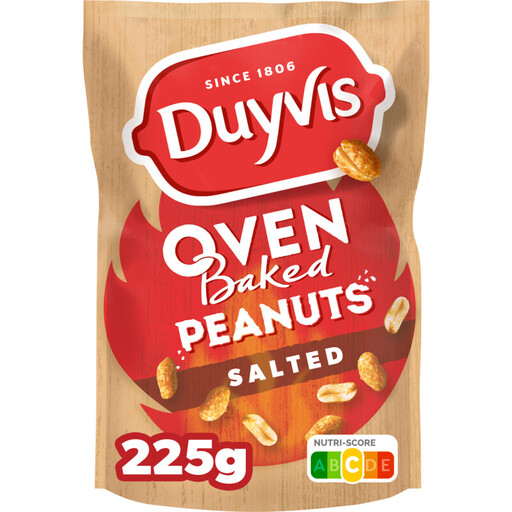
Duyvis roasted peanuts, 225 g
A roasted peanut snack to compare if you’re looking for a product described as roasted; this description doesn’t prove fat reduction.
The product information lists 50 g of fat and 1.4 g of salt per 100 g, with peanuts and flavourings as ingredients.
Don’t give whole peanuts to children under 4, and check for allergies and school rules.
View at Joybuy
 No image available
Verse Extra Large roasted peanuts, 210 g
A roasted, unsalted variant to compare if you’re looking for those product features; on their own, they don’t indicate lower fat.
The product information lists 50 g of fat and 0.02 g of salt per 100 g, 99% peanuts and sunflower oil.
Don’t give whole peanuts to children under 4, and check for allergies and school rules.
View at Joybuy
 No image available
g’woon peanuts in shells, 500 g
An option to compare if peanuts in their shells suit the type of treat you’re planning; the edible kernel needs to be shelled first.
The product information lists 49 g of fat and 0.12 g of salt per 100 g.
Don’t give whole peanuts to children under 4, and check for allergies and school rules.
View at Joybuy
 No image available
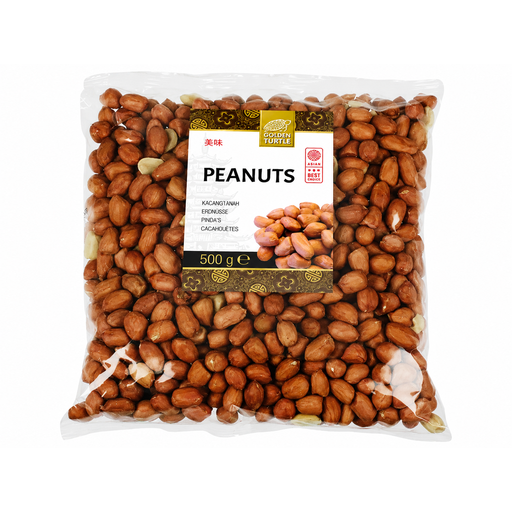
Golden Turtle Premium raw peanuts with skin, 500 g
A raw variant to compare if you want to prepare the peanuts yourself; the product description suggests roasting them as a way to prepare them for snacking.
The nutritional information lists 49 g of fat per 100 g.
Don’t give whole peanuts to children under 4, and check for allergies and school rules.
View at Joybuy
Frequently asked questions
At what age can children have whole peanuts?
The Dutch Nutrition Centre advises against giving whole peanuts or nuts to children under 4. Older children can choke on them too, so make sure they eat calmly at the table and stay with them. Ground peanuts or peanut butter don’t remove the peanut allergen, so also check for allergies and the setting’s rules.
Is a peanut classed as a nut on a label?
No. The Netherlands Food and Consumer Product Safety Authority explains that peanuts and tree nuts are separate allergens. So check exactly what the school means by a nut-free policy; the product category alone won’t tell you.
Do ‘low fat’ and ‘no added oil’ mean the same thing?
No. For a ‘low fat’ claim on solid foods, the European Commission sets a maximum of 3 g of fat per 100 g. ‘No added oil’ describes how a product is prepared; Duyvis uses this description for Oven Baked Peanuts Original, even though the product information also lists fat.
How should you store peanuts after opening the pack?
Follow the instructions on the exact pack. For AH Unsalted Peanuts 300 g, Albert Heijn recommends storing them in a cool, dark and dry place and closing the pack securely after use. If you’re filling treat bags yourself, keep the original ingredient, allergen and best-before information to hand too.
What should you do about the safety warning for AH Extra Large Salted Peanuts?
Don’t eat the specific tub of AH Extra Large Salted Peanuts with a best-before date of 04-11-2026. On 20 May 2026, Albert Heijn reported that the product may contain metal fragments and asked customers to return it; this warning doesn’t automatically apply to other variants or best-before dates.


