If you’re keeping an eye on your energy intake with your morning coffee, weigh your portion first and use the kcal per 100 g shown on the exact pack. The Netherlands Nutrition Centre gives 157 kcal per 25 g of plain, unsalted peanuts. Unsalted or roasted peanuts, or a smaller bag, don’t automatically mean fewer kcal; these features answer different questions from the energy content of an equal-sized portion. Choose the salt level and pack size that suit you, but compare the nutrition information per 100 g and calculate it for the portion you eat.
Who are peanuts with morning coffee for?
Portion-conscious coffee snackers
You want to enjoy peanuts with your coffee and keep an eye on the energy in the amount you eat. The Netherlands Nutrition Centre gives 157 kcal per 25 g of plain, unsalted peanuts; for a specific variety, always go by the label.
Those who choose unsalted
You’re looking for peanuts with no added salt. Keep this choice separate from the question of how much energy is in your weighed portion.
Stock planners
You want to divide a pack over several coffee breaks. The contents of a bag aren’t the same as the amount you eat during one break.
What should you look for in lower-calorie peanuts?
The Netherlands Nutrition Centre gives 157 kcal per 25 g of plain, unsalted peanuts. This is a category value, not the nutritional value of every branded variety.
Plain, unsalted peanuts
Suitable if: you want peanuts with your coffee and to tailor the energy intake to your portion.
Consider: a smaller portion contains less energy, but it doesn’t make the product itself less energy-dense per gram.
Salted peanuts
Suitable if: you prefer the salted flavour and want to take the salt content into account when choosing.
Consider: the ingredients for the Duyvis variety list peanuts, sunflower oil and salt; this doesn’t prove it has fewer calories than unsalted peanuts.
Roasted, unsalted peanuts
Suitable if: you’re looking for roasted peanuts with no added salt; ALDI lists this combination for Trader Joe’s peanuts in a 250 g pack.
Consider: the preparation method alone doesn’t tell you how much energy is in an equal-sized portion; compare the nutrition information on the label.
| What to consider |
What to look for |
Who might prioritise this? |
| Energy in your portion |
Check the kcal per 100 g on the pack, weigh your portion and calculate the value for the number of grams you eat. |
With my morning coffee, I want to know how much energy I’m actually eating, so I weigh the peanuts and use the label. Around 36% of consumers prioritise the calories in a portion. |
| Unsalted ingredients |
Check the variety name and ingredients; assess the salt level and nutritional value separately. |
If I’m looking for peanuts with no added salt, I check the ingredients and keep that choice separate from calories. Around 29% of consumers give unsalted ingredients top priority. |
| Portioning from the pack |
Check the net weight and decide in advance how many grams you want to weigh out for each coffee break. |
For several coffee breaks, I want to be able to divide the pack up easily, rather than see the whole bag as one portion. Around 21% of consumers focus mainly on portioning. |
| Suitable pack size |
Match the net weight to how often you eat peanuts and how much you want to keep in stock. |
I choose a pack size that suits how often I eat peanuts and don’t want to buy more than I need. Around 14% of consumers prioritise a suitable pack size and stock level. |
Common mistakes when choosing peanuts
-
Assuming ‘unsalted’ means ‘low in calories’
You can choose an unsalted variety and still eat more energy than you planned for your coffee break. Salt level and portion size answer different questions.
Assess added salt separately and calculate the nutritional value for a weighed portion.
-
Treating a whole bag as one snack portion
The Netherlands Nutrition Centre gives 25 g as a reference portion; Duyvis lists a 235 g pack of unsalted peanuts, while Jumbo offers unsalted packs of 250 g and 500 g. So the pack size isn’t the same as the amount to eat in one break.
Decide in advance how many grams you want to eat and divide the pack into portions.
-
Applying a recall warning too broadly or too narrowly
On 20 May 2026, Albert Heijn issued a warning about AH Extra Large Salted Peanuts in a tub with a best-before date of 4 November 2026, due to possible metal fragments. The warning applies to this specific product and date combination.
Check the product name, packaging and best-before date together. If you have this exact product, follow the warning and don’t eat it; don’t apply the warning to other peanuts.
Popular brands and supermarket chains
The product listings below give examples of varieties and pack sizes. They don’t show which brand has the fewest calories in an equal-sized portion; for that, check the label on the exact variety.
Duyvis
Duyvis lists salted and unsalted peanuts; the unsalted variety is available in a 235 g pack.
- The choice of varieties makes it easy to distinguish between peanuts with and without added salt.
- Unsalted doesn’t automatically mean fewer kcal; use the nutritional information on the exact pack.
Albert Heijn
Albert Heijn’s product listing is for AH Unsalted Peanuts.
- The product name makes it easy to identify the unsalted variety.
- Albert Heijn recommends checking the current packaging, as ingredients, nutritional values and allergen information can change.
Jumbo
Jumbo lists unsalted peanuts in 250 g and 500 g packs.
- The different net weights give you a choice to suit your storage needs and how often you eat them.
- A larger pack isn’t a recommended portion size; weigh out the amount you want for your coffee break separately.
Lidl
Lidl has a Dutch product listing for unsalted peanuts.
- The listing makes it easy to identify an unsalted variety.
- The variety name alone doesn’t tell you how many kcal are in a weighed portion; check the label.
ALDI
The ALDI product page lists Trader Joe’s roasted, unsalted peanuts in a 250 g pack.
- The product description states that they’re roasted and unsalted.
- These features alone don’t tell you the energy content of an equal-sized portion.
PLUS
The PLUS product listing is for unsalted peanuts in a 250 g pack.
- The listing gives the variety and net weight.
- PLUS warns that product information can change; check the ingredients and nutritional values on the current packaging.
Peanuts on Joybuy for different snacking preferences
The product cards include unsalted, roasted and salted peanuts, as well as peanuts in their shells. They give you a starting point for comparing varieties and nutritional values, but don’t show which peanuts are generally lower in kcal.
 Image unavailable
g'woon unsalted peanuts 250 g
An option if you’re looking for peanuts with no added salt.
The product description lists 99% peanuts and sunflower oil. Check the nutritional information on the pack to calculate the values for your portion.
View on Joybuy
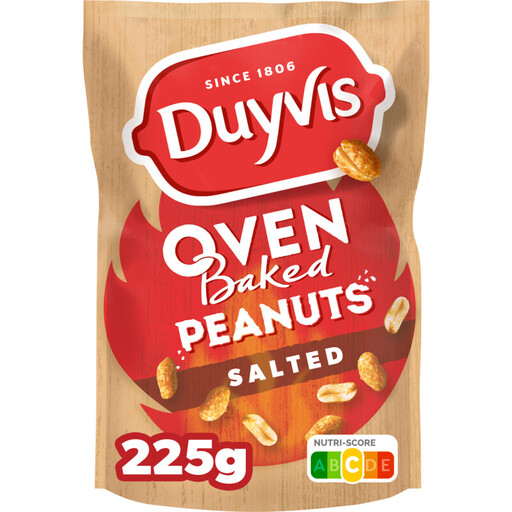 Image unavailable
Duyvis roasted peanuts 225 g
An option if you’re looking for roasted peanuts with no added salt.
The product description lists 100% peanuts and 626 kcal per 100 g. Use this value alongside the weight of your portion.
View on Joybuy
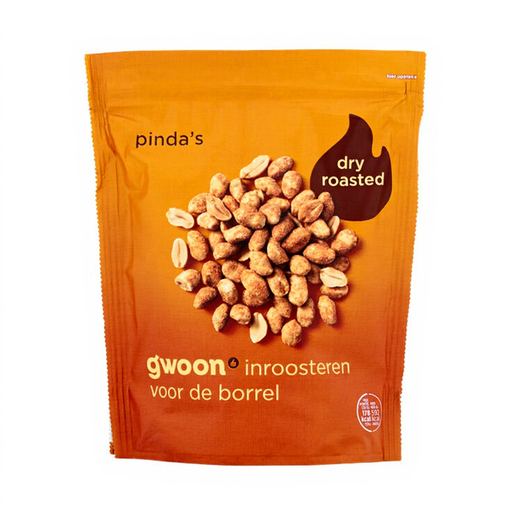 Image unavailable
g'woon dry roasted peanuts 200 g
An option if you’re looking for dry-roasted peanuts with a seasoned flavour.
The product description lists a resealable pack and 590 kcal per 100 g; the ingredients list includes salt.
View on Joybuy
 Image unavailable
g'woon peanuts in shells 500 g
An option if you’re looking for peanuts in their shells.
The product name states that the pack contains 500 g. Check the nutritional information for the exact variety and weigh your portion.
View on Joybuy
 Image unavailable
Verse Extra Large roasted peanuts 210 g
An option if you’re looking for roasted peanuts with salt and flavourings.
The product description lists 606 kcal per 100 g; the ingredients list includes salt and various flavourings.
View on Joybuy
Frequently asked questions about peanuts and calories
Are unsalted peanuts the same as low-calorie peanuts?
No. Unsalted describes the salt level, not the amount of energy. The Netherlands Nutrition Centre gives 157 kcal per 25 g of plain, unsalted peanuts; for a specific variety, calculate the value using the label and your own portion size.
How do I calculate the kcal in my portion?
Weigh the peanuts and multiply the number of grams by the kcal per 100 g shown on the exact pack, then divide the result by 100. Don’t automatically use a general category value as the label value for a specific brand.
Is 157 kcal a fixed value for every portion of peanuts?
No. The Netherlands Nutrition Centre gives 157 kcal for 25 g of plain, unsalted peanuts as a category value. The energy in your portion depends on the amount you eat and the nutritional value of the exact variety.
Are roasted peanuts automatically lower in calories?
No, the term ‘roasted’ alone doesn’t indicate a difference in kcal. Compare the nutritional values per 100 g for the exact varieties and calculate them for the same weighed amount.
Where can I find allergen information for pre-packed peanuts?
According to the Netherlands Food and Consumer Product Safety Authority, allergen information for pre-packed products is shown on the label. For unpackaged products, the seller must provide this information in another way; peanuts are not suitable for anyone with a peanut allergy.


