What should you look for when choosing?
Start with the energy per 100 g and the same weighed portion. Then compare salt, flavour, packaging and allergens as separate selection criteria.
| What to consider |
What should you look for? |
Who is this important for? |
| Energy per portion |
Check the kcal per 100 g, weigh your chosen amount and calculate: kcal per 100 g × portion weight / 100. |
If I want to compare the energy in my own portion, I always use the same weight. Around 36% of consumers rank energy per portion as their top priority when choosing. |
| Added salt |
Check the ingredients and salt value separately from the energy value. |
If avoiding added salt is your main concern, don’t confuse this with having fewer calories. Around 22% of consumers prioritise this when choosing salt levels. |
| Flavour and texture |
Check the exact variety and its ingredients; a coating or added flavour does not automatically determine the energy per portion. |
If I choose a different flavour or crunch, I want to know what that variety contains. Around 14% of consumers give flavour and texture top priority. |
| Packaging and quantity |
Compare the net weight with the number of guests and follow the storage instructions on the pack. |
If you’re buying for several neighbours, you’ll want to know how much is in a bag and how to store any leftovers. Around 14% of consumers prioritise practical group shopping. |
| Allergens and serving |
Keep the packaging so you can check the allergen information, and follow warnings about young children. |
If I’m catering for guests who need to avoid allergens, I want to keep the product information available during the get-together. Around 14% of consumers give allergens and safe serving top priority. |
Peanuts at Joybuy
These Joybuy products include unsalted, salted, flavoured and seasoned peanuts. Compare the nutrition information for the exact variety and portion; the product names alone do not indicate a calorie advantage.
 No image available
g'woon unsalted peanuts 250 g
An unsalted option for anyone who wants to assess salt and energy separately.
The product description lists 99% peanuts and sunflower oil; the pack weighs 250 g.
May contain cashew nuts. Check the nutrition table for the energy per 100 g.
View at Joybuy
 No image available
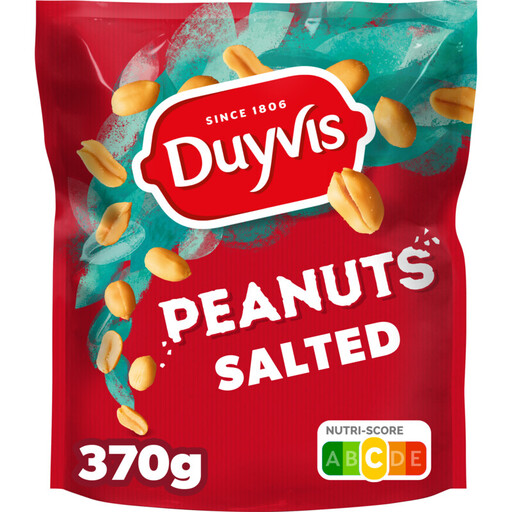
Duyvis salted peanuts 370 g
A salted option for anyone who prefers a salty flavour and wants to assess salt separately from energy.
The product description lists energy per 100 g and ingredients including peanuts, sunflower oil and salt.
May contain other nuts. The product description warns of a choking hazard for children under 5.
View at Joybuy
 No image available
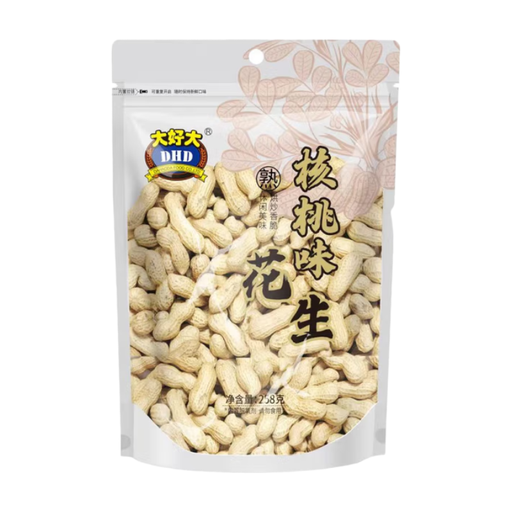
Dahaoda walnut-flavoured peanuts 258 g
A flavoured option for anyone looking for something different from regular peanuts.
The product description mentions individual packs and energy per 100 g.
The ingredients list includes sugar, salt and soya; the allergen information names peanuts and soya beans.
View at Joybuy
 No image available
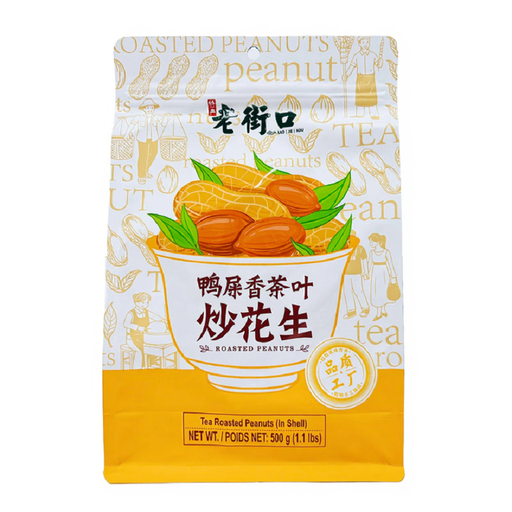
Lao Jie Kou Yashi Xiang roasted tea-flavoured peanuts 500 g
A flavoured option for sharing at a get-together if you’re looking for a larger pack.
The product name lists a 500 g pack; the description mentions roasted peanuts with oolong tea flavour.
The ingredients list includes salt, tea, flavouring, sweetener and flavour enhancers.
View at Joybuy
 No image available
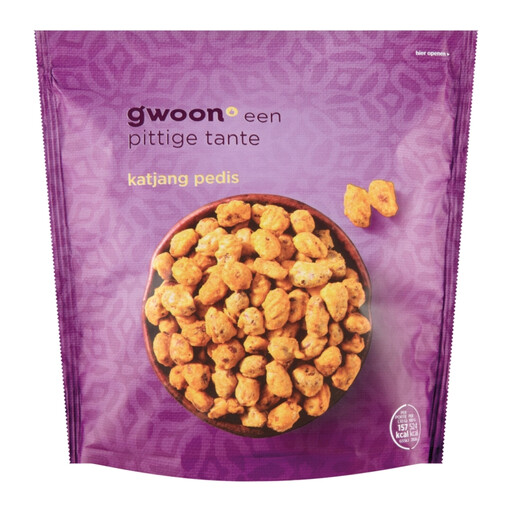
g'woon Katjang Pedis 250 g
A seasoned peanut snack for anyone who likes a spicy flavour.
The product description lists 62% peanuts, energy per 100 g and spices including cayenne pepper, ginger and garlic.
The ingredients list includes wheat, egg, soya and salt. Check the pack for the full allergen information.
View at Joybuy
Frequently asked questions
Are unsalted peanuts automatically low in calories?
No. Assess salt and energy separately. The unsalted varieties from Jumbo, Duyvis, Albert Heijn and PLUS that we reviewed list 602 to 625 kcal per 100 g; these values apply to the packs and varieties mentioned.
How do I calculate the energy in a portion of peanuts?
Multiply the kcal per 100 g by the portion weight in grams, then divide the result by 100. This lets you compare varieties in the same quantity, rather than comparing different portion sizes shown on labels.
How many peanuts should I buy for a neighbourhood get-together?
Choose an amount per person and multiply it by the number of guests. For example, allowing 25 g per person for ten guests comes to 250 g; that’s a shopping calculation, not a prediction of how much your guests will eat.
What allergen information should I check for peanuts?
Check the allergen information on the pack, and also look for product-specific warnings about the possible presence of other nuts. The Netherlands Food and Consumer Product Safety Authority says that allergen information for prepacked products must appear on the label.
What should I do with the recalled tub of AH salted peanuts?
Do not eat AH Extra Large Salted Peanuts in a tub if the best-before date is 04-11-2026. Albert Heijn asks customers to return this specific product and says they will be refunded the purchase price; according to the product notice, the warning does not apply to other best-before dates.
How should I store any peanuts left after the get-together?
The Netherlands Nutrition Centre recommends storing nuts in a tightly sealed container, somewhere dry and preferably cool. Also follow the best-before date and storage instructions on the exact pack.


