What should you look for when choosing?
Start with the amount you want to eat. Then compare the energy, salt and ingredients on the pack of the variety you’re actually buying.
| What to consider |
What to look for |
Who is this most relevant to? |
| How much you eat |
Weigh your bowl and calculate kcal per 100 g × grams eaten ÷ 100. Use 25 g only as a comparison amount, not as personal dietary advice. |
If I want to decide for myself how much to eat while watching, I weigh out my portion. Around 33% of consumers put portion control first. |
| Energy for the same amount |
Compare the energy per 100 g for exactly the same product variety and pack. The checked unsalted packs range from 602 to 625 kcal per 100 g. |
If I want to eat the same amount, I compare the declared energy on a per-gram basis. Around 27% of consumers put energy for equal quantities first. |
| Salt and dietary choices |
Check the salt content and ingredients on the pack. If you have an allergy, check the allergen information and any warnings, too. |
If I’m keeping an eye on salt as well as portion size, I check the ingredients and nutrition information. Around 20% of consumers put salt and dietary choices first. |
| Flavour and preparation |
Compare the energy, salt and ingredients of roasted or coated varieties; don’t rely on words such as ‘oven-baked’ or ‘crunchy’ alone. |
If I’m after a particular roasted flavour or coating, I check what that variety contains. Around 13% of consumers put preserving flavour first. |
| Packaging and convenience |
Check the net weight and storage instructions. A larger bag calls for a suitable way to seal and store the rest properly. |
If I want packaging that’s practical to store and take home with my shopping, I check the pack size and seal. Around 7% of consumers put packaging and convenience first. |
Peanuts at Joybuy
This selection includes unsalted peanuts and several other varieties, including peanuts in their shells and roasted or flavoured peanuts. Check the ingredients and nutrition information on each pack before comparing them.
 No image available
g’woon unsalted peanuts, 250 g
This unsalted variety could suit you if you’re looking for a peanut snack without a salty taste.
The description lists 99% peanuts and sunflower oil.
Joybuy
 No image available
g’woon peanuts in their shells, 500 g
The product description suggests these peanuts as a snack; check the pack for the nutrition information you need to compare them.
The product name specifies peanuts in their shells and a pack size of 500 g.
Joybuy
 No image available
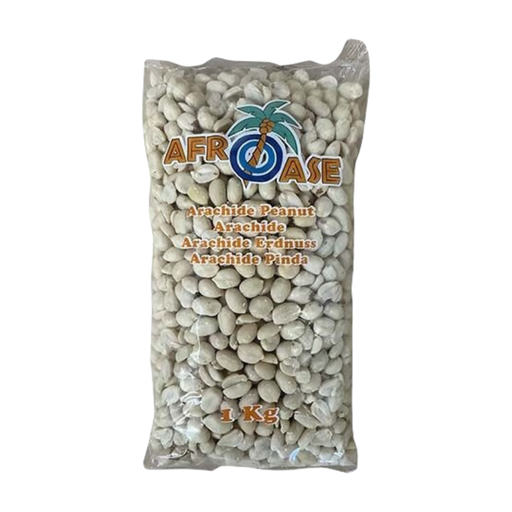
White Peanuts, 1 kg
The product name identifies peanuts and a 1 kg pack. Check the pack for ingredients, salt and energy per 100 g.
Joybuy
 No image available
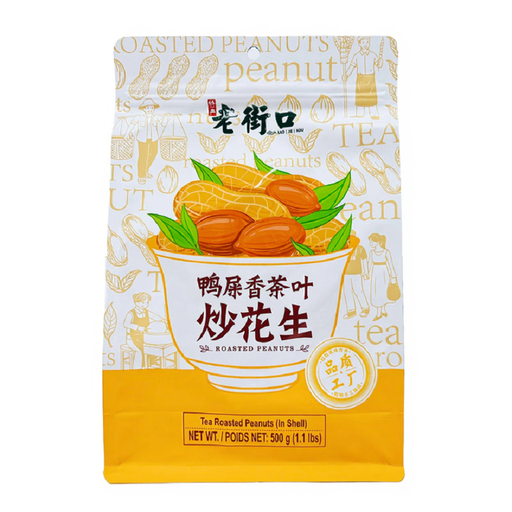
Lao Jie Kou Yashi Xiang Tea-Infused Roasted Peanuts, 500 g
This roasted, flavoured variety could suit you if you’re looking for something different from plain peanuts; compare the nutrition information on the exact pack.
The ingredients description lists salt, tea, flavouring and sweetener. This is not an unsalted variety.
Joybuy
 No image available
Verse Extra Large roasted peanuts, 210 g
The title describes unsalted roasted peanuts; the description lists 100% peanuts as the ingredient.
The product description lists 626 kcal per 100 g. This is above the European limit for the ‘low energy’ claim on solid foods.
Joybuy
Frequently asked questions
Can these peanuts be described as low in calories?
Not on the basis of the checked unsalted packs, which list 602 to 625 kcal per 100 g. According to the European Commission, solid foods can only carry the claim ‘low energy’ if they contain no more than 40 kcal per 100 g. A smaller portion may contain fewer calories than a larger one, but that doesn’t make the product itself low in calories.
When can a product be described as reduced in energy?
According to the European Commission, the claim requires a reduction of at least 30%, and the feature responsible for lowering the total energy value must be stated. A smaller bowl or a slight difference between plain peanuts doesn’t in itself show that a product meets these conditions.
Is 25 g the recommended daily amount for everyone?
No. In this comparison, 25 g is a standard portion for calculations; the Netherlands Nutrition Centre also uses this amount as a handful in its calorie checker. The previous Wheel of Five guidelines were replaced on 9 April 2026. A comparison portion isn’t personal dietary advice.
How should I store an opened bag for another night in?
Seal the pack securely and follow the storage instructions on the label. For the checked AH pack, the advice is to store it somewhere cool, dark and dry, and to close the bag securely after use. For an opened bag of Duyvis unsalted peanuts, Flink recommends an airtight, light-proof container.
What should I check if I have a peanut allergy or another food allergy?
If you have a peanut allergy, peanut snacks aren’t a suitable choice; peanut proteins can cause severe reactions. If you have other allergies, read the ingredients and warnings on the exact pack. Peanuts must be declared as an allergen, so an unsalted or oven-baked variety isn’t allergen-free.
Are whole peanuts suitable for young children?
Not necessarily. The checked product pages from Albert Heijn, Jumbo and PLUS warn that young children can choke on peanuts. A calorie comparison says nothing about whether whole peanuts are suitable for a child.


