
Mindful snackers
You’re looking for a familiar peanut snack for the buffet and want to know what a difference in fat or calories is based on. Compare labels on the same basis and choose your portion separately.


An explicit reduced-fat claim only helps when comparing a product with the products named as the reference: Albert Heijn states that Duyvis Oven baked sundried tomato and herbs has 30% less fat than certain Duyvis borrelnootjes. This does not automatically tell you anything about calories per portion or other peanuts. Compare labels per 100 g and decide on your portion separately; choosing unsalted is a different consideration from choosing less fat.
You’re looking for a familiar peanut snack for the buffet and want to know what a difference in fat or calories is based on. Compare labels on the same basis and choose your portion separately.
You’re choosing mainly by salt content and don’t want to confuse that with a reduced-fat claim. The Netherlands Nutrition Centre includes unsalted nuts in its Wheel of Five healthy eating guidelines.
You want to take allergens into account, as well as how guests will eat the peanuts. Amsterdam UMC recommends nut butter rather than whole nuts for children under 4 because of the risk of choking.
A good choice if: you want to compare fat content with the specific reference products on the label.
Bear in mind: Albert Heijn states that Duyvis Oven baked sundried tomato and herbs has 30% less fat than certain Duyvis borrelnootjes; this is not a comparison with all peanuts or every portion size.
A good choice if: choosing unsalted matters more to you than a fat-reduction claim.
Bear in mind: unsalted does not automatically mean less fat or fewer calories.
A good choice if: you’re looking for a roasted variety and will take the specific product information into account.
Bear in mind: terms such as ‘oven baked’ and ‘dry roasted’ do not, by themselves, prove that a product has less fat.
First decide whether you’re mainly weighing up fat, calories and portion sizes, salt or suitability for your guests. Then check the relevant product information.
| What to consider | What should you check? | Who is this most relevant to? |
|---|---|---|
| Reference for fat comparison | Check what the claim relates to and compare fat per 100 g. | If you’re looking for a substantiated reduction in fat, you’ll want to identify the reference products; around 31% of consumers prioritise fat reduction. |
| Calories and portion size | Compare kcal per 100 g, then use the same portion size for each product. | At a buffet, you’ll want to decide for yourself how much to serve; around 31% of consumers prioritise calories and portion sizes. |
| Choosing unsalted | Check the salt content; don’t treat ‘unsalted’ as another word for less fat. | If you’re mainly looking for an unsalted snack, that’s a different choice from focusing on fat; around 15% of consumers prioritise unsalted products. |
| Suitability for guests | Read the ingredients and allergen information, and bear in mind the advice about whole nuts for young children. | If you’re hosting guests with different needs, you’ll want to consider allergens and how the peanuts are served; around 23% of consumers prioritise suitability for guests. |
The Netherlands Nutrition Centre gives an average of 157 kcal per 25 g portion of unsalted peanuts; this is not a product-specific figure. Check the label of the product you choose. The Netherlands Food and Consumer Product Safety Authority (NVWA) points out that allergen information for prepacked products is shown on the label.
The claim compares fat content with specific reference products. Energy per 100 g and the amount you serve are separate figures.
Compare labels per 100 g, then choose the same portion size for each product.
Duyvis Oven baked sundried tomato and herbs and Duyvis Oven Baked Pinda’s Original are different varieties. A claim for one variety does not automatically apply to the other.
Check the full variety name, ingredients and nutrition table.
Unsalted is a choice about salt, not proof of a lower fat or calorie content.
Check salt, fat and energy as separate figures on the label.
A fat claim does not change the fact that peanuts are an allergen or that whole nuts pose a choking risk to young children.
Read the allergen information and, for young children, follow Amsterdam UMC’s advice to serve nut butter rather than whole nuts.
The product range includes different types of peanuts and savoury snacks. Albert Heijn states that Duyvis Oven baked sundried tomato and herbs has a relative fat reduction compared with the named Duyvis borrelnootjes.
The product listings include an unsalted AH peanut variety as well as the Duyvis variety mentioned above.
The range includes Jumbo Pinda’s Dry Roasted and Duyvis Oven Baked Pinda’s Original.
Lidl Netherlands lists unsalted peanuts in a 285 g pack.
A product listing from ALDI Netherlands names Trader Joe’s roasted and unsalted peanuts, 250 g.
PLUS lists its own-brand peanuts as an unsalted variety in a 250 g bag.
These Joybuy products are roasted, unsalted or in-shell peanuts. The product information provided does not, by itself, substantiate a reduced-fat claim.
 No image available
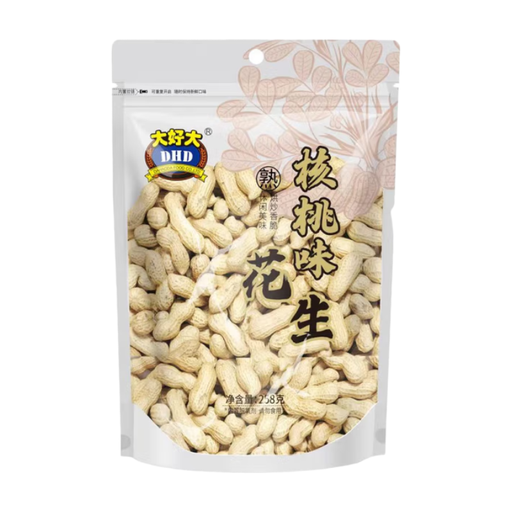
For anyone looking for a peanut snack with a walnut flavour to share.
The product description lists roasted peanuts, individually wrapped portions and 46.2 g of fat per 100 g.
The ingredients include peanuts, sugar and salt; the listing also mentions soya.
 No image available
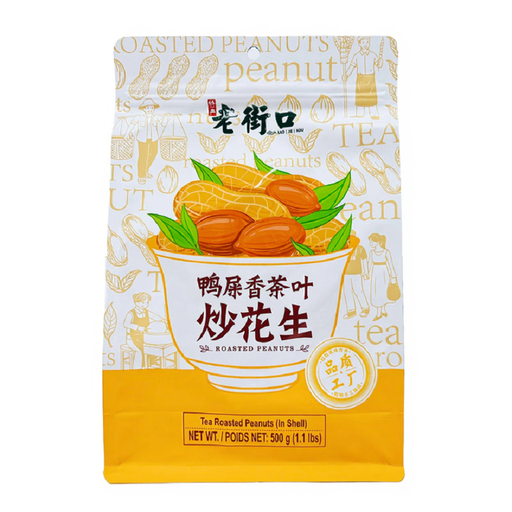
For anyone looking to serve roasted peanuts with tea as a flavour note at a get-together.
The pack is 500 g; the product description lists 35.6 g of fat and 544 kcal per 100 g.
The ingredients list mentions tea, salt and flavourings; the product contains peanuts.
 No image available
For anyone who wants to serve peanuts in their shells, ready to eat straight from the shell.
The pack is 500 g; the product description lists 49 g of fat per 100 g.
The product information lists peanuts and mentions nuts in the allergen information.
 No image available
For anyone looking for an unsalted peanut snack.
The pack is 250 g; the product description lists 50 g of fat and 0.02 g of salt per 100 g.
The ingredients include peanuts and sunflower oil. The allergen information states that the product may contain cashew nuts.
 No image available
For anyone looking to serve roasted peanuts or use them in cooking and baking.
The product description lists 50 g of fat and 0.02 g of salt per 100 g, and describes the peanuts as unsalted.
The product contains peanuts.
Albert Heijn links this statement for Duyvis Oven baked sundried tomato and herbs to regular Duyvis Borrelnootjes, Crac a Nut, Tijgernootjes and Tigernuts. It is a product-specific comparison, not a statement about all peanuts.
First compare per 100 g, then choose the same portion size for each product. You can multiply the label value per 100 g by the number of grams in your portion and divide by 100.
No, not if the product contains peanuts. A fat-reduction claim does not change the fact that peanuts are an allergen; check the ingredients and allergen information.
Amsterdam UMC recommends nut butter rather than whole nuts for children under 4 because of the risk of choking. Bear this age-specific advice in mind when putting together your buffet.
Follow the storage instructions on the packaging. The Netherlands Nutrition Centre lists rancidity, a tough texture and mould as signs that salted peanuts have spoiled; this product-specific information does not automatically apply to every coated variety.