If you avoid gluten or lactose and can eat peanuts, AH Unsalted Peanuts 300 g is one option to consider: Albert Heijn states that this variety is both gluten-free and lactose-free. If you have a peanut allergy, don’t choose peanuts; if you have a relevant tree nut allergy, also take warnings about possible traces into account. For a regular afternoon snack, you could look at unsalted varieties, but treat every flavour and coating as a separate product with its own ingredients.
Who might these options be relevant to?
People who avoid gluten or lactose
You’re looking for an afternoon snack with a specific claim that suits your diet, and you can eat peanuts. Check the exact variety. Lactose intolerance and cow’s milk protein allergy are different conditions; Stichting Voedselallergie and HagaZiekenhuis explain the distinction.
Snack shoppers with allergen requirements
You’re buying for yourself or someone with a food allergy, and want to check first whether peanuts or a warning about the possible presence of tree nuts rules out a product. A gluten-free or lactose-free claim doesn’t mean a product is free from other allergens. The Netherlands Food and Consumer Product Safety Authority treats peanuts and tree nuts as separate allergens.
People who regularly snack on unsalted foods
You’re looking for a simple afternoon snack and are mainly considering unsalted varieties, portion size and storage. Choosing unsalted peanuts does not, by itself, mean they’re suitable for someone with an allergy.
What should you look for when choosing?
First check which ingredients or allergens you need to avoid. Then choose based on flavour, packaging and portion size.
| What to consider |
What should you look for? |
Who is this important for? |
| Excluding allergens |
Check the ingredients and warnings on the exact pack, and take any warning about possible traces into account when choosing. |
If I can’t have peanuts or another relevant allergen, the product is out, even if its other features suit me. Around 36% of consumers give top priority to excluding allergens. |
| Gluten-free variety |
Look for the claim on the specific variety and check the packaging; don’t assume it applies to other flavours or packs. |
If I avoid gluten, I want a clear claim on the variety I’m buying. Around 29% of consumers put avoiding gluten at the top of their list. |
| Lactose or milk protein |
Work out which milk components you need to avoid, and check the ingredients in coatings and flavoured varieties too. |
If I need to avoid lactose or milk protein, I want to know which of those two requirements applies to me. Around 21% of consumers prioritise a milk-related dietary requirement. |
| Unsalted and storage |
Compare the unsalted varieties and check the portion and storage information on the pack. |
If I’m mainly planning an unsalted snack for everyday occasions, portion size and storage are practical considerations. Around 14% of consumers prioritise this kind of everyday snack choice. |
Common mistakes
-
Assuming ‘free from’ means free from all allergens
A product labelled gluten-free or lactose-free may still contain peanuts and carry a warning about the possible presence of tree nuts. Peanuts are an allergen in their own right.
Check exactly which ingredient the claim relates to, and read the ingredients and allergen warnings on the specific pack too.
-
Assuming plain means the same as a coated variety
Duyvis Unsalted lists peanuts and sunflower oil. Duyvis Cocktail Party Nuts also lists wheat and lactose from milk, so the ingredients in that variety are different.
Treat every flavour and version as a separate product, and check its own ingredients and allergen information.
-
Overlooking a tree nut warning
A product may contain peanuts and also carry a warning about the possible presence of other tree nuts. The product name alone won’t tell you this.
If you have a relevant tree nut allergy, take any warning about possible traces into account. Don’t assume a product is suitable based on its name or another free-from claim.
Brands and varieties to consider
Duyvis
Unsalted peanuts and Cocktail Party Nuts are two different varieties, each with its own ingredients information.
- Duyvis lists peanuts and sunflower oil for its Unsalted variety.
- The manufacturer warns that Unsalted may contain various tree nuts. The Cocktail variety also lists wheat and lactose from milk. This doesn’t apply to every product from the brand.
Albert Heijn
AH Unsalted Peanuts 300 g is a specific variety to consider if you’re looking for an explicit gluten-free or lactose-free claim.
- Albert Heijn states that this variety is gluten-free and lactose-free. It also lists a 25-gram portion and 96% peanuts with sunflower oil.
- The variety contains peanuts and carries a warning about various tree nuts. A lactose-free claim doesn’t mean it’s suitable for someone with a cow’s milk protein allergy.
Jumbo
Jumbo Unsalted Peanuts 250 g is an unsalted own-brand variety with product information about its ingredients and allergens.
- Jumbo lists 99.5% peanuts and sunflower oil.
- The product information lists peanuts and warns that the product may contain tree nuts. The ingredients list is not a general free-from guarantee.
Lidl
The Lidl variety reviewed is a 200 g pack of roasted, unsalted peanuts.
- Lidl describes the peanuts as suitable for snacking or cooking with.
- This product information does not state that the product is suitable for people avoiding gluten, lactose or tree nuts.
ALDI
The Dutch variety reviewed is sold by ALDI under the product name TRADER JOE'S Peanuts 250 g.
- ALDI describes this variety as roasted and unsalted.
- These product features are not a medical free-from guarantee.
PLUS
PLUS Unsalted Peanuts 250 g comes with product information about its ingredients and storage.
- PLUS lists 99% peanuts and sunflower oil, and advises storing the product in a cool, dry place away from light.
- The product information warns that it may contain tree nuts and cashews. PLUS also warns that young children can choke on peanuts.
Peanut and granola options at Joybuy
Here you’ll find peanut snack options, including unsalted peanuts, peanuts in shells, roasted peanuts and granola with peanuts and chocolate. Check the variety and allergen information for each product. A claim about one feature doesn’t automatically mean a product is suitable for other dietary requirements.
 Image unavailable
g’woon unsalted peanuts 250 g
Suitable if you’re looking for unsalted peanuts; the product description lists 99% peanuts and sunflower oil.
The description warns that the product may contain cashews.
View at Joybuy
 Image unavailable
g’woon peanuts in shells 500 g
A peanut snack in its shell if you’re looking for this type; the product description lists peanuts as an ingredient.
The description mentions possible traces of tree nuts.
View at Joybuy
 Image unavailable
Verse Extra Large roasted peanuts 210 g
Suitable if you’re looking for roasted, unsalted peanuts; the product description lists peanuts as an ingredient.
The description states that peanuts are the only ingredient.
View at Joybuy
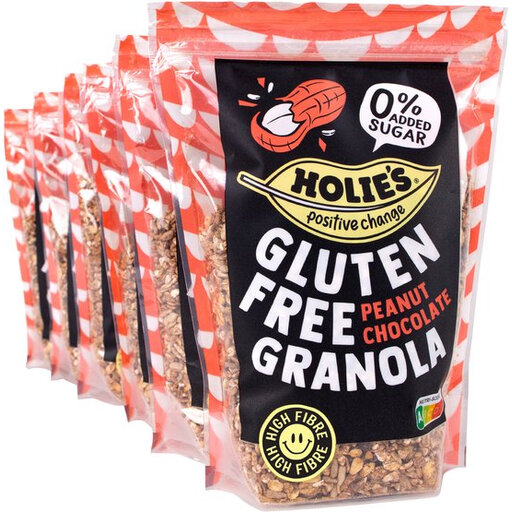 Image unavailable
Holie’s Glutenfree Peanut Chocolate granola, 6 x 330g
A granola option with peanuts if you’re considering something other than loose peanuts; the product name includes the variety ‘Glutenfree’.
The product description lists 9% peanut butter and 4% peanuts. The allergen information lists oats and warns of the possible presence of, among other things, almonds, cashews, hazelnuts, pecans and soya. Check the information against your dietary requirements.
View at Joybuy
Frequently asked questions
Does allergen information have to appear on the label of packaged peanuts?
Yes. The Netherlands Food and Consumer Product Safety Authority states that allergen information for prepacked products must appear on the label. Peanuts and tree nuts are separate allergens, so a tree nut warning does not replace the listing of peanuts as an ingredient.
What do warnings such as ‘may contain peanuts’ mean from 1 January 2026?
Since 1 January 2026, the Dutch PAL rules have applied to warnings about the possible unintentional presence of allergens. The Netherlands Food and Consumer Product Safety Authority explains that manufacturers or sellers carry out a risk assessment for these warnings, which are linked to the possibility of reference values being exceeded. The permitted wording is ‘May contain X’ and ‘Not suitable for people with an X allergy’. This relates to possible unintentional presence, not an ingredient that has been deliberately added.
Is ‘gluten-free’ just a marketing term?
No. According to the European Commission, Regulation (EU) No 828/2014 sets requirements for the claims ‘gluten-free’ and ‘very low gluten’. The regulation has applied since 20 July 2016. A gluten-free claim doesn’t mean that other allergens are absent.
Is a lactose-free claim enough if you have a cow’s milk allergy?
No. HagaZiekenhuis explains that lactose intolerance relates to milk sugar, while cow’s milk allergy relates to milk proteins. A lactose-free claim therefore doesn’t prove that a product is suitable for someone with a cow’s milk allergy; check the product information for that specific requirement.
Are whole peanuts suitable for young children?
The product information reviewed from Albert Heijn and PLUS warns that young children can choke on peanuts. Take this product-specific warning into account; a free-from claim does not remove the choking risk.


