
Parents planning portions
You want to offer a measured snack after school and keep an eye on its energy content, without putting a child on a weight-loss diet on their own.


The unsalted varieties we looked at are not low in calories: the labels for Jumbo, Duyvis, AH and PLUS show 602 to 625 kcal per 100 grams. For solid foods, the European Commission sets a limit of no more than 40 kcal per 100 grams for the ‘low energy’ claim. So compare the energy per 100 grams and weigh out a suitable portion. Also check for allergens, choking risks and the rules at your child’s school or childcare setting.
You want to offer a measured snack after school and keep an eye on its energy content, without putting a child on a weight-loss diet on their own.
You take peanut allergies, choking risks and the rules at school or childcare settings into account before choosing a peanut snack.
You’re looking for an unsalted option that you can portion out and store, and compare ingredients and packaging rather than just brand names.
First, check whether peanuts are suitable for your child and where they’ll be eating. Then compare energy, ingredients and packaging on a like-for-like basis.
| What to consider | What to look for | Who is this important for? |
|---|---|---|
| Energy per portion | Compare kcal per 100 grams and weigh out the portion. | If you want to be able to work out the energy content of the snack, this is your first priority. Around 36% of consumers put energy per portion first. |
| Allergens and safety | Check the ingredients, warnings and rules at the place where your child will eat. | If allergy arrangements, choking risks or school rules determine the choice, suitability matters more than portion size. Around 29% of consumers prioritise safety and suitability for the setting. |
| Unsalted ingredients | Compare salt, ingredients and energy separately. | If you’re mainly looking for an unsalted option for regular use, check the energy information on the label too. Around 21% of consumers make ingredients their main priority. |
| Portioning and storage | Check the net weight and follow the storage instructions after opening. | If a bag is intended for several snack times, portioning it out and sealing it properly are important. Around 14% of consumers prioritise practical shopping and storage. |
Salt and energy are different things on a food label. The unsalted varieties we looked at contain 602 to 625 kcal per 100 grams.
Choose unsalted if that suits your preference for the ingredients, but assess energy separately per 100 grams and per weighed portion.
Children need nutrients to grow. Starting a weight-loss diet without professional advice is therefore not an appropriate response to wanting to snack more mindfully.
Plan a suitable snack and discuss any concerns about weight with a qualified healthcare professional.
A smaller portion or a different preparation method doesn’t remove the peanuts from the product. A school or childcare setting may have its own rules or a ban.
Check the policy at the specific place where your child will eat, and distinguish between eating at home and taking food to school.
The packaging may not be suitable for a planned snack at school or childcare if peanuts aren’t allowed there.
Nutrition information per 25 grams and per 30 grams refers to different quantities. A bag isn’t automatically one snack portion either.
Convert the varieties to the same quantity and reseal the opened packaging in line with the storage instructions.
The unsalted variety we looked at is available in a 235-gram pack.
The 300-gram pack of AH Unsalted Peanuts we looked at lists a portion size of 25 grams.
Jumbo Unsalted Peanuts 250 g is an unsalted variety with nutrition information per 100 and 30 grams.
PLUS Unsalted Peanuts 250 grams is a roasted variety in a 250-gram bag.
Lidl lists an unsalted pack weighing 285 grams.
ALDI lists Trader Joe’s roasted, unsalted peanuts in a 250-gram pack.
These product picks are selected to help you compare peanuts for a measured snack. Check the ingredients and nutrition information on the packaging for each variety.
 No image available
A good fit if you’re looking for an unsalted variety and want to weigh out the snack portion yourself.
The product name states 250 g. Check the kcal per 100 grams on the packaging to work out the energy content of your portion.
 No image available
This in-shell variety suits anyone specifically looking for peanuts in their shells. If serving them to children, consider their shape and the choking risk.
The product name states 500 g. Weigh out a portion and check the nutrition information for this variety.
 No image available
For anyone looking for a roasted, unsalted variety; check your portion size and take the warning about whole peanuts into account.
The product name states 210 g. The energy content listed means this isn’t a low-calorie choice.
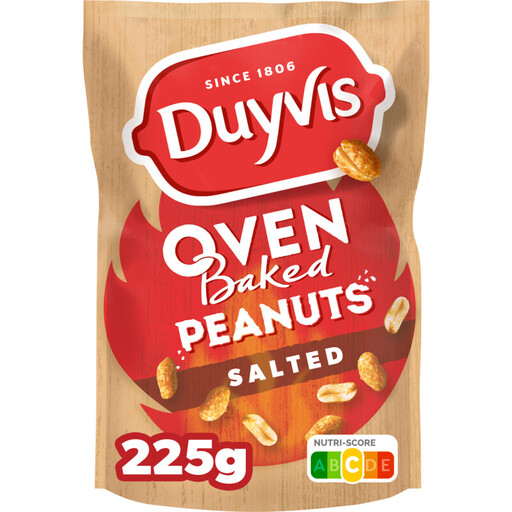 No image available
A good fit if you’re looking for roasted peanuts, but not if you specifically want an unsalted variety.
The product name states 225 g. Check the energy and ingredients on the packaging, and weigh out the portion you want.
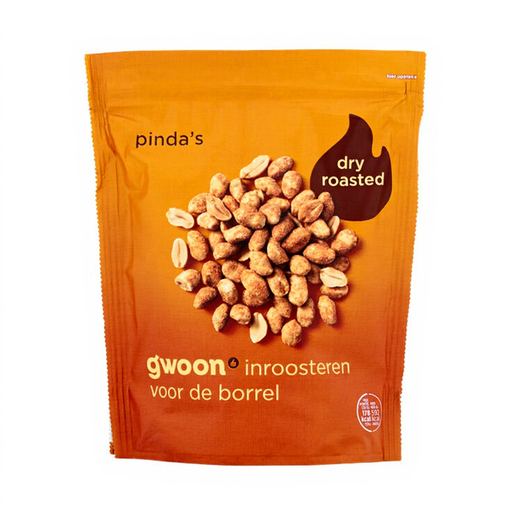 No image available
The resealable pack is handy if you want to divide the peanuts between several snack times; this variety contains salt and herbs, so it isn’t unsalted.
The product name states 200 g. Check the nutrition information and weigh out your portion.
No. The four varieties we looked at with complete nutrition information are not low in calories. For solid foods, the European Commission sets a maximum of 40 kcal per 100 grams for the ‘low energy’ claim; the labels in question show 602 to 625 kcal per 100 grams. A smaller portion doesn’t change the value per 100 grams.
First compare kcal per 100 grams, then calculate the figures for the same amount across all varieties. For example, AH gives a portion size of 25 grams and Jumbo 30 grams; comparing those portions directly means comparing different quantities. Values on food labels are averages.
Not necessarily: children need nutrients to grow. The Netherlands Nutrition Centre advises against putting a child on a diet on your own initiative. Discuss any concerns about weight with a GP, school nurse or school doctor; this guide doesn’t set a general calorie allowance for children.
The Netherlands Nutrition Centre warns that whole peanuts can pose a choking risk. Make sure your child sits still while eating and supervise them. Take product warnings into account when choosing; a general age recommendation on a retailer’s website doesn’t remove the risk.
Follow the rules at the specific place where your child will eat. For example, OBS De Venen states that peanuts and nuts are banned throughout the school; this is that school’s policy, not a nationwide school ban. Eating at home after school and taking a snack to school are therefore different situations.