
Film night after exercise
You want a snack that contributes to your protein intake, but you judge that contribution by the amount you eat and as part of your overall diet. A product name alone doesn’t tell you how much protein you’ll actually get.


Compare plain, unsalted peanuts for both protein and energy per serving, rather than relying on a protein claim alone. A 25 g serving, used here as a calculation example, provides 6.75 g of protein in Duyvis unsalted peanuts or PLUS unsalted peanuts 250 g; the PLUS 300 g version provides 6.25 g. These calculations, based on the nutrition information from Flink and PLUS, do not indicate any specific recovery benefits.
You want a snack that contributes to your protein intake, but you judge that contribution by the amount you eat and as part of your overall diet. A product name alone doesn’t tell you how much protein you’ll actually get.
You want to enjoy peanuts during a film while choosing unsalted varieties and keeping an eye on portion size. You’re looking for a practical balance between enjoyment, protein and energy intake.
You’re choosing based on everyone’s taste preferences, pack size and safe sharing. Allergens and any product recall information may matter more than a protein claim on the front of the pack.
A good choice if: you want a snack that’s easy to portion and don’t want added salt for flavour.
Bear in mind: a larger portion also provides more energy; the amount per 100 g isn’t the same as the amount in a small bowl.
A good choice if: you’d prefer a salty flavour while watching a film.
Bear in mind: salted peanuts don’t contain more protein; check the salt content on the exact pack you’re buying.
A good choice if: you’re after a stronger flavour or a dough coating; Duyvis describes Borrelnootjes and Tijgernootjes as peanuts with a crunchy dough coating.
Bear in mind: these are a different type of product, so check their own nutrition and allergen information.
| What to consider | What to look for | Who might find this especially useful? |
|---|---|---|
| Protein per serving | Compare protein and kcal per 100 g, then calculate the amount for your own serving. | If I want to know what a bowl contributes after exercise, I look at the amount I’ll actually eat. Protein contribution is the top priority for around 40% of consumers. |
| Energy, salt and portion size | Check both values on the label and adjust the amount to suit what you want to eat. | If I want to measure out my portion carefully during a film, I also check the energy and salt content. Around 30% of consumers put portion size and nutrition first. |
| Flavour and texture | Choose between plain unsalted, plain salted or coated peanuts, then check the information for that particular variety. | If I’m mainly after a salty flavour, seasoning or a crunchy coating, I want to be able to choose the product type that suits me. Around 20% of consumers prioritise this taste preference. |
| Packaging and storage | Choose a net weight that matches how much you expect to use, and store any leftovers in a sealed container in a dry place. | If I’m buying peanuts for one or more film nights, I want an amount that suits how I’ll use them. Around 10% of consumers put pack size first. |
Duyvis unsalted peanuts list 27 g of protein and 614 kcal per 100 g. A 25 g serving works out at 6.75 g of protein and 153.5 kcal.
First compare products on the same basis, then calculate the amount for the portion you actually plan to eat.
A larger portion also increases your energy intake.
The 250 g and 300 g PLUS varieties have different declared protein, salt and allergen information. A crunchy coating also makes these a different type of product from plain peanuts.
Check the label on the exact pack. Don’t rely on the brand name or the word ‘unsalted’ instead of checking the product’s own information.
Albert Heijn has issued a warning about AH Pinda’s extra groot gezouten in a tub with a best-before date of 04-11-2026, as the product may contain metal fragments.
Don’t eat the affected batch and check the best-before date. This warning applies to that product type and date, not to all AH peanuts.
Worth considering for plain peanuts and coated snack ranges such as Borrelnootjes and Tijgernootjes.
AH Ongezouten pinda’s is a supermarket own-brand option to look for when doing your usual shop.
The confirmed variety is Jumbo Ongezouten Kingsize Pinda’s 350 g.
Lidl lists a 285 g unsalted variety, marked as available in store only.
At ALDI, Trader Joe’s is the product name for 250 g of roasted, unsalted peanuts.
Two unsalted varieties are listed separately: a 250 g bag and a 300 g stand-up pouch.
This selection includes plain unsalted and salted peanuts, roasted varieties and peanuts in the shell for a film night.
 No image available
An option if you’re looking for unsalted peanuts to enjoy during a film and want to calculate the protein in a serving.
The product information lists 27 g of protein and 0.02 g of salt per 100 g. According to the description, this variety consists of 99% peanuts and sunflower oil; it may contain traces of cashew nuts.
 No image available
A good match if you prefer roasted peanuts with no added salt, with a stated protein value to compare alongside the energy content.
The product information lists 26 g of protein and 626 kcal per 100 g. The description states that the product is made from 100% peanuts.
 No image available
A film-night snack that you shell yourself; bear in mind that it takes a little more effort to eat while watching.
The product information lists 29 g of protein per 100 g. The product contains peanuts and may contain traces of other nuts.
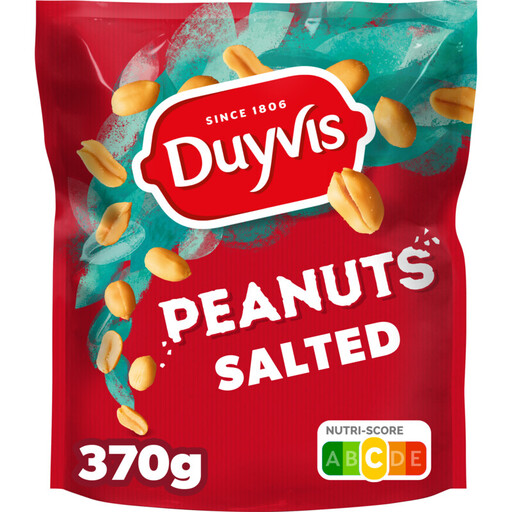 No image available
An option if you prefer salted peanuts during a film; compare the salt and protein content on the same basis.
The product information lists 26 g of protein and 0.73 g of salt per 100 g. The description warns of a choking hazard for children under 5 and states that the product may contain traces of other nuts.
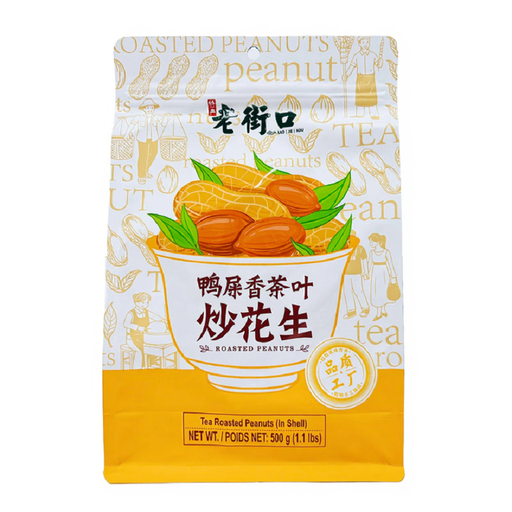 No image available
A flavoured option for anyone looking for a tea aroma alongside the taste of peanuts; the product description mentions oolong tea.
The nutrition table lists 25.2 g of protein and 1.37 g of salt per 100 g. The pack contains a desiccant, which must not be eaten.
Multiply the protein per 100 g by the weight of your serving, then divide by 100. At 27 g of protein per 100 g, a 25 g serving provides 6.75 g of protein. Calculate the energy in the same way; 25 g is an example for calculation, not a personalised sports nutrition recommendation.
Not necessarily. The Voedingscentrum says that most people who do sport don’t need special protein shakes or bars if they eat a healthy, varied diet. Consider peanuts as part of your overall diet; the product values given don’t prove that they help you recover faster.
Read the allergen information on each exact pack and bear in mind the risk of cross-contamination from shared snacks. The Nederlandse Voedsel- en Warenautoriteit explains the rules for allergen labelling on packaging; peanuts aren’t suitable for anyone with a diagnosed peanut allergy.
Bear in mind the risk of choking. The Voedingscentrum advises eating whole nuts calmly at the table and supervising children; this is usage advice, not a legal age limit for all peanuts.
Don’t eat the affected tubs. Albert Heijn has warned that this specific product type with that best-before date may contain metal fragments. The warning doesn’t automatically apply to other AH peanuts.