
Vandaag of morgen in huis

Kwaliteit gegarandeerd

Welkomstaanbiedingen ontgrendelen: GRATIS bezorging | Tot 80% korting | Gratis 30 dagen JoyPlus-proefperiode
Download de app
Peanut snacks come in many varieties: from simple salted peanuts and roasted peanuts to spicy party nuts with a crunchy coating. With such a wide selection, it’s not always easy to choose. A flashy packet doesn’t tell you much about the flavour, the amount of peanuts, or whether it’s right for your get-together.
So, keep an eye out for these common pitfalls:
For uncoated products, the peanut content is often clearly stated. According to the product information, G’woon Salted Peanuts contain 99% peanuts, with sunflower oil and 0.7% salt. With party nuts or Asian snacks, the percentage can be lower because the nut is encased in a crispy dough coating.
A lower peanut percentage isn’t necessarily a problem. It just means you’re buying a different type of snack: more coating, seasoning and texture versus a more direct peanut flavour.
The nutritional table per 100g makes it easier to compare different packs. Salted peanuts usually contain little sugar, but the salt content can vary. G’woon Salted Peanuts list 0.7g of salt per 100g, while Hui Ji Salted Dry Peanuts show 2.06g of salt per 100g.
With sweeter or seasoned varieties, sugar and carbohydrates can also be higher. Garden Wafers with peanut flavour, for example, contain 28.2g of sugar per 100g. That’s a wafer snack with peanut paste, not a standard peanut.
Peanuts are a mandatory allergen to declare. In addition, some varieties contain wheat and soya. WANT WANT Tiaodou, for instance, contains peanuts, wheat and soya. Duyvis Oriental Party Nuts list peanuts, gluten and soya, and may contain milk, nuts and mustard.
Also pay attention to the packaging:
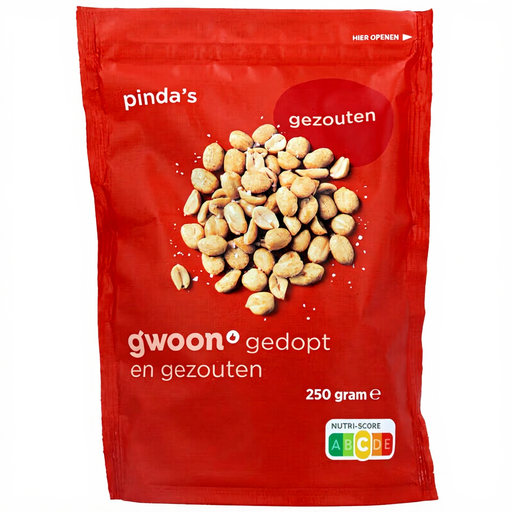
Why this fits the profile: A straightforward 250g bag with a recognisable, simple composition for snacking on the go or with drinks.
The label states 99% peanuts, so you can clearly see this isn’t a heavily coated party nut.
250g, 0.7g salt per 100g, and suitable as a snack for drinks.
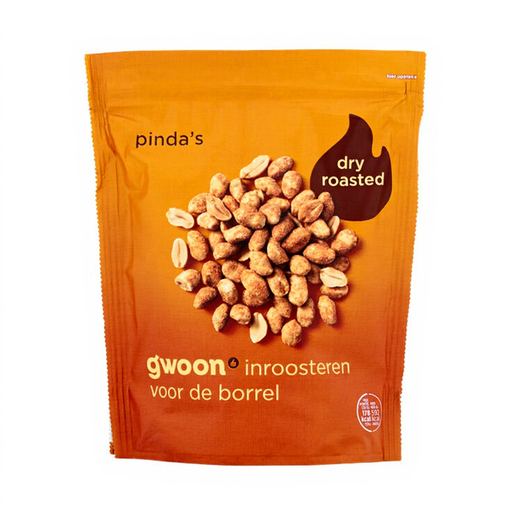
Why this fits the profile: For those who want roasted peanuts with a firm bite and light seasoning, without a thick coating.
The product information mentions 93% peanuts and a light spice mix, so the composition remains verifiable.
200g, resealable stand-up pouch, 26g protein and 1.5g salt per 100g according to the label.

Why this fits the profile: 500g of peanuts in their shells are ideal for a longer drinks session, a party, or use in cooking.
The shell makes it immediately clear you’re not buying a seasoned or coated variety. No extra flavour layers are listed.
500g, one ingredient according to the product information, and 11g of fibre per 100g.
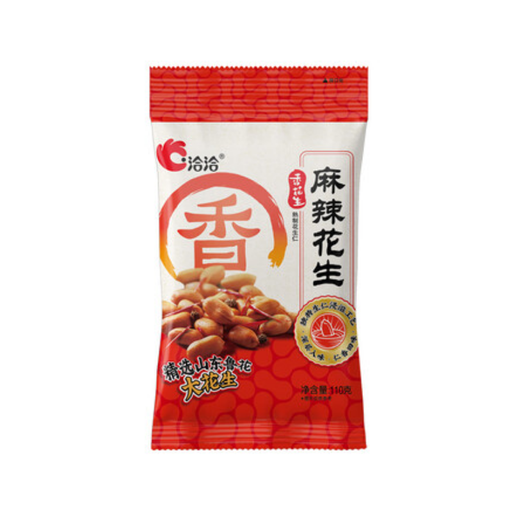
Why this fits the profile: A 110g portion with chilli and Sichuan pepper for anyone after a bold, spicy peanut snack.
The flavour direction is clearly stated: chilli and Sichuan pepper. So you know these aren’t mild salted peanuts.
Roasted peanuts, ready to eat, with 52.8g fat, 24.1g protein and 1.4g salt per 100g.
We’ve put together a full, up-to-date list of products that fully meet these strict selection criteria and comply with current European safety regulations.
That depends on the group. Salted peanuts are familiar and accessible. Party nuts with curry, barbecue or a crunchy coating offer more variety. For a mixed gathering, you could combine a mild variety with a seasoned or spicy peanut snack.
Store peanuts in a cool, dry place away from direct sunlight. Seal the packaging well to limit moisture and loss of crunchiness. Always follow the storage advice on the packaging. Do not use the product if the packaging is damaged.
Not without checking the label. Peanuts themselves are an allergen, and coated varieties can also contain wheat, gluten, soya, milk, nuts or other ingredients. Check the current ingredients and allergen information before purchasing and consuming.
