
Cooking for a crowd
You’re making a larger batch of sauce and want to know whether a jug blender has enough room and will give you the texture you’re after.


For a larger, reasonably runny batch of peanut sauce for several people, a jug blender is a practical choice. For smaller quantities, or blending directly in a suitable saucepan, a hand blender may be more suitable. If you’re using peanut butter as the base and only need to mix and heat the ingredients, a saucepan may be all you need, according to the Voedingscentrum. Jug capacity and wattage don’t guarantee a smooth result with thick sauce, so check the quantity, recipe and instructions for hot ingredients for the exact appliance.
You’re making a larger batch of sauce and want to know whether a jug blender has enough room and will give you the texture you’re after.
You want a smooth sauce and are weighing up whether to mix peanut butter or also blend harder ingredients.
You want to avoid extra pouring and washing up, or you only heat the sauce after mixing. Whether hot ingredients can go into the appliance depends on the instructions for the exact model.
Choose this when: you want to blend a larger, reasonably runny quantity for several people.
The trade-off: the jug takes up space and may mean more washing up; a thick or small batch won’t necessarily blend well.
Choose this when: you’re making a smaller quantity or want to blend in a suitable saucepan.
The trade-off: hard or very thick ingredients can be tricky to blend; check the instructions for hot sauce, too.
Choose this when: you’re using peanut butter as the base and only need to mix and heat the ingredients.
The trade-off: this method won’t grind whole peanuts or create a blended texture.
| What to consider | What to look for | Who should consider this? |
|---|---|---|
| Quantity of sauce | Compare the jug capacity and maximum fill line with your usual batch size; allow for the possibility of making a second batch. | If I want to make enough sauce for a shared meal in one manageable batch, I check the capacity and fill limit first. Around 40% of consumers say portion size is their top priority. |
| Thick ingredients | Decide whether you’ll be mixing peanut butter or grinding whole peanuts. Check the instructions for nuts, pulse use and whether you need to add liquid. | If you want a smooth sauce or are starting with harder ingredients, pay particular attention to the recommended uses and method. Around 30% of consumers prioritise texture and blending thicker ingredients. |
| Heat and serving | Check the manual for your exact model for temperature, lid and fill-level guidance. Consumentenbond recommends allowing boiling liquid to cool first. | If I want to serve the sauce warm, I want to know whether it’s better to mix and heat it separately. Around 20% of consumers prioritise how the appliance handles heating. |
| Cleaning | Check which parts are dishwasher-safe according to the manual and how to clean the jug and blades safely. | After cooking, I want to keep washing up to a minimum, even if that means choosing a simpler method. Around 10% of consumers put ease of cleaning first. |
A jug blender is most practical for larger, reasonably runny quantities. A small or thick batch may not suit this approach as well.
Compare your batch size with the jug capacity and the minimum and maximum operating limits in the manual. For a small quantity, you could also consider a hand blender or saucepan.
A larger jug may take up more space and mean more washing up. You may also need an extra preparation step to get the texture you want.
The stated power rating alone won’t tell you how a thick mixture will circulate in the jug or which ingredients the manufacturer says the appliance can handle.
Check the instructions for nuts, liquid, pulse use and maximum load. A use recommended by the manufacturer isn’t an independent performance test of your recipe.
Instructions for processing hot ingredients vary by appliance. Steam and an overfilled jug also need extra care.
Follow the manual for your exact model for temperature, lid and fill-level guidance. If hot blending isn’t explicitly allowed, blend the ingredients cold or at room temperature, then heat the sauce in a saucepan.
The VitaPower jug blenders mentioned come with a choice of plastic or glass jugs, both with a 1.5-litre capacity.
The Power Core NBF430MB is a jug blender that the manufacturer recommends, among other things, for larger quantities.
The MultiQuick 7 MQ7025X is a hand blender option for blending in a suitable saucepan or smaller beaker.
Philips offers a range of jug blenders. Check the exact model code and version when comparing features.
This selection of Joybuy products includes jug blenders for batches of sauce and a hand blender for blending in a suitable saucepan.
 Image unavailable
This jug blender is an option for mixing sauce for several people.
The product name lists a 1,500 ml jug and a power rating of 800 W. The product description mentions six stainless steel blades, a pulse function and dishwasher-safe parts.
 Image unavailable
This jug blender may suit you if you want to mix sauce in a jug and its stated working capacity matches your batch size.
The product name lists 1200 W and 1.5 litres. The product description mentions a glass jug, a pulse function and an automatic cleaning function. Check the manual before blending hot sauce: a heat-resistant jug doesn’t automatically mean it can hold boiling liquid.
 Image unavailable
A hand blender may suit you if you’re making smaller quantities to blend in a suitable saucepan.
The product description mentions 25 speeds, a turbo function and a chopper with three texture settings. The product information warns against blending boiling liquids.
 Image unavailable
This jug blender is an option if its stated working capacity suits the amount of sauce you want to make.
The product description lists 1000 W, a working capacity of 1.5 litres, three speeds, a pulse function and removable blades. According to the description, ingredients must not be hotter than 80 °C.
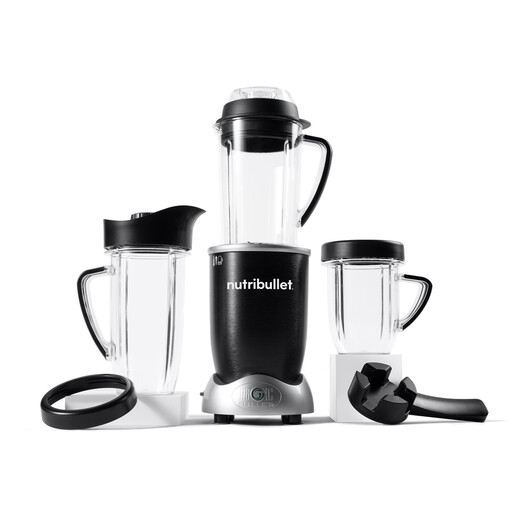 Image unavailable
This jug blender may suit you if you want to blend sauce and nuts and its stated capacity matches your batch size.
The product description lists a 1-litre jug and mentions a soup setting and a vented lid for hot ingredients. Follow the manual for this version for the permitted temperature and method.
No, you don’t. The Voedingscentrum recipe mixes and heats the ingredients in a saucepan until the sauce reaches the desired thickness. A blender or hand blender is most useful if you want to blend the ingredients or achieve a different texture.
No, don’t assume you can. Consumentenbond recommends allowing boiling liquid to cool first and observing the maximum fill level. For the specific models HR3756/00, HR3752/00 and HR3868/00, Philips advises blending cold ingredients or ingredients at room temperature. Always check the manual for your exact appliance.
Check the manual before washing parts by hand or putting them in the dishwasher. Wipe the main unit with a damp cloth and, if necessary, wash the blades by hand. Dry any removable parts thoroughly.
ACM ConsuWijzer generally states that you have 14 days to change your mind after delivery, subject to legal exceptions. Products must also perform as you could reasonably expect with normal use. If a product is faulty, the seller is responsible for providing an appropriate solution. A manufacturer’s warranty does not replace these legal rights.
Ask your guests about allergies and check the labels on the ingredients you use. The NVWA explains that businesses selling food must provide allergen information; that requirement doesn’t make peanut sauce suitable for someone with a peanut allergy.