
Cooking a small portion
You’re making a little sauce and want to know whether a saucepan will do, or whether mixing it in a small beaker would be useful.


You don’t need a blender for the Netherlands Nutrition Centre’s recipe: mix peanut butter and water in a saucepan, then simmer the sauce until it reaches your preferred consistency. If you want to mix or chop ingredients beforehand, choose between a compact blender and a hand blender with a beaker or chopper, depending on the portion size and storage space available. For every model, check the instructions to make sure it can be used with warm ingredients, and see which parts are actually included.
You’re making a little sauce and want to know whether a saucepan will do, or whether mixing it in a small beaker would be useful.
You match the usable mixing capacity to the number of people you’re serving, rather than looking only at a blender jug’s maximum capacity.
You’re taking an appliance with you or storing it temporarily, and weighing up a compact beaker against the separate parts of a hand blender.
The Netherlands Nutrition Centre’s recipe makes peanut sauce in a saucepan using peanut butter and water. So first decide whether you really want to mix or chop the ingredients beforehand; only then do capacity, storage and washing up become deciding factors.
| What to consider | What should you check? | Who is this relevant for? |
|---|---|---|
| Small portions and preferred consistency | Decide whether you’ll simply stir the sauce in a saucepan or mix it beforehand; check the usable capacity and whether a measuring beaker is included. | If I’m only making a small portion, I want to know whether an extra appliance offers anything the saucepan doesn’t. Around 40% of consumers put small portions and their preferred sauce consistency first. |
| Quantity for several people | Compare the recipe quantity with the usable capacity of the exact beaker or jug, not just its maximum capacity. | If I’m cooking for several people, I want to know whether I can mix the sauce in one go. Around 30% of consumers prioritise the quantity needed for a group. |
| Taking it with you and storage | Check which beakers and accessories come with the specific version, and how much space they take up. | If I have limited cupboard or luggage space, I consider both the appliance and its separate parts. Around 20% of consumers prioritise portability and storage. |
| Washing up and leftovers | Check which parts are detachable or dishwasher-safe, and how to store any leftovers. | If I want to keep washing up to a minimum or save some sauce for later, I check the cleaning instructions and storage advice. Around 10% of consumers put washing up and reusing leftovers first. |
The Netherlands Nutrition Centre’s recipe combines peanut butter and water in a saucepan. An extra appliance is only useful if you want to mix or chop the ingredients beforehand.
First decide whether you need a separate mixing step. That way, you won’t have to take an appliance with you, find space to store it and wash it up during a short stay if it doesn’t add anything to the preparation.
Philips lists a maximum capacity of 1,9 l and a usable capacity of 1 l for the Philips HR2041/00. These figures aren’t interchangeable when you’re planning how much sauce to make.
Compare your recipe with the usable capacity of the exact version. For very small portions, also check whether the ingredients will reach the blades; capacity figures alone won’t tell you that.
A Philips warning about hot liquids refers to specific models. It doesn’t automatically apply to other versions or brands.
Check the instructions for the exact model before putting warm sauce into a beaker or jug. Keep mixing and heating separate unless the permitted temperature is clearly stated.
The Blend Up BL19H4 is a compact blender option if you want to mix sauce or dips in a beaker beforehand.
The MultiQuick 5 MQ 5235 BK is a hand blender option with a separate chopper and measuring beaker.
The 3000 Series HR2041/00 is a jug blender; its usable capacity is worth considering when planning portions.
The ErgoMixx MSM66120 is a hand blender option for mixing small quantities separately and chopping ingredients.
This selection includes compact blenders and hand blenders with accessories for anyone who wants to mix sauce in a beaker beforehand or chop ingredients.
 No image available
A hand blender option if you want to mix sauce as well as chop ingredients.
The product information lists 25 speeds, a chopper with three textures and dishwasher-safe accessories. The description warns against processing boiling liquids; check the instructions for the temperature limits for your intended use.
 No image available
A set with a separate measuring beaker and chopper for mixing sauce and chopping ingredients.
The product name lists a 700 ml measuring beaker, a 500 ml chopper, up to 1200 W and 15000 rpm. The instructions limit continuous use to one minute, followed by a one-minute rest.
 No image available
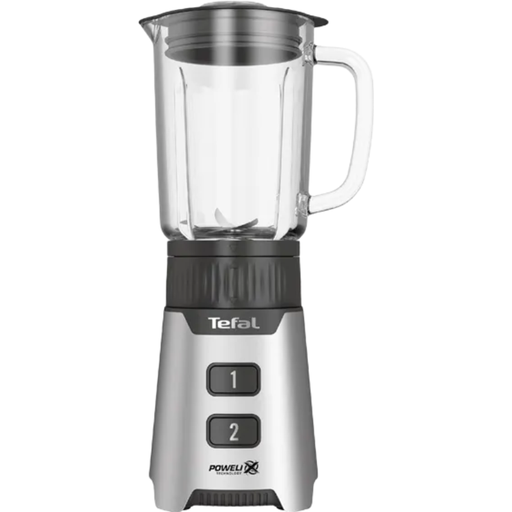
A compact blender option if you want to mix a portion in a blender beaker and put the appliance away afterwards.
The product name lists 400 W and a capacity of 700 ml. The product information lists two speeds, removable blades and dishwasher-safe parts.
 No image available
A set with a separate beaker and chopper if you want to chop or whisk ingredients as well as mix them.
The product name lists an 800 ml beaker, a 500 ml chopper, a whisk and two speeds.
 No image available
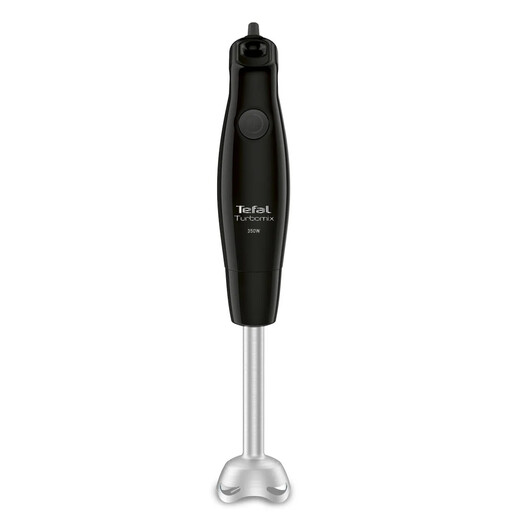
A hand blender option if you want to mix small quantities in a measuring beaker.
The product information lists a measuring beaker and removable, dishwasher-safe parts. The stated weight is 0,76 kg and the dimensions are 41 × 7 × 10 cm.
No, not for the Netherlands Nutrition Centre’s recipe: it combines peanut butter and water in a saucepan, then simmers the sauce until it reaches the desired consistency. An appliance is an optional extra if you want to mix or chop ingredients separately.
Don’t assume you can: permitted temperatures vary by model. Philips gives instructions about cold or room-temperature liquids for some specifically named models; don’t automatically apply these to other versions. Check the instructions for your exact model, and keep mixing and heating separate unless the temperature limit is clear.
Allow any leftover sauce to cool, cover it and put it in the fridge within two hours. Use it within two days, following the Netherlands Nutrition Centre’s general advice on leftovers. Its three-day advice for an opened pack of peanut sauce applies to a different type of product.
According to the Dutch government, you’re entitled to a product that works properly, but the Netherlands has no fixed statutory warranty period. If a product is faulty, the retailer is your point of contact; a manufacturer’s warranty is in addition to your statutory rights.
The Dutch government states that electrical appliances placed on the EU market must meet the applicable product safety requirements, including the required CE marking. A product listing on its own doesn’t prove that a specific item meets these requirements. The NVWA lists peanuts as an allergen and explains that businesses offering food to consumers have a duty to provide information; this duty doesn’t automatically apply to private cooking in a holiday cottage.