
Portion-conscious shoppers
You want to keep eating peanuts, but you pay attention to the fat in the amount you weigh out. Unsalted does not mean low in fat; the label lists total fat and saturated fat per 100 g.


For households that use the contents, an unsalted 500 g bag may be a suitable pack size; if you only use peanuts occasionally, a smaller bag is more practical. A smaller portion does not make peanuts low in fat: labels from Jumbo, PLUS, Albert Heijn and Duyvis list 48–52 g of fat per 100 g for the varieties reviewed, while the European Commission allows a maximum of 3 g per 100 g for an EU ‘low fat’ claim on solid foods.
You want to keep eating peanuts, but you pay attention to the fat in the amount you weigh out. Unsalted does not mean low in fat; the label lists total fat and saturated fat per 100 g.
You buy for several people or regularly add peanuts to meals. A 500 g bag can work well if you use the contents and store them properly after opening. The Netherlands Nutrition Centre advises storing peanuts in a cool, dark and dry place in a well-sealed container.
You only use peanuts now and then and would rather not open a large pack all at once. A smaller pack may suit you, but it is not automatically a portion pack; choose the amount you weigh out to suit how you use them.
Start by checking the nutritional values per 100 g and the amount you actually weigh out. Then choose a pack size that suits how much you use, and check the exact variety.
| What to consider | What to look for | Who it matters to |
|---|---|---|
| Fat per portion | Use the fat per 100 g and the amount you weigh out to work it out; unsalted is not the same as low in fat. | If I want to limit my fat intake, I look at how much fat is in the amount I weigh out. Around 36% of consumers put this first. |
| Amount for the household | Choose a pack size that suits how much you use; only compare the same product variety. | If several people in my household eat peanuts, I want to choose a bag whose contents will actually get used. Around 29% of consumers focus mainly on household use. |
| How much you use and storage | A smaller bag means opening less at once; store opened peanuts in a well-sealed container in a cool, dark and dry place. | If I only eat peanuts occasionally, I don’t want to open more than I can use. Around 21% of consumers focus mainly on choosing a suitable pack size and storing it properly. |
| Salt and ingredients | Check whether the variety is salted or unsalted, and read the ingredients and allergen information on the pack. | If I want to check the salt and ingredients, I look at the exact variety and its label. Around 14% of consumers put these features first. |
Less salt does not automatically mean less fat. Duyvis lists 52 g of fat per 100 g for both the salted and unsalted varieties reviewed.
Read total fat, saturated fat and salt as separate values on the label, and work out the fat content for the amount you weigh out.
A larger pack does not reduce the fat content of the peanuts. Any unused contents may also stay open for longer.
Choose an amount your household will use, and store opened peanuts in a well-sealed container in a cool, dark and dry place.
The 500 g and 300 g PLUS bags have different declared ingredient percentages and nutritional values.
For each variety, check the net weight, ingredients and nutrition table before comparing it with another pack.
Unsalted peanuts are available in a 235 g pack, among other sizes; the salted variety comes in several pack sizes.
The 500 g unsalted bag is a larger pack option for household use.
The unsalted varieties include a 500 g bag and a smaller 250 g pack.
The unsalted pack described has a net weight of 285 g.
The options described are 250 g of roasted unsalted peanuts and a 500 g XXL pack of salted peanuts.
The unsalted peanuts are available in a 500 g bag and a 300 g stand-up pouch.
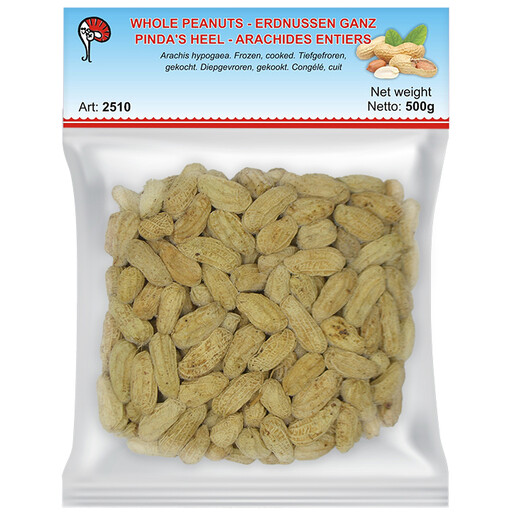
This Joybuy selection includes boiled peanuts, peanuts in the shell and raw peanuts, all in 500 g packs. When choosing, consider the preparation method and storage instructions; these three types are not directly interchangeable.
 No image available
These whole boiled peanuts are an option if you’re specifically looking for this preparation method in a 500 g pack.
Store frozen; once thawed, keep refrigerated and do not refreeze.
 No image available
This 500 g pack is for anyone looking for peanuts in their shells rather than shelled peanuts.
Seal the pack well after opening and store the peanuts in a cool, dry place.
 No image available
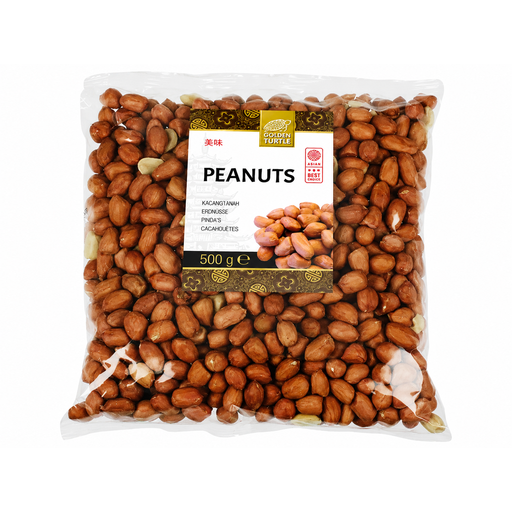
These raw, unroasted peanuts with skins are a good fit if you’re looking for peanuts to prepare yourself, for example as part of a meal.
The product information lists 49 g of fat per 100 g. This is above the EU threshold for a ‘low fat’ claim on solid foods, which is a maximum of 3 g per 100 g; this threshold is set by the European Commission.
No, not as a product claim. According to the European Commission, the EU ‘low fat’ claim for solid foods requires a maximum of 3 g of fat per 100 g. A smaller portion does not change the fat content per 100 g.
Multiply the fat per 100 g by the amount you weigh out, then divide by 100. For example, 25 g of Jumbo unsalted peanuts from the 500 g bag contains 12 g of fat, based on the declared 48 g per 100 g. This is a calculation example, not personal dietary advice.
Store the peanuts in a well-sealed container in a cool, dark and dry place, as advised by the Netherlands Nutrition Centre. Also follow the instructions on the pack and look out for changes such as a rancid smell or taste, a chewy texture or mould.
Check the allergen information on the exact pack if anyone has a relevant allergy; peanuts are an allergen, and statements about the possible presence of other nuts can vary by product. The labels on the AH, Jumbo and PLUS 500 g bags reviewed also warn that young children can choke on peanuts.
No. Albert Heijn’s warning concerns AH Extra Large Salted Peanuts in a tub with a use-by date of 04-11-2026, due to possible metal fragments. Do not consume the affected product and follow Albert Heijn’s instructions; do not confuse this variety with the 500 g unsalted bag reviewed here.