
Parents who want to serve peanuts safely
For children under 4, the form of the product is crucial: don’t give them whole peanuts. If peanuts are suitable, choose a smooth spread with no pieces.


Don’t give whole peanuts to children under 4. If peanuts are suitable for your child and the setting, choose smooth peanut butter with no pieces and no added salt or sugar. The AH, Jumbo and PLUS peanut butters checked contain 597 to 639 kcal per 100 grams, according to their product information, so they don’t meet the EU ‘low-calorie’ claim for solid foods, which requires no more than 40 kcal per 100 grams. Serving a smaller portion doesn’t make the product itself low in calories.
For children under 4, the form of the product is crucial: don’t give them whole peanuts. If peanuts are suitable, choose a smooth spread with no pieces.
Compare the ingredients and energy per 100 grams. ‘100%’ or ‘unsalted’ doesn’t automatically mean low in calories; the amount you serve matters too.
Check whether peanuts are suitable in light of any diagnosed allergy and the rules at the school or childcare setting where the food will be eaten.
First consider the form of the product and any allergy or setting-related restrictions. Then compare the ingredients and nutritional information on the exact pack; a calorie claim means something different from the salt or sugar content.
| What to consider | What to look for | Who it matters most to |
|---|---|---|
| Safe product form | Check that the peanut butter is smooth and contains no pieces; don’t give whole peanuts to children under 4. | If I want to give peanuts to my toddler, I first want to know whether the form is suitable. Around 36% of consumers put the product form first. |
| Ingredients and portion size | Compare the ingredients, added salt and sugar, kcal per 100 grams, and the amount you actually serve. | If I want to manage portions carefully, I compare the nutritional information without assuming that ‘100%’ or a small portion means a product is low in calories. Around 29% of consumers give ingredients and portion size top priority. |
| Allergens and setting rules | Read the allergen information on the exact pack and check the school or childcare setting’s rules. | If a peanut allergy or our childcare setting’s policy is a factor, I need to know whether peanuts are allowed there before choosing. Around 21% of consumers put these considerations first. |
| Packaging and use | Compare pack sizes and follow the storage and usage instructions on the packaging. | If the peanut butter is used regularly, I want to choose a pack that suits our needs and make sure I can follow the instructions. Around 14% of consumers focus mainly on practical use and pack size. |
Being unsalted doesn’t change the advice against giving whole peanuts to children under 4. The Netherlands Nutrition Centre recommends smooth peanut butter with no pieces for toddlers.
If peanuts are suitable for your child, choose a smooth variety and don’t give them whole peanuts.
The European Commission sets a limit of no more than 40 kcal per 100 grams for the ‘low-calorie’ claim on solid foods. The product information for the AH, Jumbo and PLUS peanut butters mentioned lists 597, 602 and 639 kcal per 100 grams respectively.
Compare the kcal per 100 grams on the packaging. A smaller portion doesn’t change the energy per 100 grams or make the claim applicable.
A smooth texture doesn’t remove peanuts from the product. For example, Het Avontuur Primary School also asks parents to leave peanut butter at home; that’s the policy at that setting, not a national rule.
Read the allergen information on the exact pack and ask the school or childcare setting what rules apply there.
The Consumentenbond taste tests from 2023 and Foodies test from 2024 assess flavour, not whether a product is low in calories or suitable for toddlers.
First assess the product form and any relevant restrictions. Then consider taste as a preference when choosing.
According to Duyvis, its Pinda’s Ongezouten range is an example of whole peanuts with no added salt.
The AH Terra Plantaardig 100% pindakaas naturel checked is a variety made with peanuts as its ingredient.
The Jumbo 100% Pindakaas Naturel checked is a peanut butter variety with its own nutritional information.
The own-brand range reviewed is Vita D’or 100% pindakaas naturel.
According to the product page, the HELAES 100% pindakaas reviewed is available as a smooth variety and with pieces.
The PLUS 100% pindakaas checked is worth considering when comparing ingredients, nutritional information and usage instructions.
These Joybuy products are peanut butter varieties you can compare. Check the texture and ingredients of each variety before choosing it for a toddler.
 No image available
The product description says it can be used as a spread; for a toddler, check whether this variety is smooth and contains no pieces.
The description states that it contains 100% peanuts and no added salt or sugar.
 No image available
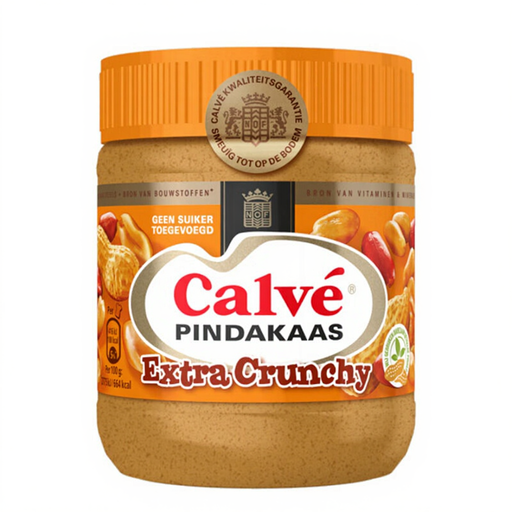
This variety contains coarsely ground peanuts and isn’t the smooth texture recommended for toddlers by the Netherlands Nutrition Centre.
The product description lists peanuts, vegetable oil and salt, with no added sugar. Don’t choose this version as a smooth spread for a toddler.
No. According to the European Commission, a solid food must contain no more than 40 kcal per 100 grams to make the ‘low-calorie’ claim. The product information for the AH, Jumbo and PLUS peanut butters checked lists 597 to 639 kcal per 100 grams. Having no added salt or sugar describes different qualities.
No. The Netherlands Nutrition Centre gives this guideline for a small amount of sweets, biscuits or ice cream. For everyday snacks, it recommends options such as vegetables, fruit or suitable wholegrain products. Don’t treat the guideline for treats as a general maximum for everything your toddler eats.
The Netherlands Nutrition Centre recommends offering extra food or drink no more than twice a day, if possible, so your child is hungry for their main meals. This is nutritional advice, not a legal requirement; water can be offered at any time.
According to the NVWA, allergen information must appear on the label of pre-packed products. Peanuts and tree nuts are separate allergens. Since 1 January 2026, the NVWA has also been checking precautionary cross-contamination warnings; any such warning must be based on a risk assessment.
The PLUS product page notes that a natural layer of oil may form and recommends stirring before use. Follow the storage and usage instructions on the specific pack; the AH product page recommends storing it in a cool, dark and dry place.