
Lunch with allergy requirements
You’re buying for a child with agreed exclusions and want to consider the ingredients, possible presence warnings and the childcare setting’s policy together. A general free-from claim isn’t specific enough for this.


Start with the specific ingredient that needs to be avoided and the childcare setting’s policy: gluten-free or lactose-free does not mean a product is free from peanuts or nuts. If peanuts or nuts are allowed, a spread is a better choice for young children than whole nuts, in line with the safety advice cited here. If an allergen must be avoided, choose an alternative and check its ingredients and warnings too.
You’re buying for a child with agreed exclusions and want to consider the ingredients, possible presence warnings and the childcare setting’s policy together. A general free-from claim isn’t specific enough for this.
You’re looking for a suitable product format for nursery. With peanuts and nuts, the choking risk is separate from allergies, so spreads and whole nuts are not interchangeable choices. The Netherlands Nutrition Centre advises giving children up to and including the age of 4 nut butter or peanut butter rather than whole nuts.
You’re looking for a spread with a simple recipe, provided the ingredients are allowed. Compare the exact ingredients and usage instructions; a claim such as 100% does not make a peanut product peanut-free.
First check the agreed allergens and the childcare setting’s policy. Then consider whether the product format is suitable for the child’s age, and only after that look at the recipe and everyday use.
| What to consider | What should you check? | Who should consider this? |
|---|---|---|
| Allergens | Check the agreed allergen, ingredients and warnings on the current packaging. | When I’m buying for a child with allergy requirements, I want to know whether the specific excluded ingredient could be present. Around 34% of consumers prioritise checking allergens in this way. |
| Product format | Consider the child’s age, the texture, eating skills and supervision separately from the allergen information. | For a young child, I want to choose a product format that follows the advice for nursery; choking is still possible for older children too. Around 33% of consumers prioritise a suitable product format. |
| Recipe | Compare the ingredients of the exact variant and check whether sugar or salt has been added. | If I’m packing a spread for lunch every day, I want a simple recipe, once I’ve established that the ingredients are allowed. Around 20% of consumers prioritise this. |
| Checking with the childcare setting | Read its safety and health policy and discuss the specific lunch arrangements. | I want to know in advance whether the childcare setting can use the product in line with the agreed exclusions. Around 13% of consumers prioritise this practical check. |
The Dutch government states that every childcare organisation has a safety and health policy which parents are entitled to view. This gives you a practical basis for discussing lunch arrangements with the setting.
The AH product reviewed is labelled gluten-free and lactose-free, but contains peanuts and, according to the product information, may contain various types of nuts.
Check the packaging for the specific ingredient that needs to be avoided, and review the full ingredients and allergen information.
Being unsalted doesn’t change the product format or remove the choking risk for young children.
Consider the product format and allergens separately. For young children, a spread is in line with the advice cited here, provided the ingredients are allowed.
A product made with 100% peanuts still contains peanuts. PLUS also states that the peanut butter reviewed may contain cashews.
Check both the ingredients and warnings against the specific arrangements for the child.
In its 2023 test, the Consumers’ Association assessed the taste of peanut butter; this doesn’t tell you whether a product is suitable for a child with allergy requirements.
Use taste comparisons to help with flavour preferences only, and check the current packaging for ingredients and allergen information.
The unsalted peanuts reviewed are whole peanuts, not a nut-free nursery snack.
AH Unsalted Peanuts show that a specific free-from claim is not the same as being peanut-free or nut-free.
Jumbo’s 100% Smooth Peanut Butter is an option if peanuts are allowed.
The natural peanut butter reviewed is described as a product range with no added ingredients.
HELAES 100% peanut butter is a product range reviewed as a sandwich spread.
PLUS 100% peanut butter may suit lunch arrangements that allow a simple peanut recipe.
These products are peanut spreads and are only an option if peanuts are allowed and the childcare setting agrees. They are not suitable as a general allergen-free choice; check the ingredients and warnings for the exact variant.
 No image available
Suitable if peanuts are allowed; do not choose it if peanuts need to be avoided.
The product description states that it is made with 100% peanuts and contains no added sugar or salt.
 No image available
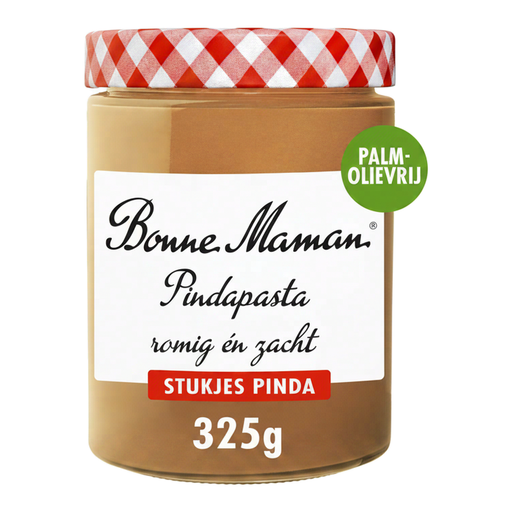
This is a peanut spread with pieces, so it’s only an option if peanuts are allowed.
The product description states that it contains 79% peanuts, as well as sugar, salt and other ingredients. The allergen information lists peanuts; the product information also warns that it may contain nuts.
 No image available
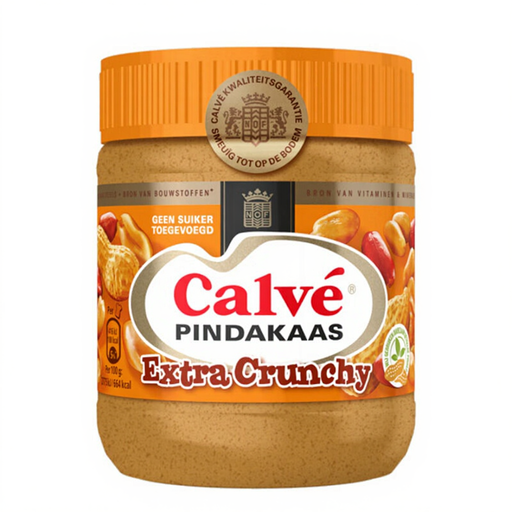
This crunchy peanut spread is only suitable if peanuts and the listed allergens are allowed under the agreed arrangements.
The product description states that it contains no added sugars and lists oil, salt and soya. The allergen information lists peanuts and nuts, with possible traces of milk, cereals containing gluten and soya.
No. Don’t treat lactose-free as a general claim that a product is allergen-free. The NVWA includes milk, including lactose, in allergen information, so check the specific exclusion and all the ingredients. The AH peanut product reviewed is labelled lactose-free, but contains peanuts.
According to the NVWA, ‘May contain X’ and ‘Not suitable for people with an X allergy’ are permitted phrases when the warning is based on a risk assessment. Enforcement of the new rules began on 1 January 2026. A warning, or the absence of one, does not guarantee that a product is suitable for every individual child.
Ask to see the setting’s safety and health policy and discuss the specific allergy and lunch arrangements. According to the Dutch government, parents are entitled to view this policy. The Netherlands Nutrition Centre states that the parent committee has the right to advise on the food policy.
Follow the instructions on the exact jar. PLUS recommends stirring because a natural layer of oil may form, and says to store the jar in a cool, dry place. Jumbo says to store its product in a cool, dry, dark place; these instructions do not specify how long a prepared lunch can be kept.