For introducing peanuts, the Netherlands Nutrition Centre recommends smooth peanut butter with no pieces and no added salt or sugar. You can mix it with mashed fruit or cooked vegetables. Whole peanuts and crunchy peanut butter are not suitable ways to introduce peanuts to your baby. If your baby has severe eczema or a food allergy, speak to their doctor or dietitian first.
Who is this choice relevant to?
Parents looking to introduce peanuts
You’re looking for a suitable first taste of peanut and want to know how to offer it. The Netherlands Nutrition Centre provides advice on introducing peanuts. If your baby has severe eczema or a food allergy, speak to their doctor or dietitian first.
Families introducing solid foods
Your baby is exploring solid foods and you want to include peanut butter without offering whole peanuts as finger food. The Netherlands Nutrition Centre advises against giving whole peanuts or nuts to children under 4.
Parents with questions about allergens
You want to consider allergies and possible traces of other nuts. The NVWA says that allergen information for prepacked products must be shown on the label, so check the packaging of the exact variant.
What should you look for when buying?
| What to consider |
What to look for |
Who is it most relevant to? |
| Texture and how to serve it |
For introducing peanuts, choose peanut butter with no pieces; mix it with mashed fruit or cooked vegetables. |
If you’re mainly looking for a suitable texture and way to serve it, make those your priorities; around 29% of consumers prioritise texture when buying. |
| Introduction and allergens |
Read the ingredients and warnings about other allergens on the exact product packaging. |
If you want to know when to start and what an allergen warning means, these are the key questions; around 23% of consumers give introduction and allergens top priority. |
| Protein content |
Compare nutritional values on the same basis, such as per 100 grams; don’t read an adult reference intake as advice for your baby. |
If you mainly want to understand what the protein value on the label means, check the nutritional information rather than sports or recovery claims; around 18% of consumers prioritise protein information. |
| Ingredients |
Check the ingredients list to see whether salt or sugar has been added; don’t rely on words such as ‘natural’ or ‘100%’ alone. |
If you want a simple ingredient list without added salt or sugar, the ingredients list is what matters; around 18% of consumers make ingredients their main buying consideration. |
| Jar size and storage |
Choose a size that suits how you’ll use it and follow the storage instructions on the exact packaging. |
If you’re looking for a jar that suits repeated use and your family’s needs, size and storage are worth considering; around 12% of consumers prioritise everyday use and jar size. |
Common buying mistakes
-
Assuming unsalted whole peanuts are suitable finger food for babies
Having no added salt doesn’t change the shape. The Netherlands Nutrition Centre advises against giving whole peanuts or nuts to children under 4 because of the risk of choking.
For introducing peanuts, choose peanut butter with no pieces or a suitable ground form; don’t offer whole peanuts directly to your baby.
-
Reading a protein figure or adult reference intake as advice for your baby
Jumbo’s product information says that the reference intake is based on an average adult. This information doesn’t provide serving-size advice for your baby.
Use protein per 100 grams to compare products, and choose a way of serving it that follows guidance for feeding babies.
-
Assuming that 100% peanuts means there are no other allergens
The AH variant reviewed warns that other nuts may be present; PLUS warns that cashew nuts may be present.
Read the allergen information on the exact jar, especially if you need to take a known allergy into account.
-
Using an old taste test as advice on feeding babies
In 2023, the Consumentenbond tested the taste of smooth and crunchy peanut butter. The test did not assess whether the products were suitable for introducing peanuts to babies.
Check the current variant and its texture; don’t let a taste rating replace the requirements for introducing peanuts.
Relevant brands to consider
Duyvis
The unsalted peanuts reviewed come in a 235-gram pack; the manufacturer suggests using them as a snack or cooking ingredient.
- Duyvis lists peanuts and sunflower oil as ingredients.
- The packaging may contain traces of various types of nuts. Whole peanuts are not suitable for serving directly to babies.
Albert Heijn
AH Terra Plantaardig 100% pindakaas naturel is the 350-gram Dutch variant reviewed.
- Albert Heijn lists peanuts as the ingredient, with 27 grams of protein per 100 grams and no added sugar or salt.
- The product information warns that other types of nuts may be present; also check that the exact jar is smooth, with no pieces.
Jumbo
Jumbo’s 100% Pindakaas Naturel is the 350-gram Dutch variant reviewed.
- Jumbo lists peanuts as the only ingredient, with 26.0 grams of protein and 0.00 grams of salt per 100 grams.
- The 15-gram serving listed on the product page is not advice for babies; check the texture on the exact packaging.
Lidl
The smooth variant reviewed comes in a 600-gram jar, which Lidl associates with its Vita D’or range.
- Lidl describes the variant as having no added ingredients and says it contains no added sugars.
- The product page says it is available in store. Before introducing peanuts to your baby, check that the exact variant is smooth and contains no pieces.
Aldi
The 350-gram HELAES listing reviewed covers both a smooth variant and one with pieces.
- ALDI describes the product as containing only peanuts.
- For introducing peanuts to a baby, choose only the smooth variant with no pieces and check which one you’re buying.
Plus
The PLUS 100% pindakaas reviewed is the 350-gram Dutch variant.
- PLUS lists 27 grams of protein and 0 grams of salt per 100 grams, and names 100% peanuts as the ingredient.
- The product information warns that cashew nuts may be present and doesn’t explicitly confirm that this variant contains no pieces.
Peanut butter at Joybuy
These Joybuy products are peanut butters you can compare by product name and ingredients. Before using one for your baby, check the exact packaging: peanut butter for introducing peanuts should be smooth and contain no pieces.
 No image available
PCD Peanut Butter 350 g
For anyone comparing peanut butters; use this variant to introduce peanuts to your baby only if the exact packaging confirms that it is smooth and contains no pieces.
View at Joybuy
 No image available
Calve Peanut Butter 100% – 350 g
The product name says 100% peanut butter. Before using it to introduce peanuts to your baby, also check that the exact packaging confirms it is smooth and contains no pieces.
View at Joybuy
 No image available
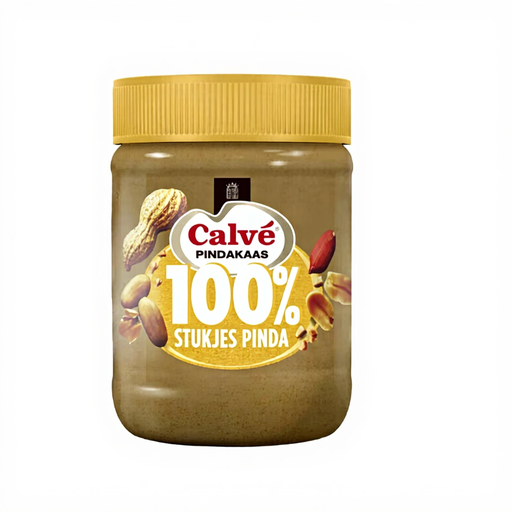
Calve Peanut Butter Nut 100% – 350 g
The product name says 100% peanut butter. Before using it for your baby, check the exact variant and texture; choose peanut butter with no pieces when introducing peanuts.
View at Joybuy
Frequently asked questions
Should you wait until your baby can eat completely independently before introducing peanuts?
No. The Netherlands Nutrition Centre describes introducing peanuts by mixing peanut butter with mashed fruit or cooked vegetables. Eating larger pieces independently is a separate step: your child needs to be able to sit upright and swallow and chew well.
How should you start giving peanut butter, and how often should you offer it afterwards?
The Netherlands Nutrition Centre’s general schedule recommends half a teaspoon of peanut butter with no pieces on day 1, one teaspoon on day 2 and three teaspoons on day 3. If all goes well, the schedule then recommends three teaspoons a week, which can be divided across several days. If you have a personalised medical introduction plan, follow your healthcare professional’s instructions.
What should you do if your baby has severe eczema or a food allergy?
Speak to your baby’s doctor or dietitian before introducing peanuts. General buying advice is not a substitute for individual medical advice.
Does your baby need a sports or recovery product for this?
The protein value on a jar describes its nutritional composition, but it doesn’t mean your baby needs a sports or recovery product. Choose based on suitable texture and ingredients; don’t read an adult reference intake as a nutritional guideline for babies.
What allergen information should you check on peanut butter?
Check the ingredients and warnings about possible traces of other allergens on the exact packaging. According to the NVWA, allergen information for prepacked products must be shown on the label.


