
Student short on kitchen space
Mostly makes a single smoothie with soft peaches and wants a blender that’s easy to store and clean.


For a single smoothie made with soft peaches in a small student kitchen, a compact blender or a model with a travel cup is a more sensible starting point than a large jug blender. If you often make smoothies for housemates, the extra capacity of a larger jug could be useful. For frozen peaches, however, it’s more important to check whether the specific model is suitable than to look at its wattage alone. The Dutch Consumers’ Association points out that wattage by itself says little about blending results.
Mostly makes a single smoothie with soft peaches and wants a blender that’s easy to store and clean.
Wants to make an individual serving in a cup and take it with them. The capacity and included lid determine how practical this is.
Often uses hard, frozen ingredients and checks whether the specific model is suitable for them.
Choose this if: you usually make one serving and want to put the blender away after use.
The trade-off: if you’re making smoothies for several people, you may need to blend them in batches.
Choose this if: you want to make your smoothie in the same cup you’ll take with you.
The trade-off: the cup may have less capacity than a large jug; check whether the version you’re buying comes with a drinking lid.
Choose this if: you regularly make several servings at once and have room for the jug and motor base.
The trade-off: if you’re making one smoothie, the larger jug takes up space you may not need.
The Dutch Consumers’ Association reports that many blenders struggle with frozen fruit. If you plan to use it, check the instructions and any test results for the specific model.
| What to consider | What should you check? | Who should pay particular attention? |
|---|---|---|
| Compact blending | Compare the dimensions, capacity and information about blending soft ingredients. | I mostly make one smoothie with soft peaches and want to use as little cupboard space as possible; around 36% of consumers prioritise compact blending. |
| Cleaning and taking it with you | Check which cup and lid are included, and how the separate parts should be cleaned. | I want to minimise washing up after blending or take my smoothie with me straight away; around 29% of consumers prioritise easy cleaning or portability. |
| Frozen peaches | Check the model’s manual and, if necessary, look for an independent test of that exact model. | If I use frozen peaches, I want to know whether this particular model is suitable; around 21% of consumers prioritise suitability for frozen fruit. |
| Several servings | Compare the usable fill level and the storage dimensions of the jug and motor base. | I make smoothies for my housemates and don’t want to blend a new serving each time; around 14% of consumers give top priority to making several servings at once. |
The stated wattage alone doesn’t tell you how well a blender mixes ingredients. The Dutch Consumers’ Association assesses different blending tasks separately and reports that many blenders struggle with frozen fruit.
Choose a blender based on the ingredients you usually use. If you often blend frozen peaches, check independent results for the specific model.
A product range name doesn’t automatically tell you which cup or lid is included with a particular version.
Before choosing, check the full model name, the included parts and the cleaning instructions.
A larger jug is most useful if you make several smoothies at once. For a single serving, that extra capacity can mean more storage space and cleaning.
First work out how many servings you usually make at once, then compare capacity and dimensions.
The HR2510/90 is a compact model, while the HR2670/00 is sold with a cup. These are features of these specific models, not a general assessment of all Philips blenders.
The VitaPower Serie 2 MMB2111S is a personal blender with a 0.6 l blending cup. Bosch describes it as suitable for a single serving or a drink on the go.
The Original NB603DG is a personal blender with a stated motor base power of 600 W and a 700 ml cup included.
The Dutch range includes compact to-go models and larger jug blenders. Features vary between versions.
This selection includes compact and personal blenders, as well as a larger jug blender. Compare the capacity, intended use and available specifications with the portions you usually make.
 No image available
This compact model is suited to a small kitchen and smoothies made with soft peaches.
The product name lists a capacity of 0.6 l, 350 W and an ice-crushing function.
 No image available
Jug capacity is worth considering if you usually make one smoothie or want to put the blender away after use.
The product name lists 250 W and a 500 ml glass jug.
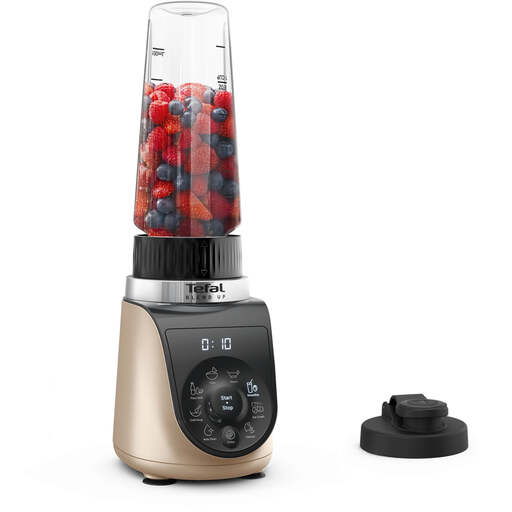 No image available
The product title identifies this as a personal smoothie blender.
Tefal lists frozen fruit as a suitable use. This is a manufacturer’s claim, not an independent test of blending performance. Check the manual to make sure it’s suitable for your needs.
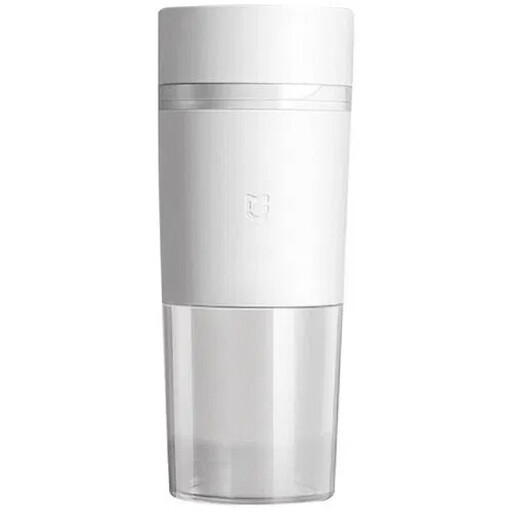 No image available
This portable model is designed for making a personal smoothie.
Don’t use this blender for hot liquids: the product information warns of pressure build-up and a risk of burns.
 No image available
The 1.5 l capacity is better suited to making several servings; for a single smoothie, the larger jug may need more storage space.
The product name lists 600 W, 1.5 l, 3 speeds and an ice-crushing function.
Not necessarily. The Dutch Consumers’ Association reports that most of the blenders it tested in the lower price range can make a smoothie with softer fruit. For frozen peaches, check whether the specific model is suitable and look for test results.
Check the manual to see which removable parts are dishwasher-safe. The Dutch Consumers’ Association says that removable parts are often suitable for the dishwasher, but this varies by model.
No. According to ACM ConsuWijzer, your statutory guarantee lasts for as long as you could reasonably expect the product to work properly; the period isn’t automatically the same for every product. If a fault is covered by this guarantee, the seller is responsible for providing an appropriate solution at no cost.
For a standard online purchase, you’ll generally have a statutory 14-day cooling-off period after delivery. ACM ConsuWijzer lists some exceptions, including certain unsealed hygiene products, so don’t assume that every used appliance can be returned.
The Netherlands Food and Consumer Product Safety Authority classifies kitchen appliances as electrical equipment and says that applicable requirements apply to electrical products, including mandatory CE marking. The CE mark isn’t an independent quality assessment, so check the product information for the appliance you’re considering.