
A blender for a small kitchen
You make peach smoothies at home and mainly want the whole appliance to fit in your cupboard. Philips describes the HR2510/90 as a compact mini blender. Remember to measure the jug and any separate parts too.


For making one smoothie at a time with soft, stoned peaches, a compact blender is a sensible place to start. Be sure to measure the space needed for the whole appliance and all its separate parts. A personal blender with a travel cup is a good option if you want to take your smoothie with you, while a hand blender may suit you if you’d rather not store a full blender base. For frozen peaches or larger portions, always check the instructions and capacity of the specific model.
You make peach smoothies at home and mainly want the whole appliance to fit in your cupboard. Philips describes the HR2510/90 as a compact mini blender. Remember to measure the jug and any separate parts too.
You want to blend a portion and take the cup with you. Check which cups and lids come with the version you choose. For example, nutribullet lists a 700 ml cup for the Original 600 NB603DG.
You sometimes use frozen peaches and want to know whether this is suitable for the specific model. A blender’s general suitability for smoothies doesn’t automatically mean it can handle frozen ingredients.
| What to consider | What to check before buying | Who is this important for? |
|---|---|---|
| Storing it in a small cupboard | Measure the available height and width, then compare them with the appliance, jug and all separate parts. | If my cupboard has limited space, I want to know whether the jug and separate parts will fit too. Around 36% of consumers say storage is their main buying priority. |
| Preparing the peach | Remove the stone. If using frozen pieces, check the manual to see whether this is allowed and how to prepare them. | I want to prepare the peach in the way I usually use it and make sure the blender is suitable. Around 29% of consumers prioritise how ingredients are processed. |
| Cleaning after use | Check the cleaning instructions for each part and whether it is dishwasher-safe. | If I make smoothies often, I want to know in advance how many parts I’ll need to clean and how to clean them. Around 21% of consumers prioritise easy cleaning. |
| Portion size and taking it with you | Compare the cup capacity and included lids with your portion size. Also consider whether you want to make portions for several people. | I want to take my smoothie with me straight away or make a suitable portion without using a large jug. Around 14% of consumers make portion size and portability their top priority. |
A compact base doesn’t mean the whole set takes up little space. You may need to store a jug, cup, lid or blade unit separately.
Measure your cupboard and compare the available space with all the parts included in the exact version you’re considering.
Motor power isn’t an instruction for use or a comparative performance test. On its own, it doesn’t tell you whether a specific blender can process frozen ingredients.
Check the manual for your chosen model to find out which ingredients it can handle and how to prepare them.
An additional warranty and your rights if a product is faulty are not the same thing. According to the Dutch government, there is no fixed statutory warranty period in the Netherlands, and the retailer is your point of contact if a product is faulty.
Check whether any extra warranty on offer adds anything to the rights you already have.
Philips describes the HR2510/90 as a compact mini blender for smoothies and sauces.
The manufacturer describes the Original 600 NB603DG as a personal blender with a 600 W motor base and a 700 ml cup.
Smeg describes the PBF01BLEU personal blender as a compact model supplied with two 600 ml travel bottles.
Braun lists smoothies as a use for its MultiQuick 1 hand blender range, an alternative to storing a separate blender base and jug.
This selection includes portable blenders for individual portions and a hand blender set for anyone who would rather not store a fixed blender base.
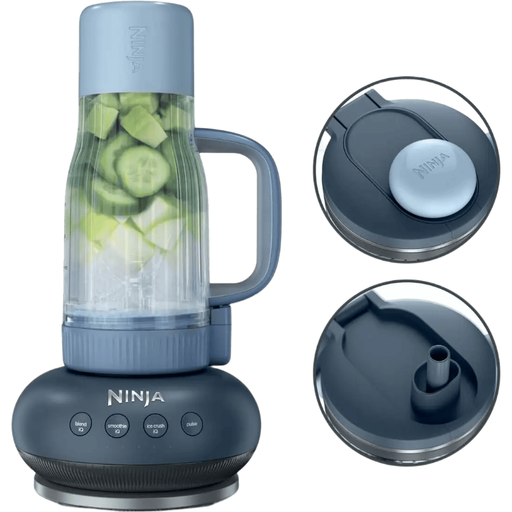 Image unavailable
Ideal if you want to make a smoothie in a separate cup and take it with you.
The product name lists a 710 ml cup and dishwasher-safe parts.
Remove the peach stone before blending.
 Image unavailable
The separate jug may suit you if you want to blend a portion at home and prefer to pour it from a jug.
The product name lists a power rating of 250 W and a 500 ml glass jug.
Remove the peach stone before blending.
 Image unavailable
A portable option if you want to make a smoothie in a separate cup and take it with you.
The product name lists a capacity of 475 ml and USB-C charging.
Remove the peach stone before blending.
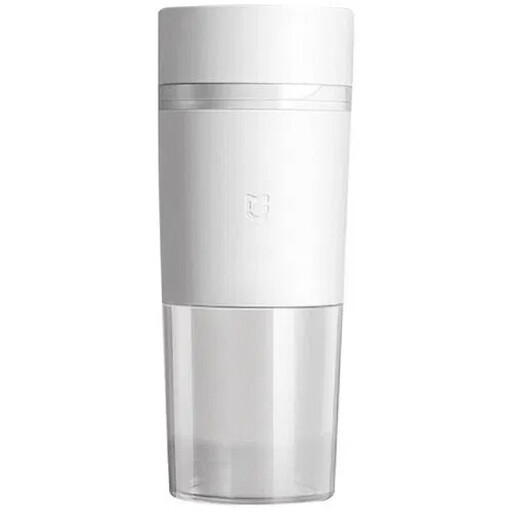 Image unavailable
This portable model may suit you if you’re looking for a blender you can take with you or put away in a cupboard.
Do not blend hot liquids in this appliance. Remove the peach stone before blending.
 Image unavailable
A hand blender set for anyone who would rather not store a fixed blender base and has a suitable mixing jug.
The product name lists a chopper and whisk. The set includes several separate parts to store, including a measuring jug.
Remove the peach stone before blending.
No. Remove the stone before blending the peach. The Netherlands Nutrition Centre advises against grinding the stones of stone fruits, including peaches, in a blender or hand blender.
No. Compare the available cupboard space with the dimensions of the whole appliance, allowing for the cup, lid and blade unit. The manufacturer lists dimensions of 343 × 140 × 140 mm for the nutribullet NB603DG. Measure your own cupboard to check whether the model will fit.
That depends on the instructions for the specific model. The Netherlands Nutrition Centre advises removing the stone and cutting the peach into pieces before freezing it. Then check the blender manual to see whether frozen ingredients are allowed and how to prepare them.
Not necessarily. Check the cleaning instructions for each part and model. Philips lists dishwasher-safe parts for the HR2510/90; this doesn’t automatically apply to the motor base or other blenders.
According to the Dutch government, there is no fixed statutory warranty period in the Netherlands. If a product is faulty, the retailer is your point of contact for a suitable solution. A manufacturer’s warranty is in addition to your statutory rights.