
Making a single smoothie
You usually make one portion and want to take the cup with you or store it away neatly.


If you usually make one peach smoothie and want to take the cup with you or store it away neatly, look for a personal blender with a cup. If you’re making several portions, a jug blender is a better fit. The Consumentenbond assesses blending results and noise separately, so compare these for the exact model and don’t let wattage alone determine your choice.
You usually make one portion and want to take the cup with you or store it away neatly.
You want to be able to clean the blender quickly and thoroughly after use, before someone else uses the worktop.
You make smoothies for more than one person, so a useful jug capacity is more important than a cup you can take with you.
Best for: usually making one smoothie, taking the cup with you and having limited worktop space.
Keep in mind: a small cup is less practical if several people in your household want a portion at the same time.
Best for: dividing smoothies between several glasses or using the blender for a wider range of recipes.
Keep in mind: a larger jug takes up more space and needs cleaning after use.
| What to consider | What to look for | Who should pay particular attention? |
|---|---|---|
| Blending results | Compare reviews of the results for the exact model; the Consumentenbond assesses smoothie results separately from motor power. | I want my peach smoothie to be well blended, so I’d rather look at the results than just the wattage. Around 25% of consumers give blending results the highest priority. |
| Cleaning | Check the cleaning instructions for each part and whether the cup, lid and blade are dishwasher-safe. | In a shared kitchen, I want to be able to clean the parts thoroughly after making my smoothie, ready for the next person. Around 25% of consumers put ease of cleaning first. |
| Noise | Compare noise ratings for the exact models if noise is a deciding factor. | If I want to be considerate of the people I live with, I want to know how the specific model has been rated. Around 20% of consumers consider noise their main concern when choosing. |
| Portions and space | Compare usable capacity and dimensions with the number of portions you need and the space you have available. | I want to know whether I can fill one cup or several glasses at once without taking up unnecessary space. Around 15% of consumers prioritise portion size and available space. |
| Features and lifespan | Compare the features you’ll actually use and check whether suitable replacement parts are available. | I’d rather prioritise features that suit the way I use the blender, along with repair options, than extra power without a clear purpose. Around 15% of consumers focus mainly on features and lifespan. |
The Consumentenbond assesses actual smoothie results separately; the stated power rating alone doesn’t tell you how a recipe will turn out.
Compare the blending results of the exact models and check the instructions if you also want to process hard or frozen ingredients.
For the Tefal PerfectMix+ BL871D31, Tefal lists a total capacity of 2 litres and a usable capacity of 1.5 litres.
Compare the usable filling capacity with the number of portions you want to make at once.
According to nutribullet, the cups for the Original 600 NB603DG can go on the top rack of the dishwasher; clean the blade separately with soap and water.
Check the cleaning instructions for every part and keep the motor base out of water.
A personal blender with a small cup is designed for one portion; a jug is a better choice when you want to make larger quantities.
First decide how many smoothies you usually make at once and how much storage space you have.
The HR2670/01 is a compact Blend & Go designed for smoothies in a cup you can take with you.
The Original 600 NB603DG is a personal blender with a 700 ml cup.
The PerfectMix+ BL871D31 is a jug blender for anyone who needs a larger capacity or wants to process other ingredients.
This selection of Joybuy products includes compact blenders for a single drink and jug blenders for several portions. Check which capacity and cleaning method suit your kitchen for each model.
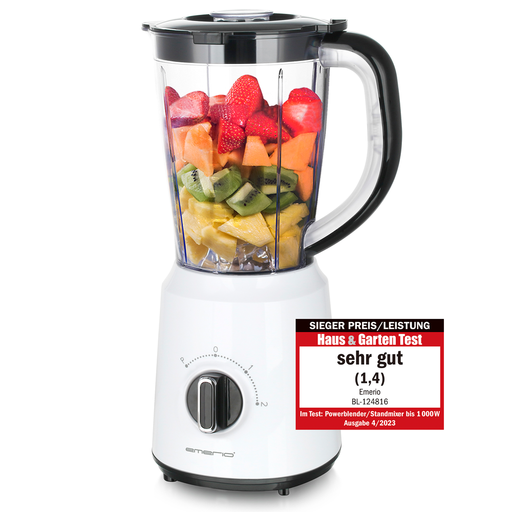 Image unavailable
This jug blender is a good fit for anyone who wants to make several portions at once.
The product name lists a 1.5 l capacity and two speeds. The instructions state that hot liquids above 60 °C must not be put in the jug.
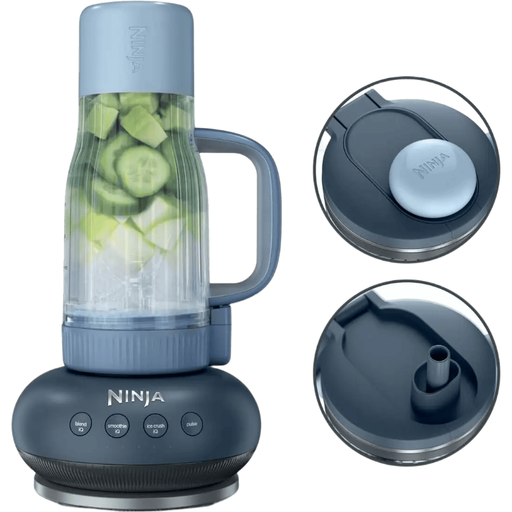 Image unavailable
This blender with a travel cup is a good fit for anyone who wants to make a smoothie and take it with them in the same cup.
The product name lists a 710 ml travel cup, three automatic programmes and dishwasher-safe parts. The instructions advise using compatible Ninja accessories and observing the maximum fill line.
 Image unavailable
The combination of a jug and travel bottle is an option for anyone weighing up different portion sizes or ways of using a blender.
The product name lists a 1,500 ml blending jug, a 600 ml travel bottle and a 300 ml chopper cup. It also states that the parts are dishwasher-safe.
 Image unavailable
This compact jug blender is a good fit for anyone who wants to make a smaller quantity of smoothie.
The product name lists 250 W and a 500 ml glass jug. The instructions state that it must not be used by children under 8; children aged 8 and over need supervision and instruction.
 Image unavailable
This portable personal blender is a good fit for anyone who wants to make a smoothie in a cup they can drink from.
The product name lists a rechargeable battery and USB-C charging. According to the product information, the removable parts can be rinsed with soap and water.
Remove the stone before blending the peach. Clean removable parts according to the instructions for the exact model, and check separately whether the cup, jug, lid and blades are dishwasher-safe. Dry the jug thoroughly and don’t immerse the motor base in water.
Not for a regular smoothie made with a pitted peach: according to the Consumentenbond, you can make smoothies with an ordinary blender too. A power blender may be useful if you also want to process hard ingredients or ice; check the model’s instructions first.
No. The Dutch government states that the Netherlands has no fixed statutory warranty period; what you can reasonably expect from a product depends on the product itself. If a product is faulty, contact the retailer. An additional warranty doesn’t replace your statutory rights.
According to the Netherlands Food and Consumer Product Safety Authority, articles intended to come into contact with food must comply with the applicable food contact materials rules. Check the product information for the specific item; this general requirement alone doesn’t prove that an individual product complies.