What should you look for when buying?
Compact blender with a jug
Choose this if: you want to blend on a small worktop and pour your smoothie at home.
The trade-off: a small jug isn’t automatically a drinking cup; for several portions, you may need to refill it.
Blend-and-go blender with a blending and drinking cup
Choose this if: you usually make one smoothie and want to take it with you in the same cup.
The trade-off: the cup’s capacity and the space the blender takes up need to suit your portion and kitchen.
For both types, the key step is to compare the space you have available and the portion size you want with the model specifications. For this buying decision, the percentages give an approximate breakdown of the main purchase concerns.
| What to consider |
What should you look for? |
Who should prioritise this? |
| Space and storage |
Measure the available width, depth and height, then compare them with the dimensions of the complete appliance and your preferred portion size. |
If I have limited worktop space, I want to be sure the appliance will fit with the jug or cup in place. Space is the main priority for around 39% of consumers. |
| Frozen peaches |
Check the instructions for the exact model, including the recommended preparation and filling method; don’t use wattage as your only guide. |
If I often use frozen peaches, I want a model designed for them. Suitability for frozen fruit is the main priority for around 23% of consumers. |
| Taking one portion with you |
Compare the capacity and check whether a suitable drinking lid is included with the exact model. |
If I want to take one smoothie with me, I want to blend straight into a sealable cup. Portability is the main priority for around 23% of consumers. |
| Cleaning |
Read the cleaning instructions for each part; dishwasher-safe parts don’t mean the motor base is dishwasher-safe too. |
If I use it regularly, I want to know which parts are easy to clean. Cleaning is the main priority for around 15% of consumers. |
Joybuy products
This selection of compact Joybuy smoothie blenders includes models with a jug and portable options. Check the capacity, dimensions and instructions for each model to make sure they suit the way you use peaches.
 No image available
Philips 3000 Series Mini Blender HR2510/90
An option if you’re looking for a compact blender with a jug for making smoothies at home.
Capacity: 0.6 l. Power: 350 W. The product name mentions ice crushing and ProBlend technology. Colour: white/silver.
Joybuy
 No image available
Aigostar Marden BL-250
A compact blender option to compare if you want the jug capacity to suit your smoothie portion.
Power: 250 W. Capacity: 500 ml. The product name mentions a glass jug.
Joybuy
 No image available
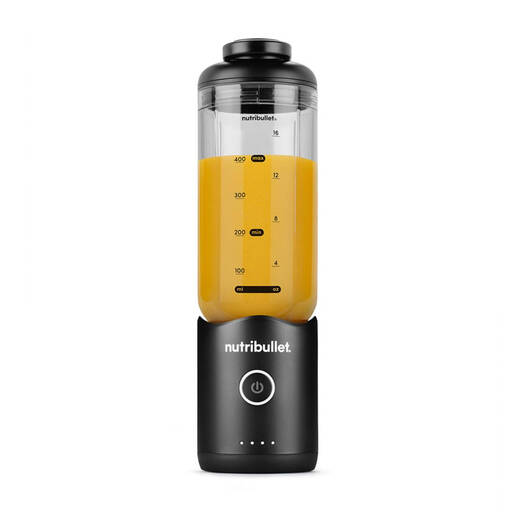
nutribullet Flex 590 ml portable blender
A portable option if you want to take a smoothie with you; the product information also mentions blending frozen ingredients. Check the instructions for peaches and your preferred preparation method.
Capacity: 590 ml. Rechargeable battery and USB-C charging. The product name mentions a collapsible design. Colour: black.
Joybuy
 No image available
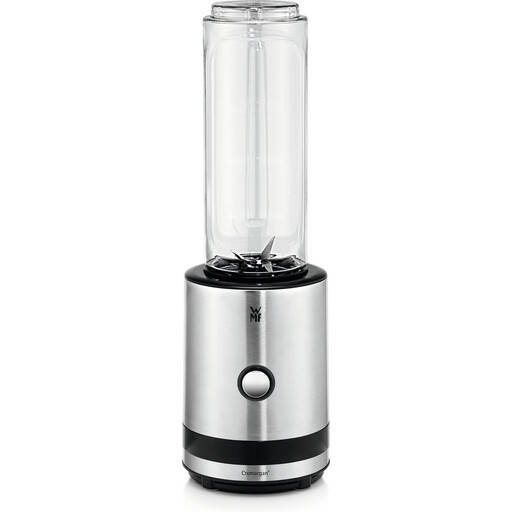
WMF Smoothie To Go Blender
A smoothie-to-go option to compare if you’re looking for a compact blender for a smoothie you can take with you.
Capacity: 0.6 l. The product name mentions stainless steel.
Joybuy
 No image available
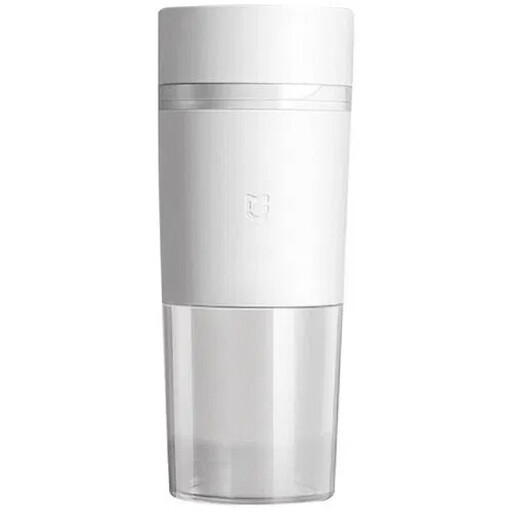
Xiaomi Portable Blender EU
A portable blender to compare if you want to make an individual smoothie; check the capacity and instructions for the specific model to make sure it suits your portion.
Joybuy
Frequently asked questions
Should I mainly look at wattage when blending frozen peaches?
No, wattage alone doesn’t predict the blending result. The Consumers’ Association assesses blending results separately; also check whether the instructions for the exact model say it can handle frozen fruit. Bosch mentions frozen fruit for the MMB2111S.
How do I clean a blend-and-go blender?
Follow the cleaning instructions for each part. For the 217401, Princess says the cup, drinking lid and blade unit are dishwasher-safe, and recommends rinsing the blade unit with warm water straight after use and leaving it to dry; this guidance doesn’t automatically apply to other models.
What if my blender develops a fault after I buy it?
In the Netherlands, a product must conform to the sales agreement, and there is no fixed statutory warranty period. According to the Dutch government, if a product is faulty, the seller must offer an appropriate solution; your statutory rights are separate from any manufacturer’s warranty.
Does the CE marking apply in the same way to every blender?
The rules that apply aren’t determined by the word ‘blender’ alone. The Netherlands Food and Consumer Product Safety Authority states that the low-voltage rules mentioned apply to electrical equipment with a rated AC voltage of 50–1,000 V or a DC voltage of 75–1,500 V; CE marking is mandatory for products covered by the Commodities Act Decree on Electrical Equipment. Check which rules apply to the specific appliance.
Do I always have 14 days to change my mind when I buy online?
Not in every case. The Dutch government states that distance purchases often come with a 14-day cooling-off period, but there are exceptions; check the terms for your specific purchase.


