If you usually make one small portion of peach purée, compare a stick blender with a suitable blending beaker against a mini blender. The former requires you to operate it by hand, while a sealed blender cup helps contain splashes. Consider how much space the complete appliance takes up, whether the capacity suits your portions and what the cleaning instructions say. A full-size blender may be more practical for larger quantities, but it will also need storage space. The Consumers' Association's buying advice highlights the importance of the jug and how you plan to use it.
Who makes peach purée?
Small-portion cook
You purée peach for one serving and want a cup that suits the quantity, without having to use a large jug. Mashing may also be an option, depending on the texture you want. The Netherlands Nutrition Centre describes mashing as one way to prepare fruit.
Cook with limited storage space
You have little room on your worktop or in your cupboard, so you compare the complete set: the stick blender, beaker, lid and any accessories. The dimensions of the base alone don't tell you how much room you'll actually need.
Cook making several portions
You often make a larger amount of purée at once and want to avoid repeatedly filling a small cup. Compare the capacity with the amount you usually make and check the appliance's maximum fill level.
What should you look for when buying?
Stick blender with blending beaker
Best for: small portions and anyone who doesn't want to leave a fixed blender base on the worktop.
Consider: you'll need to hold the blender while using it and take care to avoid splashes.
Mini blender or personal blender
Best for: anyone who wants a sealed blending cup and makes portions that fit its capacity.
Consider: a limited cup capacity may mean filling it several times to make larger quantities.
Full-size blender with jug
Best for: anyone who regularly makes larger quantities or uses the same jug for other blending and puréeing tasks.
Consider: check that the jug and base will fit in your cupboard; a larger jug takes up more space.
The Consumers' Association highlights jug size and ease of use as important factors when choosing a blender. The percentages below show which needs may matter most to consumers in this situation.
| What to consider |
What should you check? |
Who is this most important for? |
| Puréeing a small portion |
Check that the blending cup suits the amount you usually make and read the minimum and maximum fill instructions. |
I usually make one portion and want a cup that suits it, without ending up with lots left over in a large jug. Around 36% of consumers prioritise being able to purée a small portion effectively. |
| Fitting and storage |
Measure the space you have for the complete set, including the cup and accessories. Bosch lists the MMB2111S appliance dimensions as 367 × 122 × 126 mm. |
If my worktop and cupboard space is limited, I want to know in advance where each part will go. The space an appliance takes up is the main concern for around 29% of consumers. |
| Cleaning |
Check the instructions for each part before putting anything in the dishwasher, and handle blades with care. |
After puréeing, I want to know which parts I can clean safely and easily. Easy cleaning is the deciding factor for around 21% of consumers. |
| Making several portions |
Compare the cup capacity with the amount you plan to make, and don't exceed the stated maximum fill level. |
When I make more purée at once, I don't want to keep refilling the cup. Having enough capacity for several portions is the top priority for around 14% of consumers. |
Common buying mistakes
-
Looking only at the motor power
Wattage alone won't tell you whether the cup suits your portion or how much space you'll need. On one product page for the Braun MultiQuick 5 MQ50001M, Braun lists 1000 W in the product description and 750 W in the technical specifications.
First compare the portion size, cup and dimensions. Ask for clarification if specifications conflict before using them to compare models.
-
Assuming a small base means a small complete set
A personal blender also comes with a cup, while a stick blender may include several parts. Together, these need space both when in use and when stored.
Measure and plan space for all the parts you actually use.
-
Assuming every part is dishwasher-safe
Cleaning instructions can vary by part and model. A dishwasher-safe claim for one part doesn't automatically apply to the whole set.
Check the instructions for each part and take care when handling blades.
Brands and models to consider
Bosch
The VitaPower MMB2111S is a mini blender to consider if you have limited space and make small quantities.
- Bosch lists this model with a capacity of 0,6 l, a power rating of 450 W and dimensions of 367 × 122 × 126 mm.
- Its capacity may not suit you if you make a lot of purée at once. Bosch's description of a smooth texture is a manufacturer claim, not an independent test using peach purée.
Braun
The MultiQuick 5 MQ50001M is a stick blender option that comes with a blending beaker.
- Braun lists a beaker, variable speed control and a blending shaft measuring 69 × 64 × 401 mm.
- The manufacturer's page lists both 1000 W in the product description and 750 W in the technical specifications. Don't use either figure as a definitive comparison without clarification.
Philips
The HR2670/00 is a compact Blend & Go blender for anyone who wants a cup they can take with them.
- Philips lists a 350 W motor, two speeds and dishwasher-safe parts.
- Check the cup capacity and how much storage space you'll need for your portions. Descriptions of a silky-smooth blend are Philips claims, not the result of an independent peach purée test.
nutribullet
The Original 600 NB603DG is a personal blender with a stated cup capacity of 700 ml.
- The manufacturer lists a 600 W base unit and dimensions of 343 × 140 × 140 mm.
- The manufacturer's claims about a smooth result or retaining nutrients don't prove how this model handles peach purée compared with other options.
Products for small portions and limited space
These Joybuy products include mini blenders and stick blenders with a blending beaker, suited to small portions. Compare their capacity and dimensions with your kitchen and portion sizes.
 No image available
Philips 3000 Series Mini Blender HR2510/90
The description mentions a setting for soft fruit, which may suit puréeing small portions of soft fruit.
Capacity: 0,6 l. Power: 350 W. Dimensions: 123 × 119 × 350 mm. The description lists two speeds, a pulse function and removable dishwasher-safe parts.
View at Joybuy
 No image available
Aigostar Marden BL-250 blender
The 500 ml capacity is worth considering if you mainly make small portions.
The product name lists a power rating of 250 W and a 500 ml glass jug. The description mentions a travel cup and a detachable drinking lid; allow space for the parts you use.
View at Joybuy
 No image available
ROUNY 4-in-1 stick blender
The stated 700 ml blending beaker can help you decide whether this set suits your usual portions.
The description lists variable speed control and a maximum operating time of 1 minute, followed by 1 minute of rest. The product name lists a maximum power rating of 1200 W.
View at Joybuy
 No image available
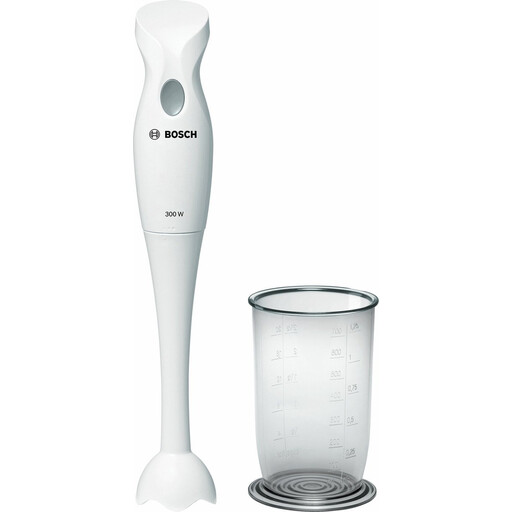
Bosch MSM6B150 hand blender
The stated 0,6 l measuring jug and listed width may help you compare the set with the space you have available.
Colour: white. Width: 6,1 cm; height: 37,4 cm. The description lists a turbo function and removable dishwasher-safe parts.
View at Joybuy
 No image available
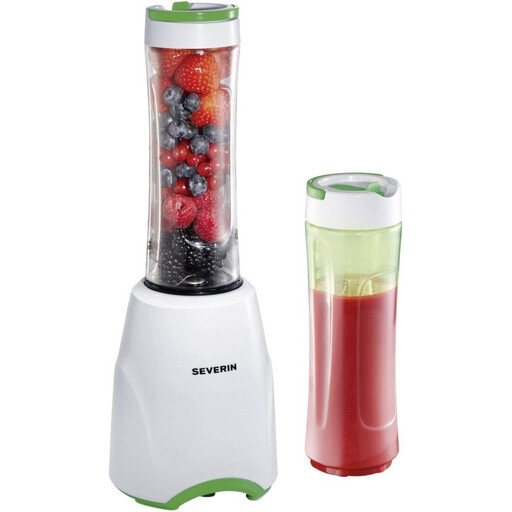
Severin SM 3735 smoothie maker
The description says the set includes two drinking cups; check that you have space to store both.
Capacity: 0,60 l. Dimensions: 13,3 × 13,3 × 36,4 cm. The description lists two speeds, pulse control and dishwasher-safe parts.
View at Joybuy
Frequently asked questions
Do I need to buy a blender to make a small fruit purée?
No, a blender isn't essential. The Netherlands Nutrition Centre describes mashing or grating as ways to prepare fruit purée. If you want to purée peach regularly or prefer a blended texture, compare stick blenders and blenders by portion size and ease of cleaning.
How should I prepare and clean everything after making peach purée?
Wash the peach under running water and remove the skin and stone before puréeing. The Netherlands Nutrition Centre gives this advice for preparing fruit. Don't fill a blender above the marked maximum level, and check the instructions for each part to see whether it's dishwasher-safe.
Do I automatically get a two-year legal guarantee in the Netherlands?
No. According to the Dutch Government, there is no fixed statutory guarantee period in the Netherlands. What you can expect from a product depends, among other things, on the product itself and normal use. Report a fault to the seller; any manufacturer's guarantee is in addition to your statutory rights.
Which product rules apply to a blender sold in the Netherlands?
The rules cover product safety and materials that come into contact with food, not a permit for home use. The Netherlands Food and Consumer Product Safety Authority says that articles intended to come into contact with food must comply with Dutch food-contact rules. CE marking applies only to products for which the relevant EU legislation requires it; the logo doesn't indicate how well a blender purées peach.


