
Making small portions
You want to blend one or a few peaches without having to wash a large jug. The Consumers’ Association considers a hand blender suitable for small portions.


For a single small portion of peach purée in a holiday cottage, a hand blender or compact blending cup is a good choice. For several liquid portions, a jug blender is more practical. Choose based on portion size, available space and ease of cleaning, and always remove the peach stone before blending.
You want to blend one or a few peaches without having to wash a large jug. The Consumers’ Association considers a hand blender suitable for small portions.
You’re looking for an appliance and blending cup that will fit in a small holiday cottage kitchen. The Consumers’ Association describes smoothie blenders as appliances with a small blending cup.
You want to make more peach purée at once and have space for a blender jug. According to the Consumers’ Association, a blender is suitable for larger quantities.
Suitable if: you want to purée a small portion in a suitable bowl and have limited worktop or storage space.
Trade-off: according to the Consumers’ Association, the result may be less smooth than with a blender; don’t blend peach stones.
Suitable if: you want to prepare a small amount of peach with enough liquid in a blending cup.
Trade-off: the smaller cup takes up less space than a large jug, but its capacity needs to suit your portion size.
Suitable if: you’re making several portions at once or want to blend a liquid mixture.
Trade-off: a jug accommodates larger quantities, but takes up more space and usually needs more washing up than a hand blender.
| What to consider | What to check before buying | Who is this important for? |
|---|---|---|
| Blending small portions | Check the minimum fill level and whether you have a suitable blending cup or bowl. | If I’m only making a small portion, I want to blend it without washing up a large jug; around 31% of consumers prioritise being able to blend small portions effectively. |
| Space for transport and use | Compare the appliance’s dimensions with the cup’s capacity. | In a holiday cottage, I want to be able to store the appliance and cup easily and take only what I need; around 25% of consumers prioritise having limited space for transport and use. |
| Easy cleaning | Check the cleaning instructions for each component and use clean kitchen utensils. | If I use the appliance regularly, I want to clean as few separate parts as possible; around 25% of consumers prioritise easy cleaning. |
| Making several portions | Compare the usable jug capacity with the amount you want to prepare. | When I’m making purée for several people, I want a jug with enough capacity so I don’t have to keep refilling it; around 19% of consumers prioritise making several portions at once. |
The Consumers’ Association says most inexpensive blenders can handle soft fruit, while heavier tasks such as blending frozen fruit can cause more problems. Wattage alone doesn’t show how smoothly a particular model will purée peaches.
Start with your portion size and ingredients, and don’t compare appliances on wattage alone.
According to the Consumers’ Association, a blender jug is less suitable for small portions than a hand blender.
Check the model’s minimum fill level and consider a hand blender or a smaller blending cup.
The Netherlands Nutrition Centre advises against grinding the stones of stone fruit, such as peaches, with a blender or hand blender.
Remove the stone before putting the peach in the appliance.
The Consumers’ Association lists the Philips 3000 Series Blend & Go HR2670/01 as an option with a compact cup.
The Consumers’ Association lists the Nutriblender AHBL02BK with a capacity of 1.1 l.
The Consumers’ Association lists the Flex NBP013GR as an option with a compact cup.
This selection includes compact smoothie blenders and hand blenders to compare for making small portions of peach purée in a holiday cottage.
 No image available
The stated jug capacity of 500 ml gives you a basis for comparison with the portion you want to make.
250 W; 500 ml glass jug; stainless steel blades; according to the product description, removable parts are dishwasher safe.
 No image available
The portable design is worth considering if you want to take a personal blender with you; check that the charging options suit how you plan to use it.
475 ml cup; rechargeable battery; USB-C charging; the product name states a runtime of 20 minutes.
 No image available
According to the Consumers’ Association, a hand blender is an option for small portions that you blend in a suitable bowl.
800 W; 20 speeds and a turbo function, according to the product description.
 No image available
This hand blender is an option to compare for small portions; use it in a suitable bowl or cup.
600 W; two speeds; 500 ml chopper bowl and 800 ml measuring jug, according to the product details. The product name also mentions a whisk and chopper.
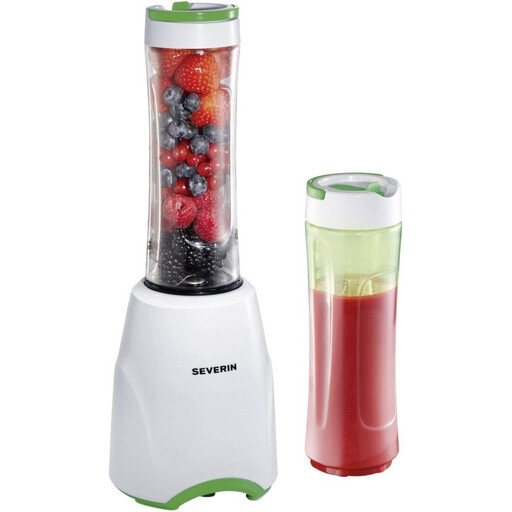 No image available
The stated cup capacity helps you decide whether this smoothie maker is suitable for the amount you want to prepare each time.
0.60 l capacity; two removable drinking cups; two speeds and a pulse function. The product description states that the cups are dishwasher safe.
Yes, remove the stone before puréeing the peach. The Netherlands Nutrition Centre advises against grinding stone fruit stones with a blender or hand blender because they contain cyanogenic plant compounds.
Wash the peaches under running water and use clean kitchen utensils. Check the instructions for your chosen model to find out how to clean its blender components.
No, there is no fixed two-year statutory guarantee period in the Netherlands. The Dutch Government explains that you’re entitled to a product that works as it should, and that the retailer is your point of contact if something goes wrong.
No, a CE mark doesn’t tell you how smoothly a blender will purée peaches. According to the Dutch Government, the mark relates to applicable legal product requirements; check the mark and documentation for the specific product.