For small portions of soft peach, a hand blender with a suitable beaker is a sensible place to start. A mini chopper may be a good option if you also want to chop ingredients. A blender or smoothie blender is more suitable for runnier mixtures, provided its minimum fill level works for your portion. Check the beaker supplied, cleaning instructions and recommended quantities for each model: a large bowl doesn’t guarantee good results with a small amount of fruit.
Who is this buying guide for?
Making a single portion
You want to purée a small amount of soft peach and need an appliance and beaker suited to that portion. The Consumers’ Association highlights small portions as a factor to consider when choosing between a blender and a hand blender.
Looking for a smooth purée
You value a smooth texture and want to weigh up whether a blender will work well for your portion size. The Consumers’ Association explains the differences between blenders and hand blenders, but the quantity you’re making remains an important factor.
Short on time for washing up
You often make a small portion and want to keep the number of separate parts and the storage space required to a minimum. So, check what you’ll need to clean after blending, too.
What should you look for when buying?
Hand blender with a suitable beaker
Best for: usually one small portion of soft peach, with few separate parts to clean.
Consider: according to the Consumers’ Association, the result may be less smooth than with a blender. Check that the blending foot is sufficiently submerged in your beaker.
Mini chopper
Best for: anyone who wants to chop ingredients as well as peach, and likes the convenience of a bowl with blades and a lid.
Consider: the bowl capacity doesn’t tell you the minimum amount of fruit needed. The bowl, blades and lid all need cleaning.
Blender or smoothie blender
Best for: anyone who often makes runnier fruit mixtures, too. According to the Consumers’ Association, smoothie blenders have smaller blending cups than standard jug blenders.
Consider: the Consumers’ Association notes that a standard blender is less suitable for small portions. Check the minimum fill level for the specific model.
| What to consider |
What should you check? |
Who is this important for? |
| Processing a small portion |
Compare your usual quantity with the stated minimum fill level, and consider the shape of the beaker, bowl or blending foot. |
If I’m only making one portion, I want the fruit to reach the blades without leaving lots of purée in the bowl. Around 42% of consumers prioritise an appliance that handles small portions well. |
| Smooth texture |
Check that the model is designed for the quantity you’re making, and consider the moisture content of your ingredients. |
I care most about getting a smooth result, but don’t want to need more ingredients than I’m making. Around 25% of consumers give their preferred texture top priority. |
| Cleaning and storage |
Check which parts are dishwasher-safe and how much space the appliance and accessories take up. |
If I use it regularly, I don’t want to wash or store lots of parts after every small portion. For around 17% of consumers, ease of cleaning and storage matters most. |
| Other uses |
Check which accessories are actually included and whether they suit the things you make. |
I want to use the appliance for other recipes, too, so extra functions are worthwhile for me. Around 16% of consumers prioritise versatility and avoiding an unnecessary extra purchase. |
Common buying mistakes
-
Confusing bowl capacity with suitability for a mini portion
A 600 ml bowl capacity tells you the maximum amount it can hold, not the minimum quantity the blades can process effectively.
Compare the minimum fill level with your usual portion and consider the shape of the bowl or beaker.
If the working area is too large, purée may be left behind or you may have to make a larger portion.
-
Assuming a chopper and blender are the same appliance
Chopping doesn’t automatically give you a smooth purée. A standard blender, in turn, may be less suitable for very small portions.
First choose based on portion size and the texture you want. Then consider which extra functions are useful to you.
-
Putting every part in the dishwasher without checking
Cleaning instructions may differ from one part to another. A general statement doesn’t necessarily apply to the motor unit, blades and accessories.
Follow the instructions for each part in the manual for your exact model.
Parts that aren’t dishwasher-safe may be damaged.
Brands to consider
Braun
The MultiQuick hand blenders are worth considering if you want to purée small portions in a beaker.
- For the MQ50001M, the manufacturer lists 21 speed settings and a measuring beaker included.
- Check that the beaker and blending foot suit the quantity you usually make, and consult the manual for cleaning instructions.
Kenwood
The Easy Chop+ CHP62.400SI is a mini chopper for anyone who wants to chop ingredients as well as make fruit purée.
- Kenwood lists a 600 ml glass bowl, a four-tier blade system and a small spatula for this model.
- The bowl capacity doesn’t tell you whether it will process one small portion of peach well. Check the minimum quantity for your needs.
Bosch
The MMR08A1 is a chopper to consider if you want to finely chop ingredients as well as purée them.
- The Dutch product information lists one speed setting, a plastic mixing bowl and dishwasher-safe parts.
- These features don’t confirm that the chopper is suitable for the very smallest portions or guaranteed to make a smooth purée.
Ninja
The blender range is worth considering if you also want to make smoothies and other runnier fruit mixtures.
- The manufacturer offers models with a drinking cup and models with a jug.
- Check the specific model and filling instructions: the range includes different options, but that doesn’t mean every model can process one small portion of peach.
Joybuy products
This selection includes hand blenders for puréeing in a beaker, as well as mini and portable blenders for smoothie-style fruit mixtures. For each model, check that the amount it needs is right for your portion of peach.
 No image available
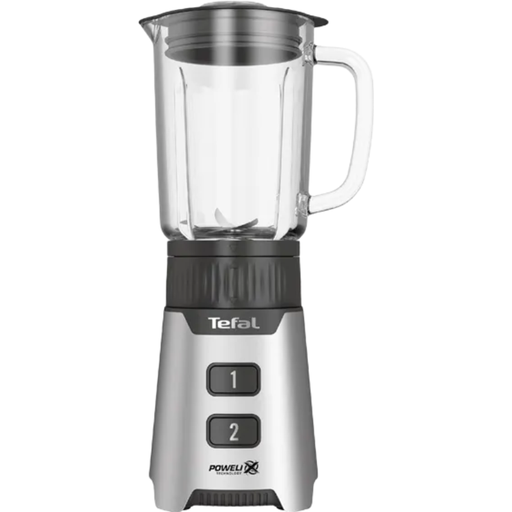
Tefal BL16GE30 mini blender
A mini blender for smoothie-style fruit recipes. Check whether the minimum fill level is suitable for one portion of peach.
Power: 400 W. Capacity: 700 ml.
Joybuy
 No image available
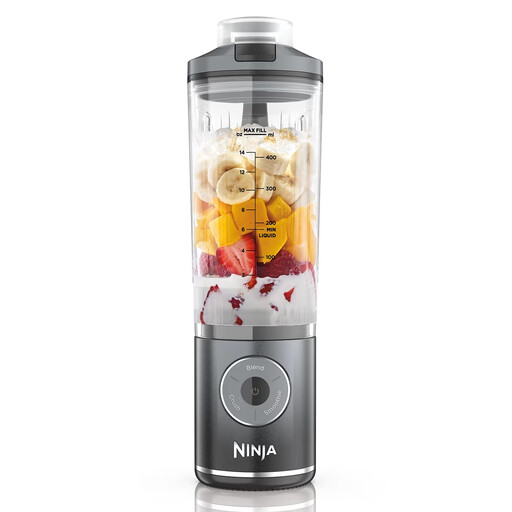
Ninja Blast BC251EUGY portable blender
A portable blender for smoothie-style fruit drinks. Check whether the instructions suit the quantity and texture you want for peach purée.
Joybuy
 No image available
Braun MultiQuick 5 MQ50001 hand blender, white
A hand blender supplied with a measuring beaker for blending in a beaker. Check that the beaker suits your portion and follow the cleaning instructions for each part.
Joybuy
 No image available
Royalty Line hand blender, 800 W
A hand blender for blending by hand. Before buying, check whether a suitable beaker is included and whether the instructions suit your portion.
Power: 800 W. Finish: stainless steel.
Joybuy
 No image available
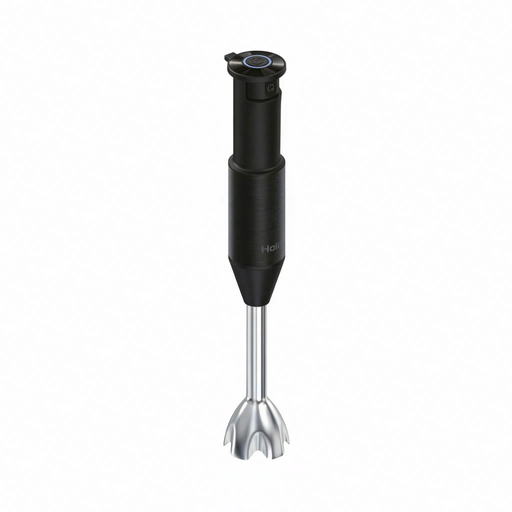
Haier I-Master HHB5B2011 hand blender
A hand blender supplied with a beaker. Check that its 0.9-litre capacity suits your needs and portion size.
Beaker: 0.9 litres. Blade design: three blades.
Joybuy
Frequently asked questions
Is a hand blender or a blender better for one small portion of peach?
A hand blender with a beaker that suits your portion is a sensible place to start. According to the Consumers’ Association, a hand blender is suitable for small portions, while a standard blender may be a better choice for liquid-rich mixtures or larger quantities. A hand blender may produce a less smooth result.
How should you prepare and store peach before and after puréeing?
Remove the stone and cut the peach into pieces. The Netherlands Nutrition Centre advises storing peach pieces covered in the fridge and removing the stone before freezing. Clean the appliance parts according to the manual. Advice on storing peach pieces doesn’t automatically tell you how long every type of prepared purée will keep.
What cooling-off period applies to an online purchase?
For online purchases from a business, a 14-day cooling-off period often applies, although there are exceptions. The Dutch government explains these consumer rules. Also check the seller’s and manufacturer’s warranty terms: a manufacturer’s warranty doesn’t replace your statutory consumer rights.
What safety requirements apply to an electrical appliance that processes food?
An electrical kitchen appliance sold in the Netherlands must meet the applicable European product requirements. Where CE marking is required, the manufacturer must affix the mark and draw up an EU declaration of conformity. Materials that come into contact with food during preparation are covered by Regulation (EC) No 1935/2004 and any applicable additional rules. A product listing alone doesn’t demonstrate that a specific item meets all the applicable requirements.


