
If you usually make one serving
A compact blending cup could be a good fit if you usually make one glass of peach lassi and want to save space and washing-up.


If you usually make one glass of peach lassi with ripe peach and yoghurt, a compact personal blender is a natural choice. For several glasses at once, a blender with a jug is more practical. If you’re using frozen peach or ice, check that the specific model is suitable. Compare the usable capacity and cleaning instructions too, so the blender suits the kitchen and washing-up arrangements in your holiday cottage.
A compact blending cup could be a good fit if you usually make one glass of peach lassi and want to save space and washing-up.
A blender with a jug is a practical option if you want to prepare several glasses at once. Check the usable capacity.
Check the instructions for the specific model if you want to use frozen peach or ice; not every blender can handle these ingredients.
When making peach lassi in a holiday cottage, your main considerations are serving size, ingredients and cleaning.
| What to consider | What should you look for? | Who is this important for? |
|---|---|---|
| Single servings and storage | Check the usable cup capacity and the dimensions of the specific model. | I usually make one glass and want to save space and washing-up in a small kitchen; around 33% of consumers prioritise a compact option for one serving. |
| Several glasses | Compare the jug’s usable capacity with the amount you want to make in each batch. | If I’m making drinks for several people, I want to know whether one batch will be enough; around 25% of consumers prioritise servings for a group. |
| Frozen peach or ice | Check the instructions for the specific model for explicit confirmation that it can handle frozen fruit or ice. | I want to use frozen peach or ice and don’t want to assume it’s suitable based on the wattage alone; around 25% of consumers prioritise blending frozen ingredients. |
| Cleaning | Check the cleaning instructions for each part and see whether the blade unit can be removed. | After making lassi, I want to clean the cup and blade unit easily, especially if there’s no dishwasher; around 17% of consumers make easy cleaning their top priority. |
According to the Consumers' Association, power alone doesn’t tell you everything: blending and crushing results are assessed separately.
Start by considering serving size and ingredients. For a performance comparison, look for results for the specific model.
For the Philips HR3020/20, Joybuy lists a 2-litre jug with a usable capacity of 1.5 litres.
Compare the usable capacity with the number of glasses you want to make at a time.
The Consumers' Association points out that not every blender can crush frozen fruit or ice.
Check the instructions for the specific model if you want to blend frozen ingredients.
Philips offers both a compact Blend & Go cup blender and the 5000 Series HR3020/20 jug blender.
The Original 600 NB603DG is a personal blender with a 700 ml cup.
The Nutri Blender QB3001EUS is a compact blender with a small blending cup.
The Blendforce II BL4358 is a blender with a glass jug.
This selection includes compact blenders for small servings and a jug blender for making several glasses; check each model’s suitability for frozen ingredients and its cleaning instructions.
 Image unavailable
A compact option if you usually make a small serving; the product name lists a capacity of 0.6 litres and a power rating of 350 W.
 Image unavailable
An option for a small serving; the product name lists a 500 ml glass jug and a power rating of 250 W.
 Image unavailable
A jug model for making several glasses; Joybuy lists a usable capacity of 1.5 litres for the HR3020/20, with a 2-litre jug.
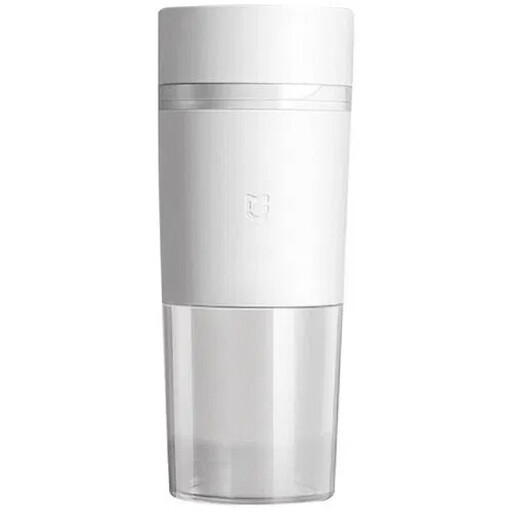 Image unavailable
A portable model for anyone specifically looking for a blender in this format; check the capacity and charging method for the specific version.
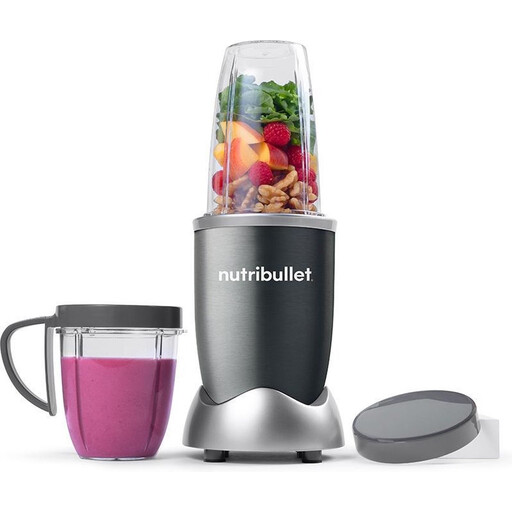 Image unavailable
A personal blender with two cups and a storage lid, according to the product name; the product information states that this model can’t crush ice.
No. Choose a blender with an ice or frozen fruit function only if you want to use those ingredients. A standard blender can make smoothies, but according to the Consumers' Association, not every blender can crush ice or frozen fruit.
Wash fruit under running water before use, as recommended by the Netherlands Nutrition Centre, and follow the instructions for the specific model when cleaning the blender parts. For the nutribullet NB603DG, the manufacturer gives separate cleaning instructions for the blade and cup.
Cover leftovers and put them in the fridge promptly. The Netherlands Nutrition Centre recommends keeping your fridge at 4 °C and refrigerating leftovers within two hours of preparation; don’t assume that storage advice for a packaged smoothie also applies to homemade peach lassi.
Not automatically. The Dutch Government says you’re entitled to a product that works properly when you buy it, and the seller must provide a solution if the product is faulty; there’s no fixed time limit for the statutory guarantee. An extended warranty may be worthwhile if its terms offer something extra.
Electric blenders sold in the Netherlands must meet the relevant European product safety requirements. According to Business.gov.nl, once the manufacturer has assessed these requirements, they must affix the CE marking and draw up an EU Declaration of Conformity. A brand name or product listing alone doesn’t prove that an individual item has been checked.