
Vandaag of morgen in huis

Kwaliteit gegarandeerd

Welkomstaanbiedingen ontgrendelen: GRATIS bezorging | Tot 80% korting | Gratis 30 dagen JoyPlus-proefperiode
Download de app
Looking for peach iced tea for a hot day, your workplace or the pantry? You’ll soon find plenty of varieties with similar packaging and flavour claims. Yet they can differ considerably in size, sugar content, tea base and ease of use. A can for drinking on the go calls for a different choice from a 1.5-litre bottle for home.
Pay particular attention to these common pitfalls:
Compare the nutritional information per 100 ml, not just per can, bottle or pouch. This keeps different pack sizes easy to compare.
For sugar-free peach iced tea, look for products with 0 grams of sugar or a very low value. According to the product information, g’woon Ice Tea Peach Zero contains 0.1 grams of sugar and 0 kcal per 100 ml. The sweeteners are sucralose and acesulfame-K. If you want to limit your sugar intake, this type of variety may be worth considering, although taste and sweetener preferences are personal.
Other varieties contain more sugar. Arizona Iced Tea Peach lists 4.8 grams of sugar per 100 ml, while Lipton Ice Tea Peach contains 3 grams of sugar per 100 ml according to the available nutritional information. Always check the packaging, as recipes and labels may change.
Peach iced tea may be based on black tea, green tea, oolong, rooibos or tea extract. Black tea often has a more pronounced tea flavour, while oolong can offer a softer, more aromatic profile. Rooibos is naturally caffeine-free and is usually prepared as a hot infusion.
Also check whether it contains peach juice, peach purée, peach powder or only natural flavourings. For example, Fuze Tea lists black tea extract, natural peach flavouring and 0.1% peach juice from concentrate. The proportion does not tell you everything about the flavour, but it does help put marketing language into perspective.
Pay attention to allergens too. According to the product information, one product may be free from the 14 main EU allergens, while another may contain, for example, milk. Xiang Yue Peach Oolong Milk Tea lists milk ingredients in its ingredients list.
Choose the size according to how you plan to use it:
With ready-to-drink iced tea, there is no mixing required. Once opened, the drink generally needs to be stored in the fridge and used within the stated period, according to the product information. With syrup, the mixing ratio is important. Karvan Cevitam, for example, recommends 1 part syrup to 9 parts water; according to the product description, one 600 ml bottle makes up to 6 litres of drink. The nutritional value of the syrup itself is not the same as that of the diluted drink, so compare labels carefully.
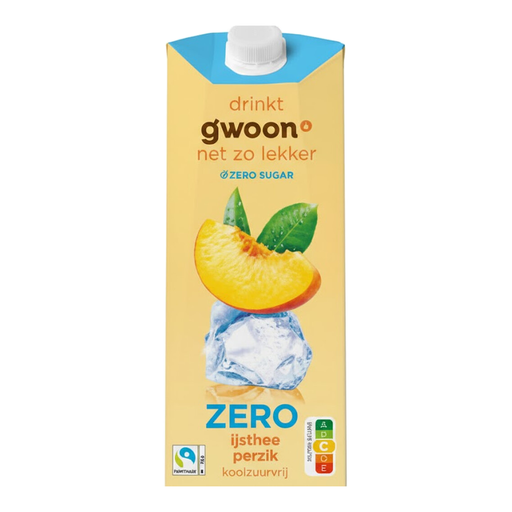
Why it suits this profile: The 1.5-litre bottle is practical for home and means you do not need several smaller packs. According to the product information, the zero version contains 0 kcal and 0.1 grams of sugar per 100 ml.
The nutritional information makes it clear that this is a sugar-free option; however, check that you enjoy the sweeteners sucralose and acesulfame-K.
1.5-litre capacity, peach juice concentrate and low energy content according to the product label.
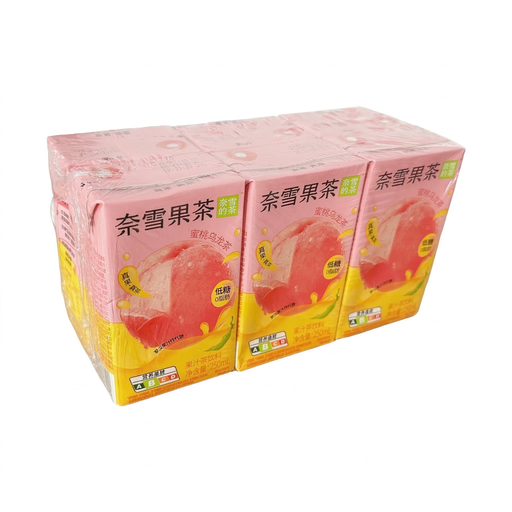
Why it suits this profile: This multipack combines oolong tea with concentrated honey peach and apple juice. The six 250 ml bottles are ideal for keeping a supply in the fridge.
The label gives specific proportions: at least 4 g/l of oolong tea and at least 10% fruit juice, rather than making only a general fruit flavour claim.
Six 250 ml servings, an oolong base and 20 kcal per 100 ml according to the product information.
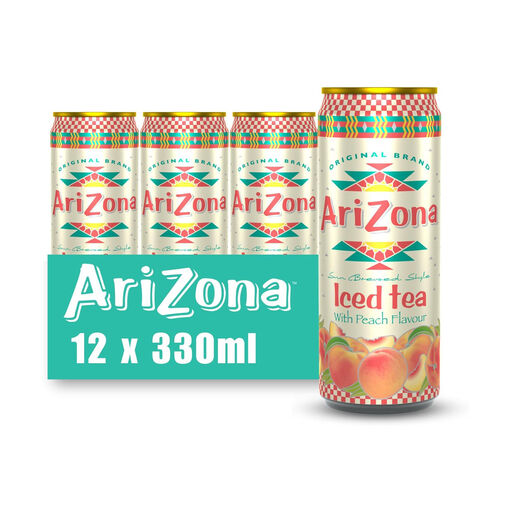
Why it suits this profile: The box of 12 330 ml cans is suitable for an office, party or household where ready-to-drink iced tea is consumed regularly.
The fixed number of cans makes the total quantity clear in advance. However, check that 12 servings suit your consumption and storage space.
330 ml per can, black tea extract and 4.8 grams of sugar per 100 ml according to the product details.
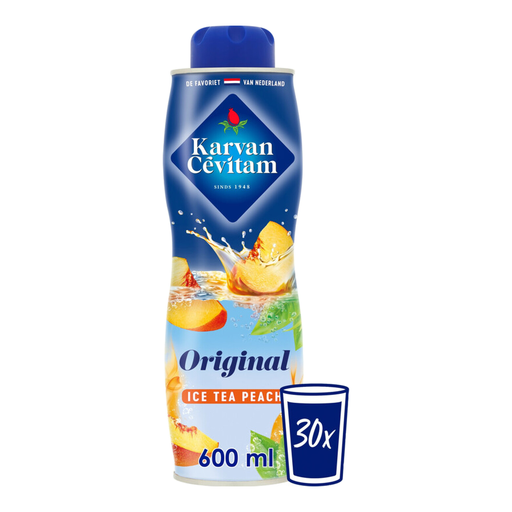
Why it suits this profile: With syrup, you can make up a drink by the glass or jug, and add sparkling water or extra ice if you wish. According to the product description, the ratio is 1 part syrup to 9 parts water.
The bottle states the mixing ratio and maximum yield. This makes it easier to estimate the cost per glass than with a product labelled simply as a concentrate.
600 ml of syrup, making up to 6 litres of drink according to the description; refrigerate after opening.
We’ve put together a complete, up-to-date list of products that fully meet these strict selection criteria and the applicable European safety regulations.
Not every peach tea is iced tea from the fridge. Pickwick Rooibos Harmony Mango Peach Tea consists of 20 sachets of 2 grams and is prepared with boiling water. According to the product information, this rooibos variety contains mango and peach purée and is caffeine-free. You can allow the tea to cool and serve it with ice, but this takes more time than a ready-to-drink beverage.
Nittoh Tea Peach Melty comes in individual sticks. According to the instructions, one stick is dissolved in approximately 150 ml of water, either hot or cold. This is convenient at the office or on the go when you have access to water, but less suitable if you want to open a chilled drink straight away.
No. Many ready-to-drink varieties contain black or green tea extracts and may therefore contain caffeine. Rooibos is naturally caffeine-free, but always check the product description and packaging. The presence and amount of caffeine are not listed in the same way for every product.
A can, pouch or bottle of approximately 190 to 500 ml is usually practical for a single serving. A can is ready to enjoy immediately, while a pouch is lightweight to carry. For several people, a multipack of peach iced tea or 1.5-litre bottles makes more sense.
Calculate the price per litre or per serving. For syrup, base your calculation on the stated dilution, not just the volume of the bottle. Also compare the sugar content, number of servings and storage instructions. This helps you avoid finding that a low purchase price is ultimately less economical because of a small volume or limited yield.
