
Vandaag of morgen in huis

Kwaliteit gegarandeerd

Welkomstaanbiedingen ontgrendelen: GRATIS bezorging | Tot 80% korting | Gratis 30 dagen JoyPlus-proefperiode
Download de app
A peach drink might seem straightforward to choose at first glance. Yet peach drinks vary widely in their composition, texture, sugar content and when you might drink them. A can of peach iced tea is quite different from a Korean peach drink with pulp, a sugar-free peach soft drink, or peaches in syrup for a dessert.
The following pitfalls come up regularly:
The nutritional values per 100 ml make products easy to compare. Lipton Ice Tea Peach, for example, states 3 grams of sugar per 100 ml. In a 330 ml can, that works out at roughly 9.9 grams of sugar, based on the stated nutritional information.
Haitai Bong Bong Peach states 19 grams of sugar per 100 ml. A 340 ml can therefore contains approximately 64.6 grams of sugar. Coco Palm Soda Peach states 41 grams of sugar per 340 ml can. These are example calculations based on the product information provided; always check the current label.
A sugar-free peach soft drink can be an alternative if you’re particularly watching your sugar intake. Pepsi Peach Zero Sugar states 0 grams of sugar and 0 kcal per 100 ml. The ingredients list includes aspartame, acesulfame-K and sucralose, among others. If you want to avoid certain sweeteners, it’s worth reading the ingredients and warnings on the packaging.
First, decide which kind of peach drink you’re looking for:
With fruit pulp and nata de coco, also pay attention to how you should prepare the drink. Only shake a can if the packaging allows it, and be aware of sediment. A wide opening usually makes it easier to drink pieces than a narrow one.
For a household or a party, a box of 20 or 24 cans can be practical. But do check the volume per can: 320, 330, 340, 350 and 473 ml are not the same. A multipack of 24 cans of 340 ml, for example, contains 8.16 litres in total.
Also look out for the alcohol content. Not every peach drink is alcohol-free. 7DROPS Soju Peach contains 12% ABV according to the product information, so it belongs with alcoholic drinks, not regular soft drinks. Store and use this product according to the label and applicable regulations. For children, pregnant women and anyone who doesn’t want to drink alcohol, an alcohol-free option is needed.
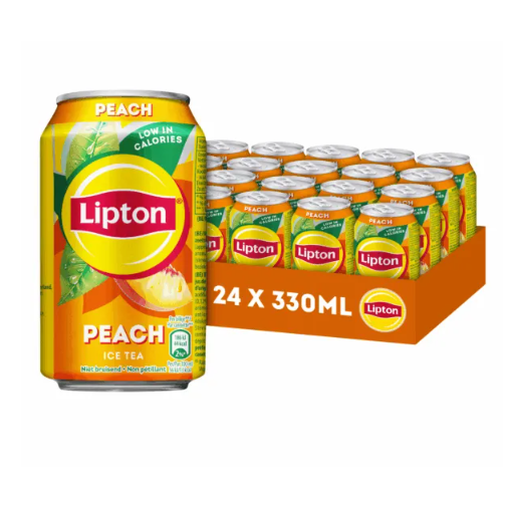
Why this fits the profile: A familiar peach iced tea in a multipack for home, visitors or stocking the cupboard. The 330 ml cans are a manageable serving size.
The product information states 3 g of sugar per 100 ml. This means you can compare its sugar content against other peach drinks rather than relying on the packaging alone.
24 cans of 330 ml; 13 kcal per 100 ml according to the stated nutritional values; refrigerate after opening.
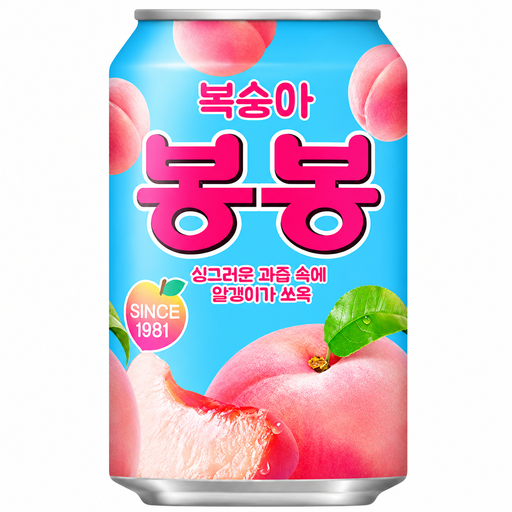
Why this fits the profile: For those who want not just a sweet fruit flavour but also a different drinking experience with real peach pulp.
The ingredients list states 5% peach pulp and 0.5% peach concentrate. The texture is therefore described more specifically than a general claim like “fruity”.
24 cans of 340 ml; peach pulp explicitly stated; 19 g sugar per 100 ml according to the product information.
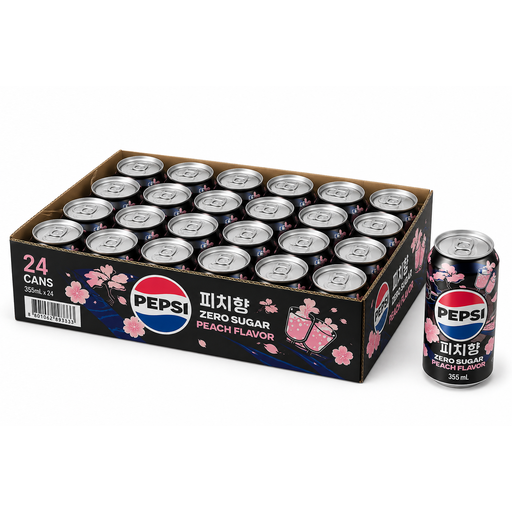
Why this fits the profile: Aimed at fans of Korean peach drinks who want to combine carbonation, cola and peach flavour without sugar, according to the stated nutritional values.
“Zero sugar” is backed up by the stated value of 0 g sugar and 0 kcal per 100 ml. Do check whether the sweeteners listed suit your preferences.
355 ml per can; 24 cans per box; carbonated; 0 g sugar per 100 ml according to the product data.
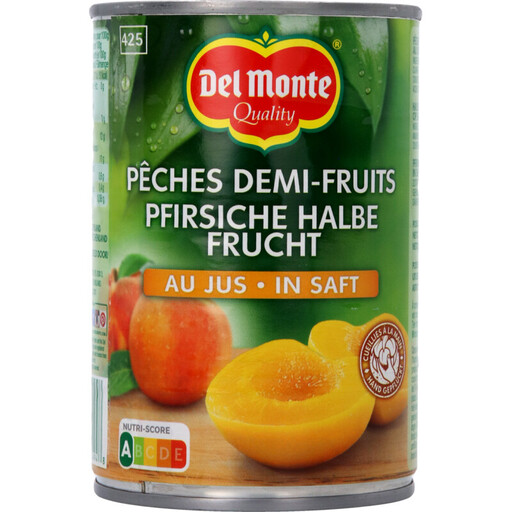
Why this fits the profile: For yoghurt, ice cream, fruit salads and baking, peach halves are more practical than a liquid peach drink.
The ingredients list states peaches and clear pear juice from concentrate, with no separately added sugar according to the product information. Check the current label.
415 g per can; halved fruit; 52 kcal and 9 g sugars per 100 g according to the stated nutritional values.
We’ve put together a full, up-to-date list of products that fully meet these strict selection criteria and comply with current European safety regulations.
Haitai Bong Bong Peach states 5% peach pulp and 0.5% peach concentrate. This is a different drinking experience from a clear peach iced tea. Kato Peach Juice with Nata de Coco and Coco Palm Peach contain nata de coco according to the product descriptions, so coconut jelly rather than peach pulp.
Store an opened product in the fridge and seal the packaging well. The product information for several drinks advises consuming within the period stated on the packaging. With tinned peaches, follow the instructions on the label after opening and do not leave the product in the opened tin if the packaging gives other instructions.
That depends on your preference. Choose peach iced tea for tea and a milder still drink, a peach drink with fruit pulp for extra texture, or a sugar-free peach soft drink if you want to limit your sugar intake. Always compare ingredients, nutritional values, volume and alcohol content before you order.
