
Purée maker with limited cupboard space
You mainly make small portions of pea purée and want to store the appliance and its parts easily. The Dutch Consumers' Association recommends a hand blender as a compact alternative for small portions.


For small portions of cooked peas and minimal cupboard space, a hand blender is usually the simplest choice. A compact food processor is worth considering if you also want to chop, slice or grate regularly. Measure the space for the appliance and its separate parts, and compare your portion with the usable capacity of the bowl rather than just its brim-full capacity.
You mainly make small portions of pea purée and want to store the appliance and its parts easily. The Dutch Consumers' Association recommends a hand blender as a compact alternative for small portions.
You want to chop, slice or grate as well as purée. The Dutch Consumers' Association describes a food processor as suitable for these kinds of food-preparation tasks. Check that the necessary blades and discs are included with the model you choose.
You sometimes make a small amount and sometimes more. Compare the usable amount per batch with your recipe: the Dutch Consumers' Association and manufacturers distinguish between the nominal bowl capacity and the processing capacity of different models.
Start with the space you have and the tasks you actually do. Then compare the bowl’s usable capacity with your portions.
| What to consider | What to look for | Who is this important for? |
|---|---|---|
| Storage | Measure the available height, width and depth. Consider where the bowl, lid, attachments and any storage box will fit. | I want to be able to put the appliance and its parts away in my cupboard after use. Around 36% of consumers prioritise storage space for the machine and attachments. |
| Puréeing peas | Check which blades are included and whether the manual gives advice for small portions. Cook the peas first; a little liquid can help with dry ingredients. | If I mainly make purée, I want a method that suits my portion, without extra features I won’t use. Around 29% of consumers prioritise suitability for making purée. |
| Portion size | Compare your recipe with the usable capacity for the exact model, not just its brim-full capacity. | I want to know whether my usual amount will fit in one batch. Around 21% of consumers prioritise portion size. |
| Extra features and cleaning | Check which slicing or grating discs are included and read the cleaning instructions for each part. | If I also want to slice or chop vegetables, useful extra features matter to me, as long as cleaning remains manageable. Around 14% of consumers prioritise this combination of versatility and easy cleaning. |
The amount a bowl can hold when filled to the brim may differ from the amount up to its highest mark or its stated processing capacity. This means your recipe may not fit in one batch.
Compare the quantity in your recipe with the stated processing capacity for the exact model, not just the largest figure in litres.
A smaller usable capacity may mean preparing the recipe in several batches.
A bowl, lid, blades, discs or separate storage box also take up space. Parts may fit inside the bowl with one model, while another may need a separate storage space.
Measure the full storage space and decide in advance where the separate parts will go.
A food processor’s main advantage is the added ability to chop, slice and grate. If you don’t use these features, the extra parts may take up space unnecessarily.
Decide which dishes you regularly make before counting accessories as a benefit.
The MultiPro Go is a compact food processor for anyone who wants to combine making purée with chopping, slicing and grating.
The MultiTalent 3 MCM3501M is an option if a larger bowl and storing accessories inside it are important to you.
The Mini Plus has a separate mini bowl for anyone who wants to prepare different portion sizes.
A MultiQuick with a chopper may suit you if you mainly want to purée with a hand blender and occasionally chop ingredients too.
These products are suited to making pea purée, handling different portion sizes and choosing between a chopper, hand blender and compact food processor.
 No image available
The product information mentions puréeing and two bowls, making it suitable for preparing different quantities.
Listed features: 2 L, 300 W, 2 speeds and 304 stainless steel blades. According to the product information, the bowls and lid are not heat-resistant.
 No image available
The product description lists a blending shaft and chopper, so you can make purée and chop ingredients too.
The product description warns against processing boiling liquids.
 No image available
The product description mentions puréeing; the included accessories also let you chop and whisk.
Listed features: 600 W, 2 speeds, a 500 ml chopper bowl, an 800 ml measuring beaker and a whisk. Follow the product instructions when using warm ingredients; they recommend a heat-resistant beaker and small portions.
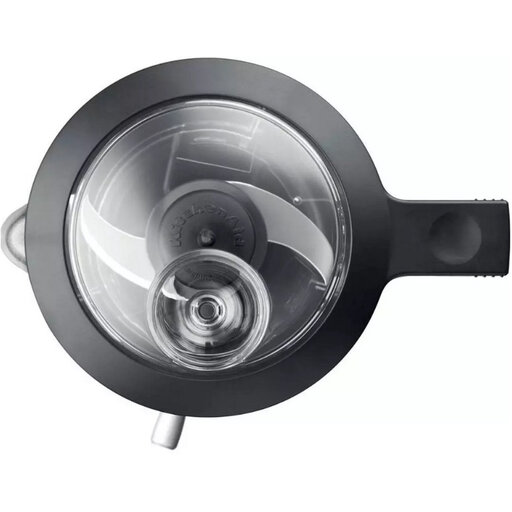 No image available
The product information says it can purée cooked vegetables, making it suitable for anyone who wants to prepare a small amount with a chopper.
As instructed in the product information, cut larger ingredients into pieces no bigger than 2.5 cm.
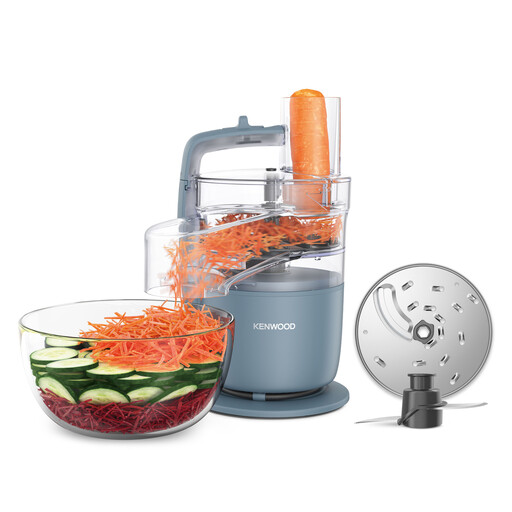 No image available
The product description mentions chopping, slicing and grating. Kenwood’s quick-start guide explains how to purée with the blade if you process the ingredients for long enough.
The product information warns against processing boiling liquids; follow the instructions for the exact model.
Cook the peas first and check the manual for the correct method and portion size. A little liquid can help with dry ingredients. Not every model has been shown to produce a specific result with peas.
No. A hand blender can be a good choice for small portions. The Dutch Consumers' Association says it is suitable for small quantities, but warns that a hand blender may struggle with thick mixtures. A food processor is a better option if you also want to chop, slice or grate.
Choose features you’ll actually use, and check the cleaning instructions for each part of the exact model. Also measure the space for the bowl, lid and accessories; parts that cannot be stored inside the bowl will need a separate place.
Contact the retailer if there’s a problem. According to the Dutch government, there is no fixed statutory guarantee period in the Netherlands. What you can expect from a product depends, among other things, on the product itself and the information provided with it. Any manufacturer’s guarantee is in addition to this.
CE marking may be compulsory for electrical equipment when required by the relevant EU rules, as the European Union’s Your Europe website explains. The Netherlands Food and Consumer Product Safety Authority states that items intended to come into contact with food must meet the applicable Dutch food-contact rules. A statement on a product page alone does not prove that a specific item meets all applicable requirements.