
Workshop host who blends in pans
Wants to make pea purée at the workstation without repeatedly transferring ingredients to a blender jug. Ease of handling and a blending foot that can be cleaned as instructed are important considerations.


For pea purée made directly in pans or bowls, a hand blender is the obvious choice; a jug blender is better suited to measured portions, provided its effective capacity is large enough. Always check the instructions for the exact model when using warm ingredients. The Consumentenbond includes vegetable purées, including pea purée, in its hand blender tests, so look for relevant purée results rather than judging by wattage alone.
Wants to make pea purée at the workstation without repeatedly transferring ingredients to a blender jug. Ease of handling and a blending foot that can be cleaned as instructed are important considerations.
Wants to assess the consistency of several portions, so looks at the puréeing results and the usable capacity of any blender jug.
Has participants use the same appliance in turn and wants to know which parts can be cleaned according to the manual, and how to do so safely.
A good fit when: you want to purée directly in a pan or bowl and move the appliance between workstations.
Keep in mind: you operate the appliance yourself; check the manual for limits on repeated or prolonged use.
A good fit when: you want to blend measured portions in the jug and its effective capacity suits your recipe.
Keep in mind: ingredients need to be transferred to the jug, which must be cleaned after use. Also check the instructions for warm ingredients.
| Consideration | What to look for | Who should prioritise this? |
|---|---|---|
| Blending at the workstation | Check the shape of the blending foot, the controls and the instructions for use in a pan or bowl. | If I want to purée directly in pans or bowls at different workstations, I want to minimise transferring ingredients. Around 36% of consumers place the greatest importance on being able to blend directly. |
| Desired texture | Look for a relevant assessment of vegetable purée and decide whether your recipe calls for a fine or coarser consistency. | For a demonstration or tasting, I want to be able to assess the desired smoothness; blending for longer can take time. Around 29% of consumers mainly want control over the texture. |
| Capacity per batch | For a jug, compare its effective capacity with the quantity in your recipe; this may differ from its maximum capacity. | If I make measured portions in a jug, I want to know in advance how much it can hold per batch. Around 21% of consumers focus mainly on usable capacity. |
| Cleaning between batches | Check which food-contact parts can be removed and follow the cleaning instructions for the exact model. | When equipment is shared, I want to be able to clean it between participants according to the manual. Around 14% of consumers prioritise cleaning. |
According to Philips, the Philips HR2041/00 has a maximum capacity of 1.9 litres and an effective capacity of 1 litre. Looking only at the maximum capacity could throw off your portion planning.
Plan batches according to the effective capacity of the exact model.
A smaller usable capacity may mean more batches and extra cleaning.
Motor power alone doesn’t tell you how finely or evenly an appliance makes pea purée. For vegetable purée, the Consumentenbond assesses factors including smoothness, consistency and preparation time.
Where possible, compare results from a relevant purée test and match the texture you want to your recipe.
Just because some blenders are suitable for hot preparations doesn’t mean every jug is.
Before the workshop, check the manual for the exact model for instructions on temperature, filling and using the lid.
The MSM6B100 is a straightforward hand blender for blending at the workstation.
The HR2041/00 from the 3000 Series is a jug blender option for measured portions.
The Blendforce II BL4358 is a jug blender option for those considering jug controls and portion sizes.
The MultiQuick 7 range includes hand blenders with variable controls.
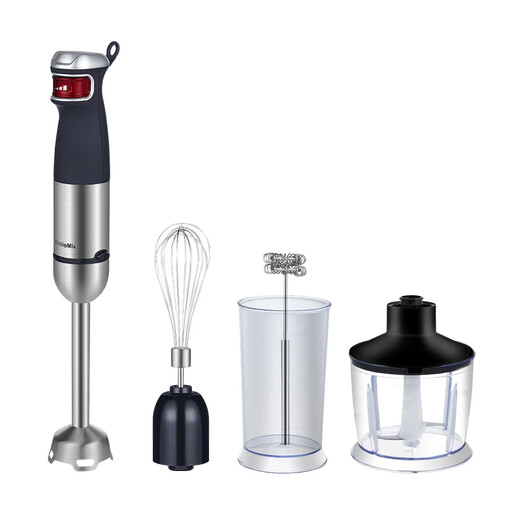
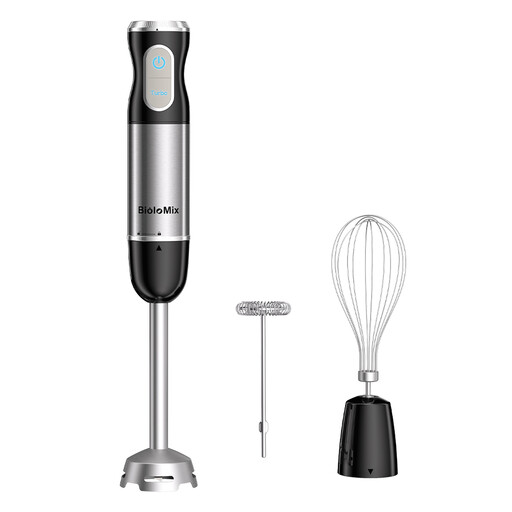
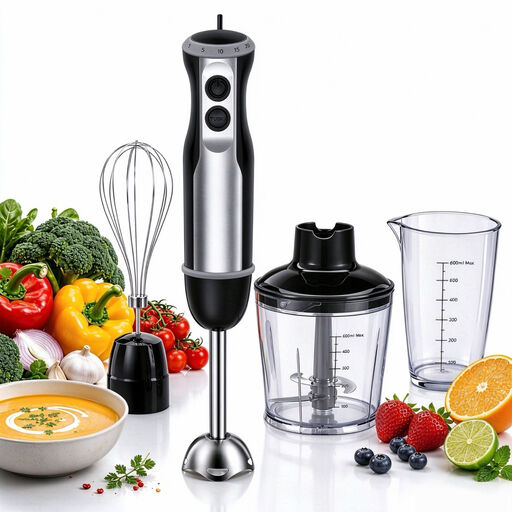
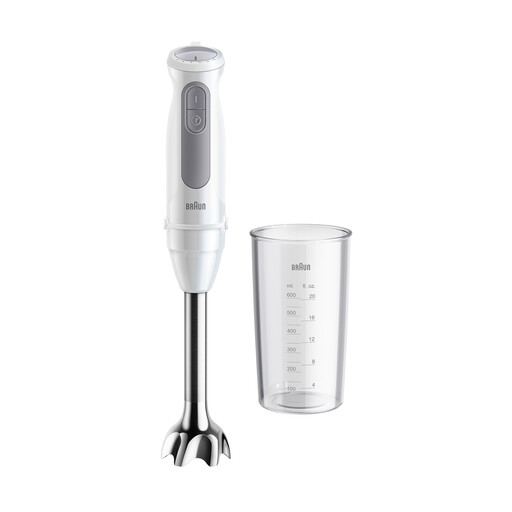
These Joybuy products are hand blenders for blending at the workstation, for example directly in a pan or bowl.
 No image available
This hand blender is designed for blending at the workstation; the product information lists a removable shaft.
The product name lists 1200 W of power, variable speed control and a stainless steel blade.
Check the manual for use with hot ingredients and for cleaning the parts.
 No image available
This model is a hand blender for puréeing in a pan or bowl; the product name describes a detachable design.
The product name lists a TURBO function and a splash-resistant design.
Check which parts can be removed and how to clean them according to the model-specific instructions.
 No image available
The product name lists soups and sauces as uses for this hand blender.
The product name lists 6 speeds and a turbo function; the product description mentions detachable accessories.
Check the cleaning instructions and guidance for hot ingredients.
 No image available
This hand blender is an option if you want to adjust the texture as you blend.
The product description lists 25 speeds, a turbo function and dishwasher-safe accessories.
The product description warns against blending boiling liquids. Follow this restriction and check the instructions for the temperature of your preparation.
 No image available
The product description lists 21 speeds and a blending beaker for small portions.
The product description mentions an ergonomic grip and dishwasher-safe parts.
Check the instructions for use with hot ingredients and for cleaning the parts.
Check the temperature and filling instructions for the exact model before putting hot ingredients in a blender jug. Some blenders are suitable for hot preparations, but that doesn’t automatically apply to every jug. Model-specific instructions also apply when using a hand blender.
Not necessarily. Philips lists a maximum capacity of 1.9 litres and an effective capacity of 1 litre for the HR2041/00. Use the effective capacity of the exact model when planning portions.
Follow the model-specific cleaning instructions and handle food hygienically. The NVWA highlights safe preparation and keeping equipment clean as considerations for businesses that sell food to consumers; the requirements that apply depend on how the workshop is organised.
That doesn’t depend solely on calling it a ‘cookery workshop’. According to the NVWA, registration is required when a business sells food several times a year; the NVWA lists an exemption from registration for one-off sales. The NVWA also outlines requirements for a food safety plan for businesses that prepare, process or sell food. First establish how the organiser provides food and which situation applies.
If the appliance is faulty, contact the seller. The Dutch government distinguishes between statutory guarantees and any manufacturer’s guarantee, and states that the Netherlands has no fixed statutory guarantee period. When buying, also check which terms apply if the appliance is purchased for commercial use in a workshop.