
Cooking a large panful
You want to purée cooked peas for a community meal without repeatedly transferring the mixture to a jug. The Dutch Consumers’ Association describes blending straight in the pan with a stick blender as a practical approach.


For a large pan of cooked peas, a stick blender is handy if you want to make the purée straight in the pan and avoid transferring it, as the Dutch Consumers’ Association explains. If a smooth texture is your priority, consider a jug blender and process the purée in batches. For hot purée, always check the instructions for the exact model; a cooking blender is most useful if you also want to heat the ingredients in the appliance.
You want to purée cooked peas for a community meal without repeatedly transferring the mixture to a jug. The Dutch Consumers’ Association describes blending straight in the pan with a stick blender as a practical approach.
You don’t mind working in batches if a consistent texture is important. The Dutch Consumers’ Association discusses jug blenders as an option for a smooth result.
You want to make sure the purée’s temperature is suitable for the appliance you choose. Instructions can vary from model to model.
First, choose the method that suits the quantity you’re making: blend straight in the pan, process batches in a jug or heat the ingredients in the appliance too.
Best for: puréeing cooked peas with enough liquid straight in a suitable pan.
Consider: you’ll avoid transferring the mixture, but a jug blender may give a more even result, according to the Dutch Consumers’ Association.
Best for: when a smooth purée is your priority and you can process the quantity in batches.
Consider: you’ll need to transfer the purée, and the usable capacity may be less than the jug’s total capacity.
Best for: if you want to use a heating programme as well as blend.
Consider: plan your batches around the usable capacity. The extra heating function isn’t necessary if you only want to blend.
| What to consider | What to look for | Who should consider this? |
|---|---|---|
| Quantity and batches | Compare the amount you plan to make with the jug’s usable capacity. Tefal lists 1,75 L usable capacity and 2 L total capacity for the BL83SD30. | If I’m cooking for a group, I want to know how many batches I’ll need or how to make the purée straight in the pan. Around 36% of consumers say quantity and batch preparation are their main considerations. |
| Texture | Consider whether you’re happy to work in batches and whether the cooked peas can be processed with enough liquid. The Dutch Consumers’ Association discusses jug blenders as an option for a smooth result. | If an even purée matters more than avoiding transfers, I can process the mixture in batches. Around 29% of consumers prioritise texture. |
| Hot ingredients | Check the instructions for the exact model for the temperature limit, maximum fill level and lid requirements. | If I want to blend hot purée, I need to know which method is suitable for my appliance. Around 21% of consumers consider suitability for hot purée their most important factor. |
| Cleaning | Check which parts are dishwasher-safe according to the instructions and how to clean the blades safely. | After making several batches, I want to know how many parts I’ll need to clean and which ones can go in the dishwasher. Around 14% of consumers prioritise easy cleaning. |
The total capacity doesn’t necessarily tell you how much purée you can process at once. Tefal lists a total capacity of 2 L and a usable capacity of 1,75 L for the Perfectmix Cook BL83SD30.
Plan how many batches you’ll need using the exact model’s usable capacity, not just the largest figure.
Safe use depends on the instructions for the specific model. Philips says that hot ingredients are not permitted in the HR3756/00, HR3752/00 and HR3868/00 models; this does not automatically apply to other models.
Before blending, check the temperature limit, maximum fill level and lid instructions in your appliance’s manual.
A standard blender can make purée; the Tefal Perfectmix Cook BL83SD30 also has hot programmes, according to Tefal.
Choose a heating function only if it suits your batch sizes and the way you cook. If you’d rather work in a large pan, a suitable stick blender may be a better fit.
The MultiQuick stick blenders are worth considering if you want to purée cooked peas straight in a suitable pan; the MQ7000X is one model to compare.
The VitaPower Serie 4 MMB6172S is a jug blender with a stated jug capacity of 1,5 L.
The Perfectmix+ BL811D38 is a jug blender, while the Perfectmix Cook BL83SD30 also has heating programmes.
Philips makes blenders and stick blenders; check which methods and ingredients are permitted for each model.
These stick blenders are for anyone who wants to purée cooked peas straight in a suitable pan and avoid transferring them to a blender jug.
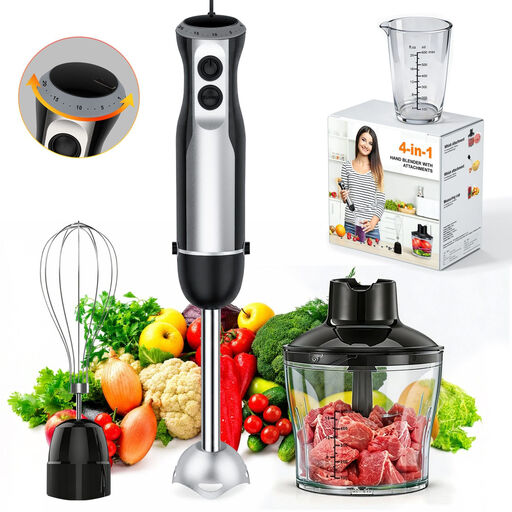 No image available
A hand blender is handy for blending in a suitable pan without transferring the mixture to a jug first.
The product name specifies 20 speeds and a turbo function.
 No image available
This hand blender suits the pan method if you want to make purée straight in a suitable pan.
The product information advises against blending boiling liquids; check the instructions before use.
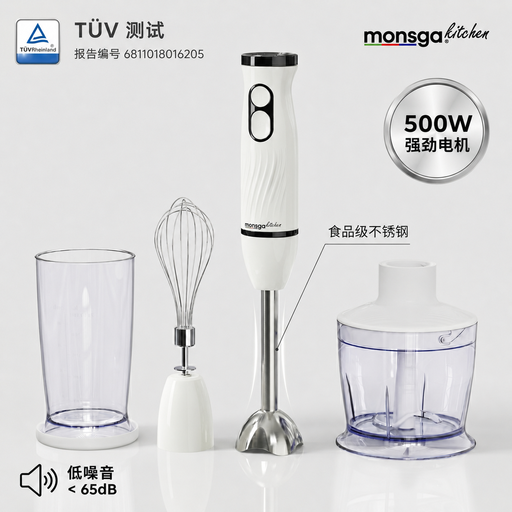 No image available
This hand blender is an option if you want to purée cooked peas straight in a suitable pan.
The product name specifies a whisk, a 500 mL chopper and a 500 mL beaker.
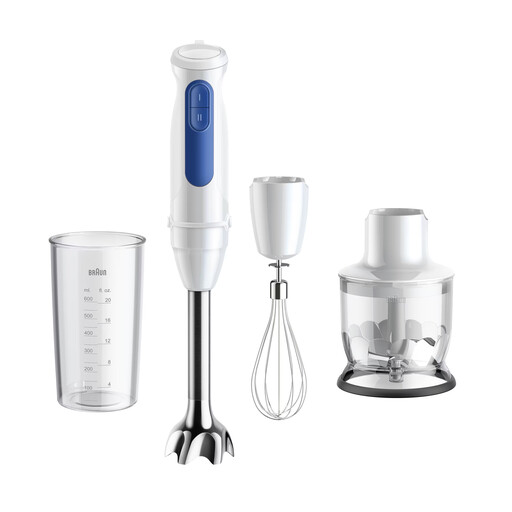 No image available
A hand blender is ideal for blending in the pan and can help you avoid transferring the mixture to a jug.
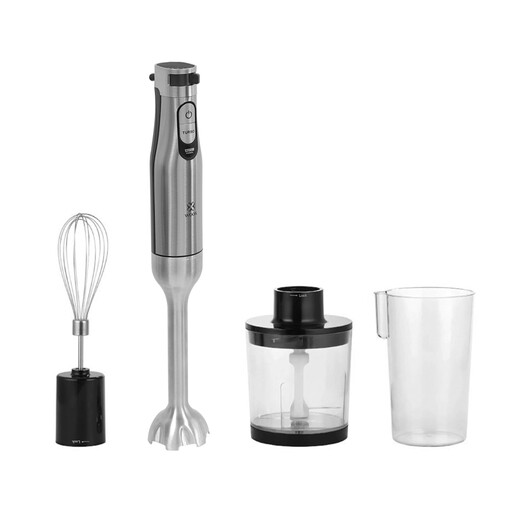 No image available
This hand blender is suited to blending straight in a suitable pan.
The product name specifies variable speed and a set with a chopper, whisk and milk frother.
Yes. You can purée cooked peas straight in a suitable pan with a suitable stick blender. Add liquid if needed, and check your appliance’s instructions when blending hot purée.
No, don’t rely on the jug material alone. Check the temperature, fill-level and lid instructions for the exact model. Philips does not permit hot ingredients in the HR3756/00, HR3752/00 and HR3868/00 models; this restriction does not automatically apply to other blenders.
The Dutch Nutrition Centre advises storing leftovers covered in the fridge or freezer and chilling them within 2 hours of preparation. It recommends a fridge temperature of 4 °C.
It depends on whether you sell food to consumers and how often you do so. According to the Netherlands Food and Consumer Product Safety Authority, registration is required if you sell food several times a year, but not if you sell it once a year. These sales rules do not require registration for a meal shared privately.
If you sell food to consumers as a business, the Netherlands Food and Consumer Product Safety Authority requires you to provide information about any allergens present. Check the ingredients in the full purée, including any additions such as milk or celery, and provide the relevant information before purchase.