
Making a large batch for a family gathering
You want to know how much purée you can make at a time, and whether it’s more practical to blend in a pan or a jug. With a jug blender, compare its usable capacity, not just the total jug capacity.


For a chunky or thick pea purée made in a pan or tall beaker, a hand blender is an obvious choice; a recipe from Dutch food site Albert Heijn Allerhande uses one for a chunky texture. If you want a smoother purée made in batches, compare jug blenders by usable capacity and whether they’re specifically suitable for hot ingredients. A cooking function is particularly relevant if you also want to heat ingredients in the appliance.
You want to know how much purée you can make at a time, and whether it’s more practical to blend in a pan or a jug. With a jug blender, compare its usable capacity, not just the total jug capacity.
You’re deciding between a chunky, thick purée and a smoother result. Albert Heijn Allerhande uses a hand blender for chunky pea purée; the Dutch Consumers’ Association says a blender jug is suitable for liquid or semi-solid foods.
You want to know whether you’re only blending hot ingredients or also heating them in the appliance. Check the instructions for the exact model: a model being suitable for hot preparations doesn’t automatically mean that the blender heats them itself.
A Dutch pea purée recipe from Albert Heijn Allerhande uses a hand blender for a chunky result; the Dutch Consumers’ Association notes that a blender jug can help reduce splashing when blending liquid or semi-solid foods. So first decide on the texture and quantity you want, then check the model’s method of use, capacity and instructions.
| What to consider | What to look for when buying | Who is this important for? |
|---|---|---|
| Quantity per batch | Compare the amount you plan to make with the usable capacity, and follow the filling instructions for the exact model. | For a family gathering, I want to know how much purée I can make at a time and whether to use a pan or jug; around 36% of consumers give the quantity per blending batch top priority. |
| Texture you want | Decide whether you want a chunky, thick or smoother purée, and check which attachments, settings and instructions are suitable. | If I’m choosing a chunky or smoother purée, I want to adjust the method accordingly; around 29% of consumers put their preferred texture first. |
| Hot ingredients or heating | Check whether the model can process hot ingredients, heats them itself, and what filling and safety instructions apply. | I want to know in advance whether I’ll just blend cooked peas or heat them in the appliance too; around 21% of consumers give this distinction top priority. |
| Cleaning | Check which parts are removable and dishwasher-safe, and whether there are any cleaning instructions for the blades. | After blending, I want to know how much cleaning the removable parts will need; around 14% of consumers put washing up after preparation first. |
According to Tefal, the BL871D has a 2-litre jug but a usable capacity of 1.5 litres. That difference affects how much you can blend at a time.
Plan your portions around the usable capacity and the instructions for use, not just the biggest number on the packaging.
A lower usable capacity may mean extra blending batches and transferring the purée between containers.
Tefal describes the BL871D as suitable for hot preparations. The separate BL83SD has hot programmes, according to Tefal; these are different features.
First decide whether you just want to blend cooked peas or heat them in the appliance too. Check the manual for the model you choose.
According to the manufacturer, the nutribullet Pro NB904CP has a 0.7-litre cup. For a gathering, a small cup may mean blending in several batches.
Compare the quantity you want with the permitted amount per batch, and don’t assume a personal blender is suitable for hot purée.
MultiQuick hand blenders are worth considering if you want to make pea purée in a pan or tall beaker. The MQ 9138XI is one example, with a blending foot and accessories.
Tefal offers jug blenders for hot and cold preparations, as well as a separate range with a cooking function. The models have different features.
The VitaPower MMB6172S is a jug blender to consider if you want to blend one batch at a time in a jug.
The Pro 900 range is a compact option for individual small portions; check whether the capacity suits the amount you want to make for your gathering.
This selection includes jug blenders for blending in batches and hand blenders for use in a pan or suitable beaker. Always check the instructions for the exact model when using hot ingredients.
 No image available
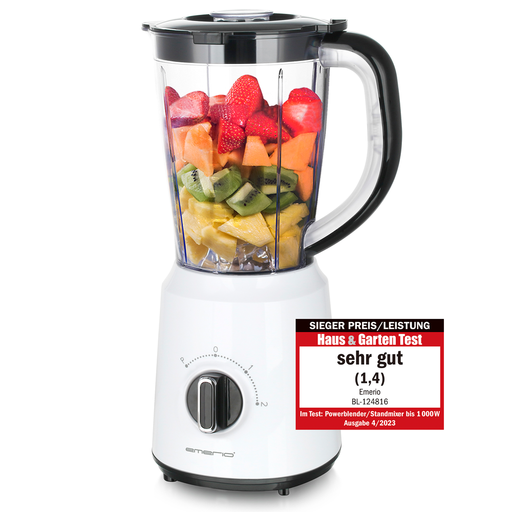
A jug blender for making purée in separate batches; the description also mentions soups.
The jug has a capacity of 1.5 litres. It has two speeds and a pulse function; the jug, lid and blades are described as dishwasher-safe.
Don’t blend liquids above 60 °C: the instructions warn that pressure may build up and the lid may come loose.
 No image available
A jug blender option for making purée in separate batches; check the manual before blending hot ingredients in it.
The description lists a 1,500 ml glass mixing jug, two speeds and a pulse function. The set also includes a 300 ml chopper cup and a 600 ml bottle.
The parts are described as dishwasher-safe.
 No image available
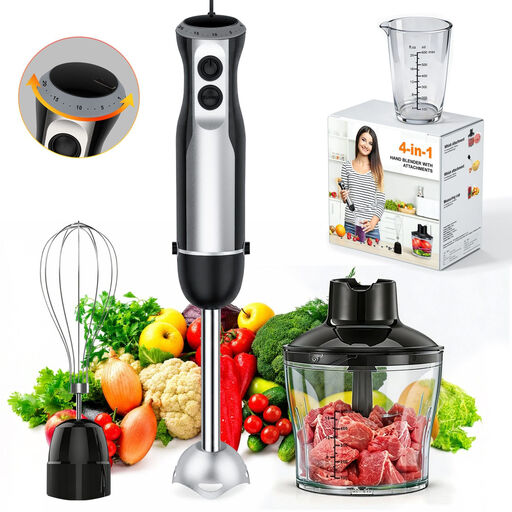
A hand blender for making pea purée in a pan or suitable beaker; a Dutch recipe uses this method to make chunky purée.
The description lists 20 speeds, a turbo function, a chopper cup and a measuring beaker.
 No image available
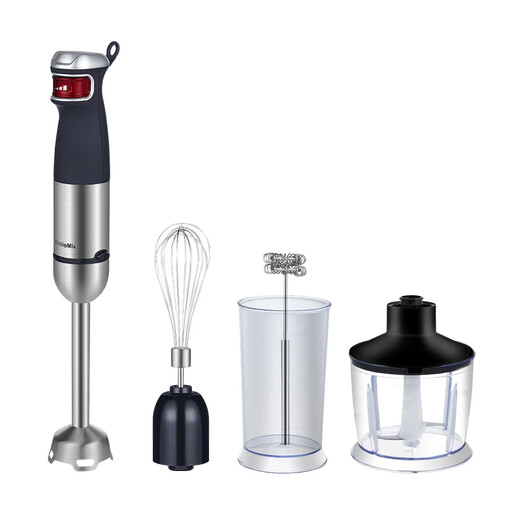
A hand blender option for blending in a pan or suitable beaker; check the instructions for processing hot ingredients.
The title lists variable speed control. The description mentions interchangeable attachments for blending, whisking and chopping, among other tasks.
 No image available
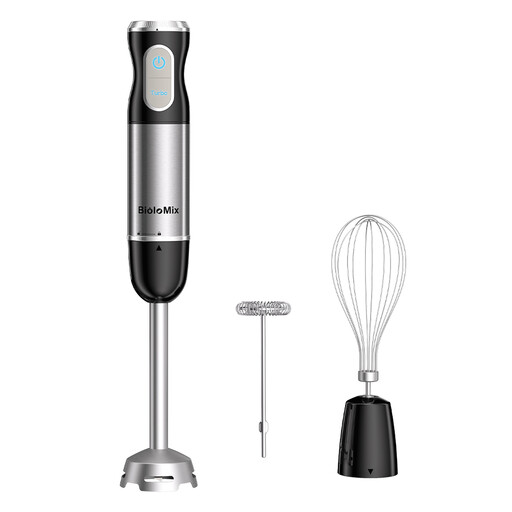
A hand blender for making purée in a pan or suitable beaker; check the manual for the right quantity and temperature.
The title describes a detachable design. The description mentions blending soups.
Choose the method that suits the texture and quantity you want. A Dutch recipe from Albert Heijn Allerhande uses a hand blender to make chunky purée from cooked, drained peas; the Dutch Consumers’ Association says a blender jug is suitable for liquid or semi-solid foods and notes that it can help reduce splashing. Check the instructions for your chosen appliance to make sure it can handle the thickness and quantity you want to blend.
No, don’t assume every blender is suitable. Tefal specifically describes the BL871D as suitable for hot preparations, but that doesn’t tell you anything about another model. Follow the manual for the exact blender when filling, closing and processing hot ingredients.
The Netherlands Nutrition Centre advises storing leftovers covered and cooled, separately from raw foods, in the fridge within 2 hours of preparation. It recommends keeping your fridge at 4 °C; follow this storage advice if you’re making the purée ahead for a gathering.
According to ACM ConsuWijzer, the Dutch consumer advice service, the seller must put things right free of charge if a product doesn’t perform as you could reasonably expect during normal use. A manufacturer’s guarantee doesn’t replace this statutory right.
According to the Netherlands Food and Consumer Product Safety Authority, products intended to come into contact with food must comply with food contact material rules in the Netherlands. Electrical appliances sold in the Netherlands are also subject to European product safety rules; which CE requirements apply depends on the appliance. These obligations for businesses placing products on the market do not, in themselves, prove that an individual listing has been checked.