
Vandaag of morgen in huis

Kwaliteit gegarandeerd
Download de app
Categorieën

Selecting a PC power supply, also known as a PSU (Power Supply Unit), is an often-overlooked step when building or upgrading a computer. The wrong choice can lead to instability, performance issues, or even damage to your components. This guide will help you understand the key specifications so you can make an informed decision for your system.
Before you buy a power supply, it's crucial to consider four key aspects: wattage, efficiency, modularity, and form factor. These factors determine whether a computer power supply is suitable for your specific build.
The required wattage depends directly on the components in your PC, especially the processor (CPU) and the graphics card (GPU).
An online PSU calculator can provide a good estimate of the required wattage for your specific components. It's advisable to choose a power supply with some extra capacity (about 20-30% more than your estimated peak consumption) for stability and future upgrades.
The 80 Plus certification indicates how efficiently a power supply converts AC power from the wall outlet into DC power for your components. Higher efficiency means less energy is wasted as heat, resulting in a lower electricity bill and a cooler, quieter system.
Modularity refers to how the cables are attached to the power supply.
The form factor must be compatible with your computer case.
Below are two recommended power supplies that represent different needs and scenarios, based on their specifications.
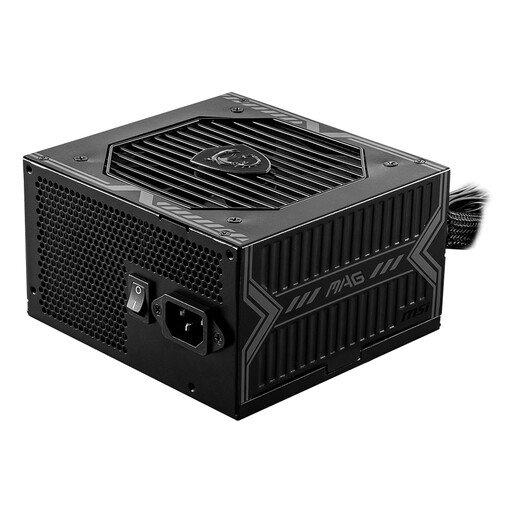
Why We Chose It The MSI MAG A650BN is a reliable 650W power supply that provides a stable foundation for entry-level to mid-range systems. Its 80 Plus Bronze certification guarantees at least 85% efficiency under typical loads.
Advantages
Who Is It For? This is a suitable ATX power supply for PC builders assembling their first system or those looking for a reliable, straightforward power supply for a mid-range gaming or work PC. As a non-modular power supply, it is a cost-effective choice.
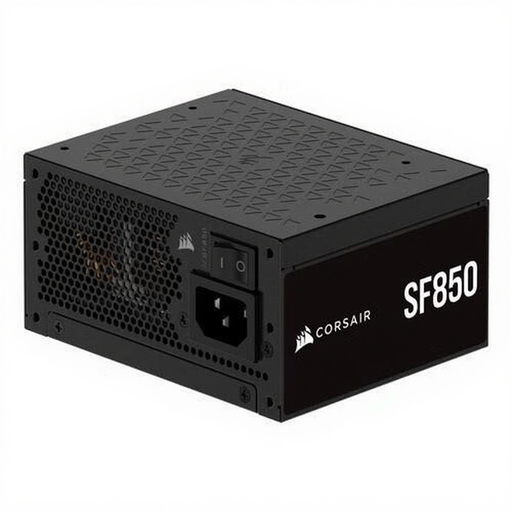
Why We Chose It The Corsair SF850 is a high-performance SFX power supply that delivers an impressive 850W of power in a very compact form factor. Its 80 Plus Platinum certification signifies exceptionally high efficiency.
Advantages
Who Is It For? This modular power supply is aimed at the PC enthusiast who needs a compact yet powerful gaming PC power supply. It's perfect for SFF builds with high-end components that demand reliable and efficient power delivery.
Our selection covers two common scenarios, but the power supply market is broad and diverse. If you're looking for a different wattage, a semi-modular option, or another brand, check out our full range of components and complete systems.
Explore Our PC Systems Category Here
1. How much wattage do I need for my gaming PC? This depends on your components. For a mid-range system (e.g., with an RTX 4060), a 650W power supply is usually sufficient. For a high-end system (e.g., with an RTX 4080 or 4090), an 850W power supply or higher is recommended. Use an online PSU calculator for a precise estimate and add 20-30% for stability and future upgrade headroom.
2. Is a modular power supply worth the extra cost? That depends on your priorities. A modular power supply offers significant advantages for cable management and airflow, resulting in a cleaner and potentially cooler PC. For builders who prioritise aesthetics and optimal airflow, it's often worth the premium. For a budget build where functionality is the main concern, a non-modular power supply will suffice.
3. What is the difference between 80 Plus Bronze and 80 Plus Platinum? The difference lies in efficiency. An 80 Plus Bronze power supply is at least 82% efficient at 20% and 100% load, and 85% efficient at 50% load. An 80 Plus Platinum power supply is significantly more efficient: at least 90%, 92%, and 89% at 20%, 50%, and 100% load, respectively. This means a Platinum-rated PSU wastes less power as heat, leading to a lower electricity bill and a quieter system.