
Vandaag of morgen in huis

Kwaliteit gegarandeerd

Welkomstaanbiedingen ontgrendelen: GRATIS bezorging | Tot 80% korting | Gratis 30 dagen JoyPlus-proefperiode
Download de app
The sun is shining, and all you want to do is enjoy your garden, patio, or balcony. A good patio umbrella is essential, but the search can be frustrating. The market is flooded with models that look great at first glance but are ready for the landfill after just one season. Before you invest in shade, it's wise to know what to look for.
Many people fall into the same traps. They choose an umbrella based on a low price or a pretty colour, only to discover hidden defects later. These are the three most common problems:
Fortunately, you can easily avoid these problems by paying attention to a few key specifications.
A good patio umbrella is an investment in comfort and durability. Don't just look at the diameter; focus on the materials and construction. These are the three most important factors to consider.
The frame is the skeleton of your umbrella. The choice of material determines its lifespan and ease of use.
The canopy provides the actual outdoor sun protection. Its quality is determined by the thickness and treatment of the fabric.
The choice between a centre-pole umbrella and a cantilever umbrella depends on your space and needs.
To help you with your choice, we have selected a number of products that suit different user profiles.
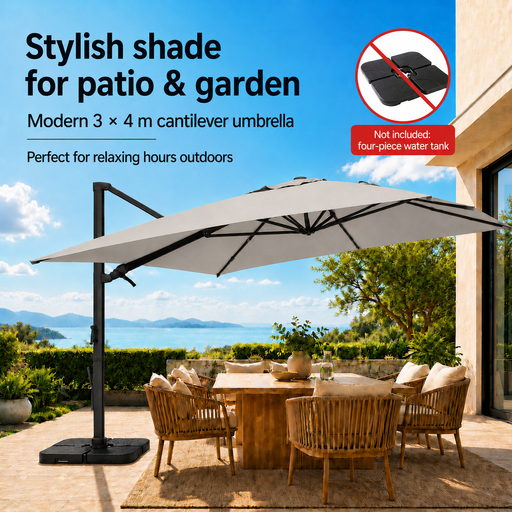
Why This Fits Their Persona: Ideal for those who want to fully shade a large patio or lounge set. The side mast of this cantilever umbrella ensures the space underneath remains clear, so you're not bothered by a central pole.
The full aluminium frame is rustproof and durable. The 280 g/m? solution-dyed fabric is thick, colourfast, and water-repellent thanks to its PA coating.
The 360° rotation and tilt function provide flexible shade throughout the day without needing to move the heavy base.
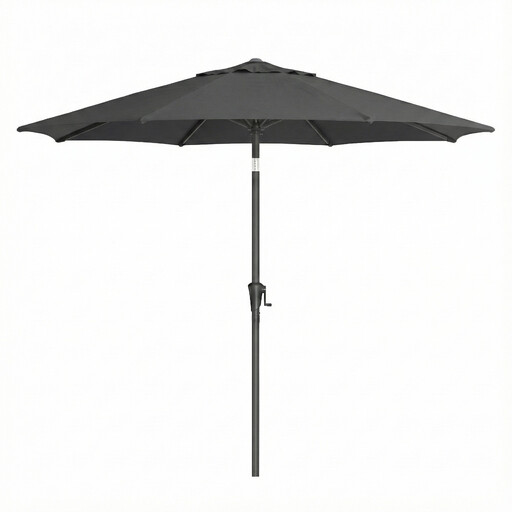
Why This Fits Their Persona: For those seeking a reliable and user-friendly centre-pole umbrella for the garden or a spacious balcony. The 3.4-metre diameter provides ample shade for a dining table or a few chairs.
The steel ribs have a powder coating to prevent rust. The 180 g/m? polyester canopy is a solid mid-range option that offers protection against UV rays and light rain.
Very easy to operate thanks to the smooth crank handle for opening and closing, and a simple push-button for the tilt function.
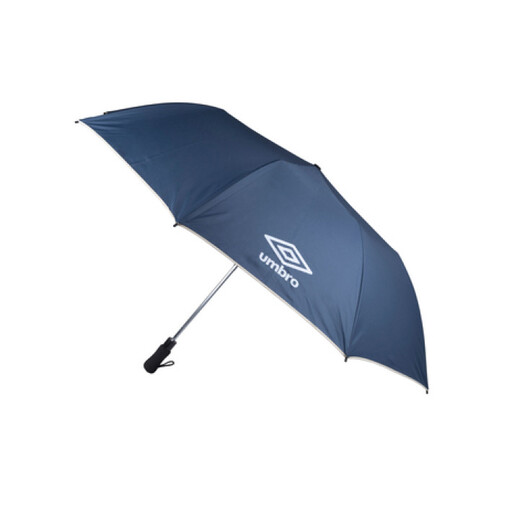
Why This Fits Their Persona: For those who need personal protection on the go or during a day out. This compact, foldable umbrella fits easily in a bag and protects against both rain showers and harsh sun.
This is a functional, no-frills product. It does what it promises: provides protection from sun and rain in a compact size. The set of 5 is convenient for the whole family.
Compact and multifunctional. The UV protection makes it a smart choice for personal sun protection when a large patio umbrella isn't an option.
A patio umbrella provides excellent shade, but for complete protection, it's wise to also use sunscreen, especially if you have fair skin or during peak sun hours. A product like the Fancl Sunguard 50+ Protect UV with a high SPF is a great supplement to the shade from your umbrella.
We have curated a complete, up-to-date list of products that meet these strict selection criteria and safety standards.
This depends heavily on the size and type of umbrella. For a standard centre-pole umbrella (up to approx. 3 metres), a 30-40 kg base is usually sufficient. For a large umbrella or a cantilever umbrella, you'll need significantly more weight, often 80 kg or more, to prevent it from tipping over in the wind. Always check the manufacturer's recommendation. Many cantilever umbrellas come with a cross base that you need to weigh down yourself with special paving slabs.
Although many umbrella canopies are water-repellent, they are not designed to be left in the rain for extended periods, especially in combination with wind. The wind can catch underneath the canopy and damage the frame. It's better to close the umbrella during rain and wind. Always let a wet canopy dry completely before storing it for a long time to prevent mould and mildew.
The level of UV protection (UPF rating) is determined by the density, colour, and material of the canopy. A thicker fabric (higher g/m?) with a darker colour generally blocks more UV radiation than a thin, light-coloured fabric. While not all manufacturers state a UPF rating, you can assume that a quality canopy of 200 g/m? or more will block a significant amount of UV radiation.
