Start by taking a test shot with your current phone or camera: you may not need a new one if it captures the whole patchwork and the details you want in sufficient focus. Use even lighting, keep the white balance consistent and shoot straight down at your work; the Smithsonian Museum Conservation Institute recommends keeping the camera parallel to the textile. Only then consider a mirrorless camera with a standard zoom for different framing options, or a suitable macro lens if you want to capture small stitches in close-up.
Who is this buying guide for?
For makers working with colour-sensitive fabrics
You want fabric colours to look consistent across your portfolio photos. So pay attention to the lighting and white balance, not just the camera. Canon Europe explains why white balance matters in challenging lighting conditions.
For makers creating large quilts
You want to capture the whole piece without distorting its shape, while also being able to take useful close-ups. The Smithsonian Museum Conservation Institute recommends keeping the camera parallel to the textile.
For makers with fine stitching details
You want to show seams or stitches individually. Compare the close-up capabilities of the specific lens, not just the camera body specifications.
What should you look for?
Your current phone or camera
Choose this if: you mainly take overall shots and a test photo captures enough detail.
Bear in mind: the resolution, focus and lighting need to be adequate for your setup.
Mirrorless camera with a standard zoom
Choose this if: you want to photograph patchworks of different sizes and frame them in various ways.
Bear in mind: a standard zoom is not automatically a macro lens. Test whether it can show your smallest desired detail large enough in the frame.
Mirrorless camera with a separate macro lens
Choose this if: you want to capture small stitches, fibres or seams in close-up.
Bear in mind: the lens is a separate purchase. At a short working distance, you’ll also need room for your lighting.
| What to consider |
What to look for when buying |
Who is this most important for? |
| Consistent fabric colours |
Check the white balance settings and, if you want to make corrections later, whether RAW is supported. Take a test shot in your own lighting. |
I want the same fabric to look consistent across my portfolio photos. Around 31% of consumers prioritise colour control. |
| Accurate overall shape |
Check that you can fit the whole piece into the frame from the available height and shoot straight down at it. |
I want to show the whole quilt without it looking skewed. Around 25% of consumers prioritise a complete view that accurately reflects its shape. |
| Clear stitches and fabric texture |
Compare the maximum magnification of the specific lens with the smallest detail you want to show. |
I want small stitches or seams to be visible individually. Around 25% of consumers prioritise close-ups of details. |
| Cost and a straightforward setup |
Check whether the deal includes a lens, and test both an overall shot and your smallest desired detail first. |
I want to get started easily and avoid buying a new camera if my current one is good enough. Around 19% of consumers prioritise this approach. |
Common buying mistakes
-
Assuming more megapixels guarantee true-to-life fabric colours
The light source and white balance both affect how colours appear in a photo. Choosing a different camera model won’t automatically solve inconsistent lighting.
First, take test photos of your own fabrics in the most even lighting you can manage. Compare the results before making a decision based on the pixel count.
An unsuitable lighting setup can mean more test shots and extra editing.
-
Treating a standard zoom as if it were a supplied macro lens
Close-up capabilities vary from lens to lens. For example, Canon specifies a maximum magnification of 0.16× with autofocus for the RF-S 18-45 mm at 45 mm. Nikon specifies 1:1 for the separate Z MC 50mm f/2.8, not for the Z50II kit zoom.
Check the full lens name, mount, magnification specification and kit contents. Test the smallest detail you want to show.
If the kit zoom can’t capture the framing you want, you may need to buy a suitable lens separately.
-
Buying a new camera body before testing your setup
Your phone or existing camera may already be good enough if it captures your chosen framing and details clearly. Shooting at an angle can distort the shape of flat textiles.
First, use your current device to take an overall shot and a close-up, shooting straight down at your work. Assess the results before choosing new equipment.
Depending on your setup, you may need a lens and a support as well as a camera body.
Camera brands to consider
Canon
The EOS R50 kit with RF-S 18-45 mm is a standard zoom option for framing a variety of overall shots.
- Canon specifies 24.2 effective megapixels and an RF mount for the EOS R50.
- Canon specifies a maximum magnification of 0.16× with autofocus for the RF-S 18-45 mm at 45 mm. Check whether that’s enough for the details you want to capture.
Nikon
The Z50II kit with Z DX 16-50 mm offers a standard zoom option, while the Z MC 50mm f/2.8 is a separate macro lens.
- According to Nikon, the Z50II kit includes the NIKKOR Z DX 16-50mm f/3.5-6.3 VR lens. Nikon specifies 1:1 for the separate Z MC 50mm f/2.8.
- The 1:1 magnification applies to the separate macro lens, not the kit zoom.
Sony
The α6400 with the 16-50 mm II power zoom lens is an interchangeable-lens setup for overall shots and modest close-ups.
- Sony specifies approximately 24.2 effective megapixels and RAW shooting for the ILCE-6400.
- Sony specifies a maximum magnification of 0.215× for the separate E PZ 16-50 mm OSS II lens. Check the exact lens version included in the kit; OSS and OSS II are not necessarily the same version.
Fujifilm
The X-S20 body is an option if you’re looking for a mirrorless camera with RAW shooting and a choice of X-mount lenses.
- Fujifilm specifies 26.1 effective megapixels and RAW shooting for the X-S20.
- The body specifications don’t tell you how small a detail will appear with your chosen kit lens. Check the lens separately.
OM System
The OM-5 Mark II is an interchangeable-lens option if you also want to use your camera outside your usual photography setup.
- OM System specifies a 20 MP sensor and a weight of 418 g, including the battery and card.
- Portability alone doesn’t show how accurately fabric colours will be captured in a fixed setup.
Joybuy camera options
This Joybuy selection includes compact cameras and cameras for vlogging. Use test shots to check that your chosen model captures your patchwork and the stitches you want in focus, without distorting its shape.
 No image available
Osmo Pocket 4P Vlog Combo, black
Take a test shot to see whether this vlog combo captures your whole patchwork and the details you want to show.
Version: Vlog Combo, black.
View at Joybuy
 No image available
Osmo Pocket 4P Standard Combo, black
Take an overall shot and a close-up to check whether this Standard Combo is suitable for your portfolio photos.
Version: Standard Combo, black.
View at Joybuy
 No image available
DJI Osmo Pocket 4 Standard Combo
Use test shots to assess whether this camera captures the overall view and smallest stitches clearly enough.
The product name lists a 1-inch CMOS sensor, 4K/240fps, 3-axis stabilisation, 2× lossless zoom, 107 GB of internal storage and a 2-inch rotating screen.
View at Joybuy
 No image available
Komery W6 camera with 12× optical zoom
Take a test shot to check whether this camera suits both your overall photos and the details you want to show.
The product name lists 12× optical zoom, 4K video, 64 MP and Wi-Fi.
View at Joybuy
 No image available
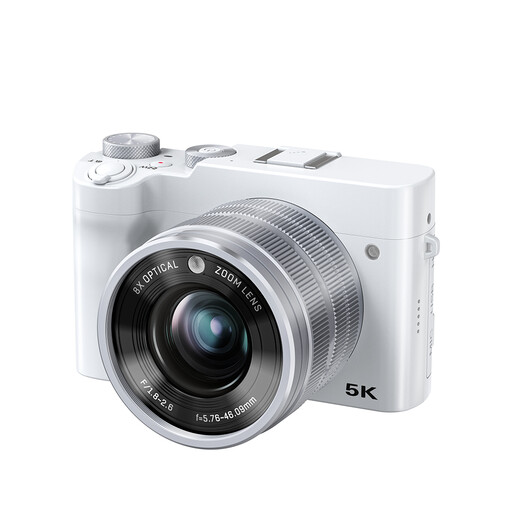
Songdian digital camera with 8× optical zoom, white
First, take an overall shot and a close-up to see whether this camera is right for your patchwork portfolio.
The product name lists 8× optical zoom, 5K, 64 MP and a dual lens.
View at Joybuy
Frequently asked questions
Do you need to buy a DSLR for your patchwork portfolio?
No, not if your current phone or camera captures enough detail for your portfolio. According to the Smithsonian Museum Conservation Institute, digital cameras and phones can also be sufficient when their resolution suits the level of detail you want. Start with a test shot of the whole piece and a close-up.
How do you photograph flat patchwork without distorting its shape?
Keep the camera parallel to the textile to limit perspective distortion. The Smithsonian Museum Conservation Institute recommends this approach for textile photography. If necessary, lay a loose piece on a clean surface and take additional shots of sections of a larger piece.
How can you stop the same fabric looking different in photos?
Keep the lighting as even and consistent as possible, and check the white balance against a neutral reference. White balance can help correct a colour cast, but the light source also affects how the fabric appears.
What can you do if a camera bought in the Netherlands is faulty?
Contact the seller if a consumer product is faulty. According to the Dutch government, there is no fixed statutory two-year guarantee period in the Netherlands; the expected lifespan and the circumstances are taken into account.
Is there a cooling-off period when buying a camera online in the Netherlands?
For many standard online purchases from a business, consumers have a 14-day cooling-off period. The Dutch government lists some exceptions and distinguishes between buying from a business and buying from a private individual.


