Who is this choice for?

Maker with limited setup space

You want to photograph the whole piece from directly above without having lots of equipment around the table. Canon Netherlands discusses overhead photography; the available height and a stable mount both help determine whether you can frame the piece properly.

Maker documenting stitches

As well as overview shots, you take close-ups of seams or fabric texture. Check the focusing distance of the specific camera and lens you’re using; Nikon Netherlands and OM SYSTEM provide this information for their own products.

Maker comparing fabric colours

You use photos to assess colour combinations or progress, so you want to work in similar lighting conditions each time. The Canadian Conservation Institute explains how light sources and their position affect the way colours and surfaces appear.

What should you consider when choosing?

Existing mobile phone

Choose this option: if you mainly take occasional overview shots and your phone can capture the whole piece from a safe position.

Bear in mind: macro features and image settings vary between phones; first test the framing from the available height.

Compact camera with a fixed lens

Choose this option: if you have little room for equipment and want to photograph both the whole piece and the details without changing lenses.

Bear in mind: the focusing distance may vary at different zoom settings, and a macro mode for details doesn’t tell you whether the whole patchwork will fit in the frame.

Mirrorless camera with a suitable zoom lens

Choose this option: if you regularly take both overview and detail shots, and want to choose the lens, mount and shooting height as one complete setup.

Bear in mind: check the exact kit lens and test the framing; a camera without a suitable lens won’t solve a short working distance.

What to consider What should you check? Who is this important for?
Fitting the whole patchwork in the frame Measure the piece and the available height; test the framing with the exact lens or zoom setting, and plan a secure overhead setup. If I want to photograph the whole piece from directly above on a small table, it needs to fit in one frame from the available height. That’s why around 33% of consumers prioritise capturing the whole piece in a limited space.
Seams and fabric texture Check the focusing distance at the zoom setting you’ll use for close-ups; plan separate detail shots if needed. If I want to document stitches or texture separately, my camera needs to focus at the distance I’ve chosen. Around 27% of consumers make these kinds of details their top priority.
Comparing fabric colours Take test shots with consistent lighting and assess the results before considering a different camera. When I compare colours or progress between photos, I want the lighting conditions to be as similar as possible. Around 20% of consumers prioritise comparing colours.
A simple setup First test the equipment you already have; then check what’s included in the kit and what mount you’ll need for your setup. If I want to keep extra equipment around the table to a minimum, I want to know whether my current camera can do the job before buying anything new. Around 20% of consumers prioritise a simple setup.

Common buying mistakes

  • Confusing a short focusing distance with fitting the whole piece in the frame

    A camera or lens may focus at close range without the whole patchwork fitting in the frame from the available height.

    Measure the piece and test an overview shot where you plan to take photos; take close-ups separately if needed.

    If the whole piece doesn’t fit in the frame, taking a separate shot or changing the lens or camera setup may mean extra setup work.

  • Comparing camera bodies alone

    The Canon and Nikon examples are sold as kits with specific lenses. The lens and a suitable mount are also part of the setup above the table.

    Check everything included in the kit, the lens specifications and whether the mount you have in mind is suitable for your camera.

    A different lens or mount may require extra accessories or setup work, so check what’s included with the kit you’ve chosen first.

  • Assuming a different camera will automatically correct inaccurate fabric colours

    Light sources and their position affect how colours and textures appear in photos.

    First take test shots with consistent, even lighting, then decide whether you’re missing any camera features.

    An extra camera won’t change the light source or its position, so you may be able to improve the results by adjusting your lighting setup first.

Camera brands to consider

Canon

The EOS R50 with RF-S 18-45mm is a mirrorless camera kit with an interchangeable lens and a screen that can be used from different angles.

  • Canon Netherlands lists the RF-S 18-45mm F4.5-6.3 IS STM lens and a vari-angle touchscreen as part of the kit.
  • These features don’t tell you whether a patchwork of unknown dimensions will fit in the frame from the available height.

Nikon

The Z50II with NIKKOR Z DX 16-50mm is a mirrorless camera kit for taking overview shots and separate detail shots with a single zoom lens.

  • Nikon Netherlands lists a minimum focusing distance of 0.2 m for the lens, which also has a retractable design.
  • The focusing distance doesn’t determine how much of the patchwork will fit in the frame from your distance at the table; test the framing where you’ll be taking photos.

OM SYSTEM

The Tough TG-7 is a compact camera option for makers who want to capture very close-up fabric details separately.

  • According to OM SYSTEM, the microscope mode focuses from 1 cm; the manufacturer lists the camera as having 12 megapixels.
  • The microscope mode is designed for very close-up details and doesn’t prove that a large patchwork will fit into a single photo.

Sony

The fixed-lens DSC-RX100M7 and the ZV-E10 II with SELP16502 offer the choice of a compact camera with a fixed lens or a mirrorless camera with a kit zoom lens.

  • Sony Netherlands specifies a minimum focusing distance for the RX100M7 of approximately 8 cm at wide angle and approximately 100 cm at telephoto. For the SELP16502, the listed distances are 0.25 m at wide angle and 0.30 m at telephoto.
  • These manufacturer specifications aren’t an independent comparison of fabric photos; check the distance for the zoom setting you’ll actually use.

Joybuy products

These Joybuy products are compact cameras with a flip-up or rotating screen, which can help you frame your shot from a different position. Take a test shot to check whether the whole patchwork fits in the frame from your table.
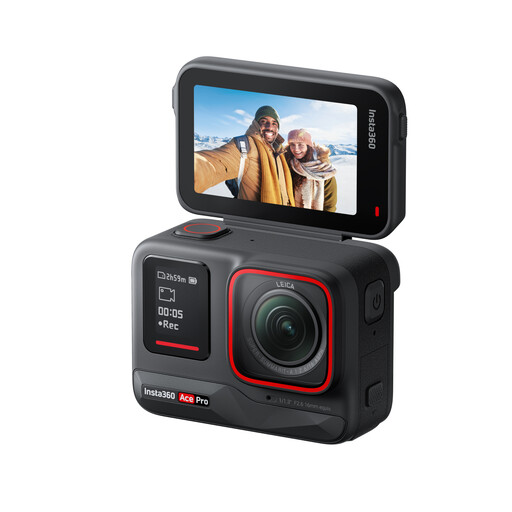
Insta360 Ace Pro action camera with flip-up screen

Insta360 Ace Pro action camera, 2.4-inch flip-up screen

The flip-up screen can be useful if you want to frame your shot from a different position; test it yourself to see whether the patchwork fits in the frame at the available height.

The product name specifies a 2.4-inch flip-up screen.

The product name specifies a 1/1.3-inch sensor.

View at Joybuy
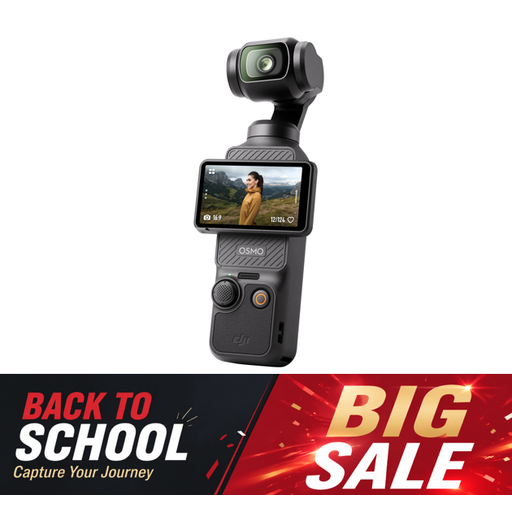
DJI Osmo Pocket 3 with rotating touchscreen

DJI Osmo Pocket 3, 1-inch CMOS, 2-inch rotating touchscreen

The rotating screen can help you compose your shot from a different position; test the framing to see whether the whole piece fits in the frame from your table.

The product name specifies a 1-inch CMOS sensor.

The product name specifies a 2-inch rotating touchscreen.

View at Joybuy

Frequently asked questions

How can I stop the camera getting in the way above a small table?

First work out the framing from the available height and use a stable mount that’s suitable for your camera. An adjustable screen can make it easier to frame your shot from that position; assess the safety of your chosen mount separately.

Do I need a macro camera to photograph the whole patchwork?

No. A short focusing distance isn’t in itself necessary for an overview shot, and it doesn’t guarantee that the whole piece will fit in the frame. For a close-up, the focusing distance at the zoom setting you’re using matters; for an overview, the dimensions of the piece, angle of view and shooting height are also important.

How can I photograph colours and texture without confusing the two?

Take an overview shot in even lighting to compare colours, and, if needed, a separate detail shot to show the texture. The Canadian Conservation Institute explains how different lighting positions can make colour and surface appear differently.

What are my rights in the Netherlands if I’m unhappy with a camera bought online or it breaks soon after purchase?

According to ACM ConsuWijzer, online purchases generally come with a 14-day cooling-off period from delivery; check which exceptions and return terms apply to your purchase. You also have statutory warranty rights if the product is faulty: the seller must offer an appropriate solution if the product doesn’t meet the standard you’re entitled to expect.

Can I publish photos of my patchwork if someone else’s work appears in them?

Check the rights to the work shown before publishing your photo. The Dutch Government says you need the creator’s permission to use other people’s copyright-protected photos; this doesn’t automatically determine the rights to every piece of patchwork shown in a photo you’ve taken yourself.
