What should you look for?
Temperature-adjustable dry iron
Best if: you mainly press patches and don’t need steam, provided the temperature setting is suitable for both the patch and the fabric.
Bear in mind: a dry iron is less versatile for everyday ironing.
Compact steam iron
Best if: you iron clothes as well as applying patches, and can switch off the steam for patching.
Bear in mind: the water tank and steam system take up space and need maintenance.
Small electric heat press
Best if: you want to work on small transfers, seams or awkward-to-reach areas, and the settings suit your patch and the surface beneath it.
Bear in mind: the small plate is less practical for larger patches and everyday ironing; Cricut’s Heat Guide covers the material combinations listed in it.
Steam generator
Best if: you also regularly iron large amounts of laundry and have enough room for the appliance and a suitable ironing board.
Bear in mind: Consumentenbond notes that steam generators are larger and harder to store; extra steam won’t help if the patch instructions call for dry heat.
For patching in an upper-floor flat, the key considerations are whether the appliance suits the materials, how much space you have, safe handling and whether you’ll also use it for everyday laundry.
| What to consider |
What to check before buying |
Who is this most relevant to? |
| Heat for the patch and fabric |
Read both sets of instructions. Check that dry heat, the temperature setting and any protective layer are in line with the recommendations. |
I want to avoid damaging the fabric or having the patch fail to stick, so I check both sets of instructions first. Around 36% of consumers put material suitability first. |
| Work and storage space |
Measure the available storage space and compare it with the appliance, its cord and the size of the patches you usually apply. |
If I have limited cupboard space, I want an appliance that’s easy to put away after a small job. Around 29% of consumers put compact storage at the top of their list. |
| Safe handling |
Check the rest or base and whether the exact model has automatic shut-off; make sure you have a stable, heat-resistant work surface. |
For a quick job, I want to be able to put the hot appliance down safely and let it cool. Around 21% of consumers make safe handling their top priority. |
| Everyday ironing too |
Consider how much laundry you iron in one go and check whether you can use the appliance without steam for patching. |
I want one appliance for patches and everyday clothes, without steam when the patch instructions call for dry heat. Around 14% of consumers prioritise using one appliance for laundry and patches. |
Irons and steam generators at Joybuy
This selection includes steam irons and steam generators for anyone who wants to iron everyday laundry as well as apply patches. Check the exact model to see whether you can switch off the steam for patching and set the recommended temperature.
 No image available
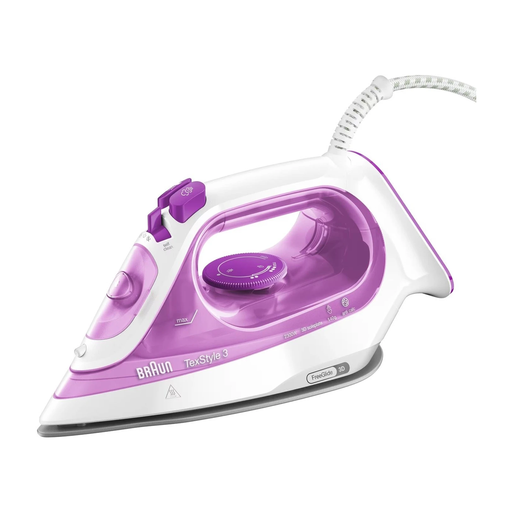
Braun TexStyle 3 SI3030 steam iron
An option for anyone who wants to iron everyday laundry as well as apply patches; check whether you can use this model without steam for patching.
The product description lists a ceramic SuperCeramic soleplate, a precision tip and automatic shut-off after 30 seconds when horizontal or 8 minutes when upright.
View at Joybuy
 No image available
Braun FreeStyle 5 SI5037 steam iron
This model may suit you if you’re looking for a steam iron for everyday laundry; check whether you can switch off the steam for patches.
The product description lists a FreeGlide 3D SuperCeramic soleplate, a precision tip, a 300 ml water tank, automatic shut-off and an open handle.
View at Joybuy
 No image available
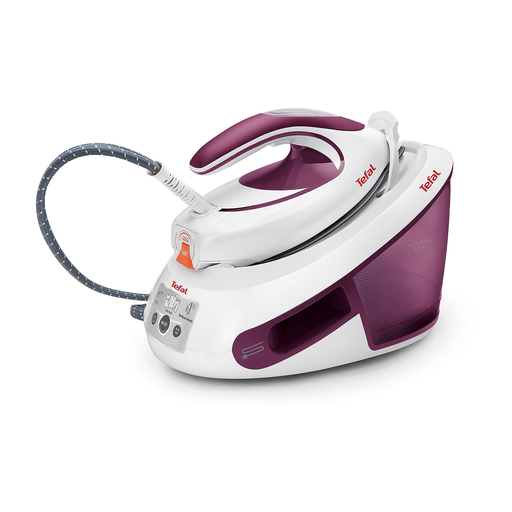
Tefal Express Anti-Calc SV8054 steam iron
An option for mixed ironing needs; before patching, check the adjustable temperature and whether you can switch off the steam.
The product information lists 2800 W, a 1.8 l water tank, a Durilium soleplate, a fabric selector, adjustable steam and a self-cleaning system.
View at Joybuy
 No image available
Philips 3000 Series PSG3000/20 steam generator
This model is designed for regular ironing as well as patching; consider how much room you have for a steam generator.
The product information lists 2400 W, a removable 1.4 l tank, vertical steaming and up to an hour of use in ECO mode. Check whether the manual allows dry use for your patching job.
View at Joybuy
 No image available
Morphy Richards EasySteam+ MUH-ISE4B steam generator
An option for anyone who regularly steam-irons as well as applying patches; the water tank and weight are worth considering if you have limited storage space.
The product information lists 2400 W, a removable 1.8 l tank, a 1.9 m cord and a weight of 2.83 kg. Check whether you can switch off the steam for patching.
View at Joybuy
Frequently asked questions
Do you need to use steam to apply a patch?
Not if your patch instructions call for dry heat: switch off the steam. Also check the maximum temperature for the fabric and use a protective layer if the instructions recommend one.
What should you do if the fabric can’t withstand the required heat?
Don’t raise the temperature above the limit on the fabric care label. Patchy suggests sewing or using suitable glue as possible alternatives for materials that its patches can’t be ironed onto; check which method of attachment suits your patch and fabric.
How do you maintain an iron you also use with steam?
Follow the descaling method and schedule in the model’s manual. Consumentenbond recommends emptying the water tank after ironing and notes that limescale can cause problems with the steam function.
Does a CE mark prove that an appliance is good for applying patches?
No. Business.gov.nl explains that a CE mark is the manufacturer’s declaration that the appliance meets the applicable EU requirements; it’s not a quality mark or proof of patching results.
What are your rights if an iron bought online breaks too soon?
According to ACM ConsuWijzer, your statutory guarantee is in addition to any manufacturer’s guarantee; if a product is faulty, you can ask the seller for an appropriate solution. Online purchases of products generally also come with a 14-day cooling-off period from delivery, subject to legal exceptions.


