
Vandaag of morgen in huis

Kwaliteit gegarandeerd

Welkomstaanbiedingen ontgrendelen: GRATIS bezorging | Tot 80% korting | Gratis 30 dagen JoyPlus-proefperiode
Download de app
Pastel highlighters are popular with school pupils, students, planners and creative users. Their soft colours are less vivid than neon ink and work well for revision notes, diaries and hand lettering. However, an attractive highlighter set can disappoint if you choose it based only on the colours shown on the packaging.
The three most common pitfalls are:
So don’t just look at the number of colours. Consider the nib, line width, size and how you’ll store the highlighters too.
Many chisel-tip highlighters offer two line widths. You can use the broad side to highlight text and the narrow side to underline or add fine details.
A nib of around 1 to 2 mm is useful for fine lines. A width of 4 to 5 mm works better for highlighting full lines of text. Always check whether the manufacturer specifies both measurements. Terms such as “dual tip” or “versatile tip” don’t tell you much without technical details.
For hand lettering and creative projects, having control over the angle is important. A chisel tip can create lines of different widths, but it isn’t the same as a brush marker. So don’t expect a flexible brush nib unless the product description says it has one.
The products listed use water-based ink. This is a common choice for paper and studying, but results vary depending on the type of paper. Ink may show through thin school paper, so test a new colour somewhere inconspicuous first.
The colour in a product photo may also look different from the mark it makes on paper. A soft shade such as mint, lilac or cream has less contrast than bright yellow. That can work well in planners where you want a clear, uncluttered look, but may make key passages harder to find quickly.
According to STABILO’s product information, the markers in question are designed for highlighting and underlining, and some models can also be used for hand lettering or drawing. This describes the intended use of the product; it doesn’t guarantee the same results on every type of paper.
A slim model with a clip fits easily into a pencil case, laptop bag or rucksack. A desk set with several colours is handy if you keep your markers in one place, such as on a desk.
According to the product information, STABILO states that the ink in its models won’t dry out for up to four hours without a cap. This is a STABILO product claim; actual performance may depend on the temperature, humidity and condition of the marker. Always put the cap back on firmly after use.
Keep pastel highlighters out of direct sunlight and, ideally, store them in a cool, dry place. Follow the safety information when young children are around: some models contain small parts and aren’t suitable for children under three.
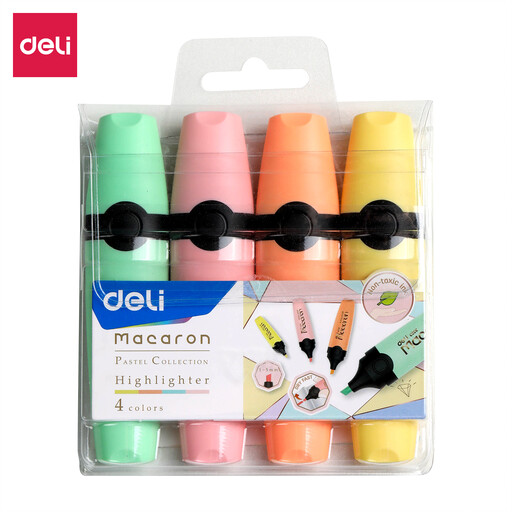
Why it suits this profile: This compact set of four pastel colours is a good choice if you want to try out different shades for school, planning or everyday office work.
The chisel tip is designed for controlled broad and fine marks. Be sure to check how the colours look on your paper first.
Four pastel colours and a chisel tip make this a practical starter set for highlighting and underlining.
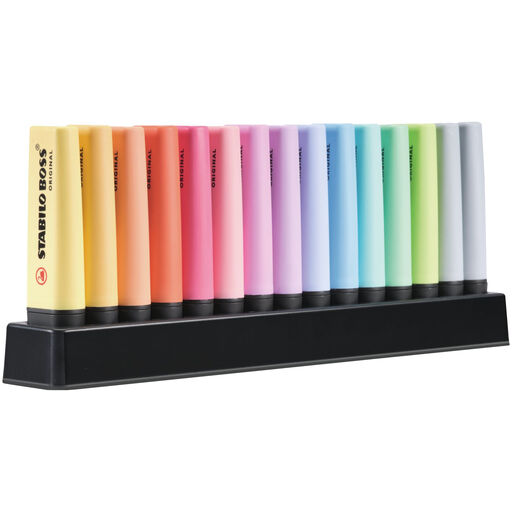
Why it suits this profile: The wide choice of colours is ideal if you use colour coding for studying, planning, office work or creative projects.
The set contains 14 pastel colours and one extra marker, so you’re less likely to need to combine several separate colours.
Chisel tip with 2 and 5 mm line widths; according to the product information, it’s suitable for highlighting text, drawing lines and creative projects.
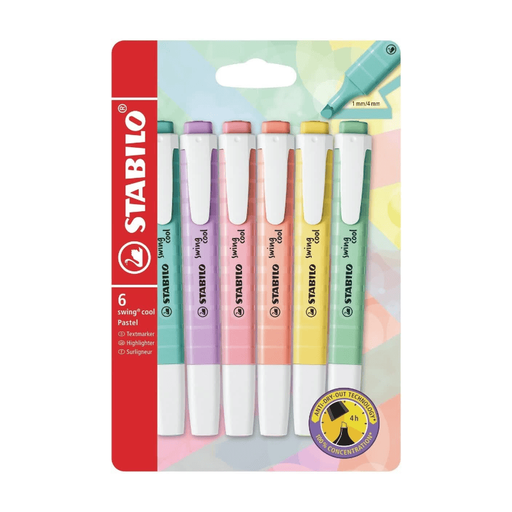
Why it suits this profile: The slim design and clip make this set handy for students and professionals who carry their highlighters in a pencil case or bag every day.
The combination of a fine 1 mm line and a broad 4 mm line means you won’t need a different marker for every task.
Pocket-sized, with a clip and two line widths in one tip; the set contains six pastel colours.
We’ve put together a complete, up-to-date list of products that meet these strict selection criteria and current European safety regulations.
Don’t use a different colour for every sentence. For example, choose one colour for definitions, one for examples and one for action points. This will keep your notes easy to read.
For an even result:
Pastel highlighters are also useful for bullet journals, diaries and simple hand lettering. For detailed illustrations, coloured pencils or specialist hand lettering markers may be more suitable. So think about what you’ll mainly use them for before buying a large set.
It depends on the paper thickness and how much ink you use. Water-based ink may show through thin paper. Try a colour in a corner first, or use paper designed for markers.
Their lifespan depends on how often you use them, how much pressure you apply and whether the cap closes properly. STABILO’s product information states that several models can be left uncapped for up to four hours, but this is a brand claim, not a guaranteed usage time in every situation. Replacing the cap firmly helps prevent the ink from drying out.
Yes, especially if you like using soft colours for colour coding. When choosing stationery for school or the office, consider the line width, size and how easy the ink is to read. A fine line is useful for small notes, while a broad chisel tip is generally more practical for highlighting longer passages.
