
Someone with limited kitchen space
You want to store a few portions of your own sauce separately and neatly, without putting a large freezer in the shared kitchen.


Choose a freezer that can freeze fresh portions and can be set to −18 °C or colder. If you only need to store a few well-organised portions and space is limited, an under-counter freezer with drawers could be a good fit. If your housemates regularly freeze larger quantities, a larger upright model may offer more room. Measure the space available, then compare the annual energy consumption, noise level and defrosting requirements of models with a suitable capacity.
You want to store a few portions of your own sauce separately and neatly, without putting a large freezer in the shared kitchen.
You regularly freeze several portions at once and want enough accessible space to store containers carefully.
You want to take the stated energy consumption, noise level and maintenance into account when choosing an appliance for a shared space.
Best for: organising a few portions of your own in a kitchen with limited floor space.
The trade-off: drawers make portions easy to reach, but offer less storage space than a larger upright model.
Best for: several people who regularly freeze larger quantities of sauce and other dishes.
The trade-off: you’ll need enough space; compare the stated energy consumption of models with the capacity you need.
Best for: a household that wants to store large or irregularly shaped items as well as sauce.
The trade-off: according to the Consumentenbond’s buying advice, small portions are generally less easy to reach than in the drawers of an upright freezer.
Best for: a shared kitchen with a suitable housing unit and a preference for an integrated appliance.
The trade-off: your choice depends on the housing unit. According to the Consumentenbond’s buying advice, built-in models are generally more expensive and harder to find a suitable replacement for than freestanding models.
| What to consider | What should you check? | Who should give this more weight? |
|---|---|---|
| Capacity and space | Measure the available space and door clearance; compare the usable capacity and drawer layout with the number of containers you store at once. | If I want to keep my portions organised without giving up more kitchen space than necessary, I’ll look at the size and layout first. Around 29% of consumers put suitable capacity and space at the top of their list. |
| Freezing fresh sauce | Check whether the exact appliance can freeze fresh food and can be set to −18 °C or colder. The Voedingscentrum states that one- and two-star freezer compartments cannot reach this temperature. | If you want to freeze newly prepared, cooled portions of sauce, check that the appliance is suitable for this, rather than just for storing already-frozen food. Around 23% of consumers put freezing performance first. |
| Energy consumption | Compare the stated annual consumption in kWh of models with a capacity that suits your needs. | If I share a freezer with housemates, I’ll take its annual energy consumption into account when choosing, rather than looking at capacity alone. Around 18% of consumers put energy consumption first. |
| Noise | Compare the stated noise level of the exact models and discuss where the appliance can go. | If the kitchen is next to a shared living or sleeping area, I may consider the noise level more important than extra capacity. Around 18% of consumers put keeping the shared space quiet first. |
| Defrosting and cleaning | Check whether the exact model has NoFrost or static cooling; also agree who will date the containers and maintain the appliance. | When several housemates store food, I want to know what maintenance is involved and how to keep the portions organised. Around 12% of consumers put low maintenance first. |
A space for already-frozen food isn’t automatically suitable for new portions. The Voedingscentrum states that one- and two-star freezer compartments cannot be set to −18 °C.
Check that the exact appliance can freeze fresh food and reach a temperature of −18 °C or colder.
Both the stated annual energy consumption and a suitable appliance size are relevant when comparing freezers.
First work out how many portions you store at once, then compare the annual consumption in kWh of models that meet your needs. Milieu Centraal highlights the annual consumption shown on the energy label.
A door that can’t open properly or unclear arrangements about containers can make an appliance harder to use in a shared kitchen.
Measure the space, check how the door opens and agree where labelled portions will go and who will keep the appliance clean.
According to Inventum, the VR550 is a freestanding 88-litre under-counter freezer with three transparent drawers, for those who want to organise individual portions.
According to Bosch Netherlands, the Bosch GTV15NWEB is a freestanding under-counter freezer with stated dimensions of 85 × 56 cm.
According to Beko, the Beko FSE1074N is a freestanding under-counter freezer with a stated width of 54 cm.
According to Liebherr, the Liebherr FNdi 1624 Plus is an under-counter freezer with NoFrost and a total volume of 92 litres.
Frilec lists the BREMEN132-040BW in its freezer range; Joybuy’s product information describes it as an 87-litre under-counter model.
This Joybuy selection includes freestanding under-counter freezers, larger upright models and chest freezers for freezing and storing portions in a shared kitchen.
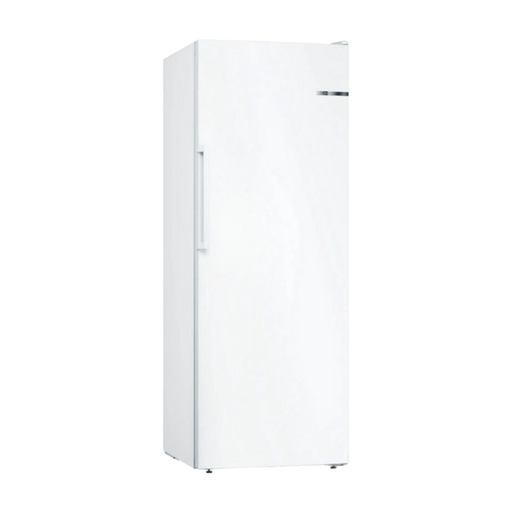 Image unavailable
A larger upright model for housemates who want to freeze and store several portions at once.
200-litre capacity; NoFrost and SuperFreeze. The product description lists a −18 °C setting and a freezing capacity of 16 kg per 24 hours.
 Image unavailable
An under-counter model for cooled portions if you’re looking for a compact freezer with NoFrost.
87-litre capacity; NoFrost and Fast Freeze; four-star freezer setting. The product information lists a recommended temperature of −18 °C and a freezing capacity of 5 kg per 24 hours. External dimensions: 84,5 × 55 × 59,5 cm; energy class D.
 Image unavailable
A chest freezer for those who want to store larger or irregularly shaped items as well as sauce; small portions are generally less easy to reach than in the drawers of an upright freezer.
99-litre capacity and a removable wire basket. The product information lists four-star freezing down to −24 °C, a freezing capacity of 4,5 kg per 24 hours and annual energy consumption of 169 kWh. External dimensions: 54,5 × 47,6 × 83,5 cm.
 Image unavailable
A freestanding upright model for storing several portions, with NoFrost according to the product information.
122-litre capacity; stated noise level 39 dB. The specifications list a four-star freezer compartment, a recommended setting of −18 °C, Fast Freeze and a freezing capacity of 5,5 kg per 24 hours. Width: 475 mm.
 Image unavailable
A compact freestanding freezer with three compartments for those who want to keep portions separate.
60-litre capacity and a reversible door. The product information lists temperatures down to −24 °C and a freezing capacity of 6 kg per 24 hours. External dimensions: 44,5 × 47,5 × 84,5 cm.
Cool the sauce quickly first, seal the portions well and put them in the fridge or freezer within two hours of cooking. The Voedingscentrum recommends small portions and a freezer temperature of −18 °C; don’t add too many new portions at once.
Use clean, airtight containers, write the date on them and agree on a designated space or drawer with your housemates. For pasta sauce without meat, the Voedingscentrum gives three months in the freezer as a quality guideline; this isn’t a general storage time for all homemade sauces.
Yes. According to the European Commission, energy labelling applies to household refrigerators and freezers. Use the label to compare the stated annual energy consumption of models with a suitable capacity.
In the Netherlands, the retailer is your first point of contact if a product doesn’t meet the terms of the contract. The Rijksoverheid states that the retailer cannot refer you solely to the manufacturer; an additional manufacturer’s warranty doesn’t affect your statutory rights.
Yes. According to the Rijksoverheid, when you buy a new appliance of a similar type, the shop must take back your old appliance of a similar type.