
Vandaag of morgen in huis

Kwaliteit gegarandeerd

Welkomstaanbiedingen ontgrendelen: GRATIS bezorging | Tot 80% korting | Gratis 30 dagen JoyPlus-proefperiode
Download de app
A ready-made pasta sauce can make a quick pasta meal much easier. However, jars, pouches, pestos and dried sauces can vary considerably in ingredients, portion size and how they are used. An eye-catching label featuring words such as “Italian”, “natural” or “full of flavour” says little by itself about what you are actually buying.
Pay particular attention to the ingredients list, allergens, nutritional information and how you plan to use the sauce. Below, you’ll find what households in the Netherlands should look out for when choosing tomato sauce for pasta, pesto, creamy pasta sauce or sauce for lasagne.
Packaging can create an Italian feel, while the product itself contains a long list of ingredients including starch, flavourings, sugar or flavour enhancers. That does not necessarily make the product unsuitable, but it is worth considering if you are specifically looking for a simple tomato sauce or Italian pasta sauce.
For tomato sauce, check the proportion of tomatoes, passata or tomato pulp. With pesto, look at the balance of basil, oil, cheese and nuts. The term “traditional” is no substitute for this verifiable information.
Tomatoes naturally contain sugars. A product with no added sugar can therefore still show a certain amount of sugar in the nutrition table. Compare the values per 100 grams, rather than looking only at the front of the packaging.
A pasta sauce with less sugar may also contain more salt, oil or starch. Assess the full table instead of focusing on a single claim.
Pesto often contains milk and nuts. A creamy pasta sauce may contain milk, egg or pork. Bolognese sauce can also contain celery or other allergens. Always check the current packaging, particularly if you have food allergies, intolerances or specific dietary requirements. Product information in an online shop can change and is not always a substitute for the label.
In the European Union, the main allergens must be clearly identified in the ingredients list. Look out for:
A product that, according to the supplied product information, contains none of the 14 main EU allergens may be worth considering for households that need to avoid them. Always check this again on the packaging.
Use the nutrition table to compare products fairly. Pay attention to:
Portion sizes vary from one brand to another. A 490-gram jar may be suitable for several people, while a 140-gram jar of pesto is more likely to be intended for one or two portions.
A ready-made pasta sauce usually only needs to be heated, whereas a dried sauce mix requires additional ingredients. A squeezy pouch can be handy for portioning, while a glass jar is often more practical when you are using a larger quantity.
Also check:
For lasagne, an ordinary tomato sauce is not always enough. A separate béchamel sauce, such as Grand’Italia Besciamella, is intended for layering in lasagne and oven dishes. For a quick meal, a dry base mix can be convenient, but you will still need to add your own pasta, vegetables, meat substitute, meat or dairy products.
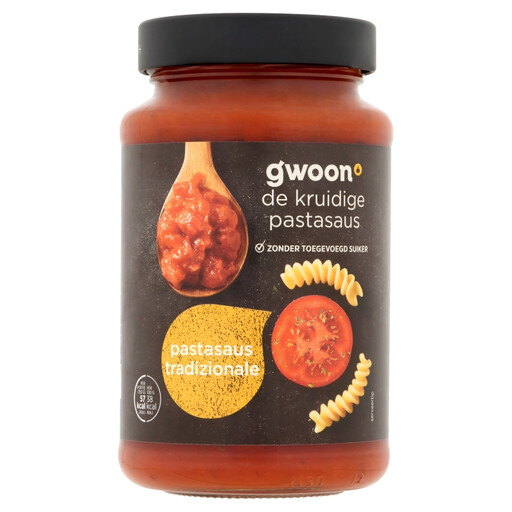
Why it suits this profile: This ready-to-use tomato sauce is suitable when you want a base for spaghetti, penne or vegetables without much preparation. The packaging states that it contains 79% tomatoes and 9% tomato purée.
The tomato content is clearly stated in the product information, so you do not have to rely solely on the packaging. The listed ingredients contain none of the 14 main EU allergens.
490 g contents, ready to heat, with 36 kcal and 0.65 g of salt per 100 g according to the product information.
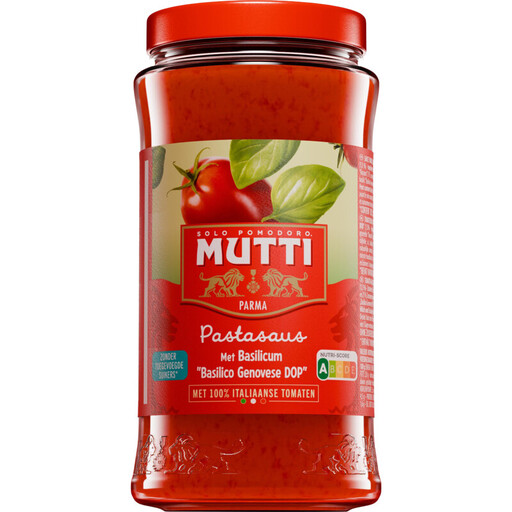
Why it suits this profile: If you are looking for a distinctive pasta sauce with basil and a relatively straightforward ingredients list, this version is worth comparing. According to the product information, it uses Italian tomatoes and contains 1.5% basil.
The product information gives specific percentages for tomatoes and basil. However, check the current packaging and listed allergens before buying.
234 kJ, or 56 kcal, per 100 g; according to the product information, free from gluten, milk and lactose.
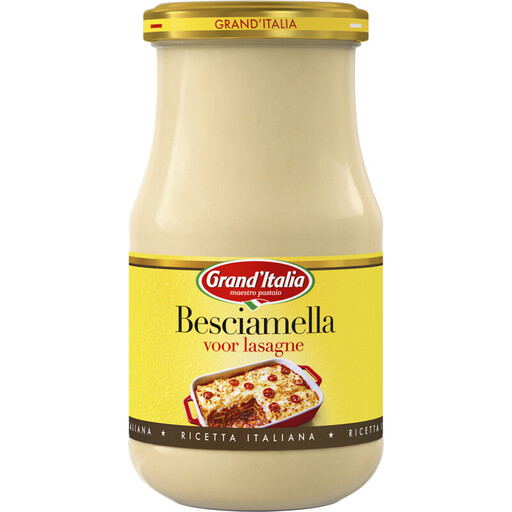
Why it suits this profile: This sauce is designed for lasagne, gratins and oven dishes. You do not need to make a separate white sauce, which is useful for larger meals or when preparing several layers.
Its intended use is clearly stated: lasagne, oven dishes and vegetables au gratin. This helps you choose a sauce that suits the recipe, rather than using ordinary tomato sauce as a substitute.
400 g contents, ready to use and made with cream and whole milk; according to the product information, contains milk, egg and wheat.
We have put together a complete, up-to-date list of products that fully meet these strict selection criteria and the applicable European safety regulations.
A ready-made pasta sauce usually only needs to be heated and mixed through the cooked pasta. Tomato sauce with basil is versatile. For extra heat, choose a spicy version with chilli. Pesto can be stirred straight into hot pasta, but generally contains more fat and salt per 100 grams.
This depends on how thick the sauce is, how much pasta you are cooking and the ratio you prefer. As a practical starting point, follow the portion information on the packaging. For a family meal, a jar of around 470 to 490 grams is often more convenient than a small jar. For 140 grams of pesto, the product information states one to two portions.
Always follow the label. In general, an opened jar or packet should be sealed, stored in the fridge and used within the stated period. Check the smell, colour and packaging before use. Discard the product if the packaging is bulging or damaged, or if the sauce no longer looks normal.
