
Party platter makers with generous toppings
You want room for cheese, hummus, fish or other toppings. A description such as extra-large helps you narrow down your options, but doesn’t tell you how well a rusk will hold up under its toppings.


For party toppings, choose rusks described as extra-large or robust if you want more room for toppings. These descriptions don’t guarantee greater thickness or strength when topped with moist ingredients. Choose wholegrain or multiseed if you also want a pronounced grain or seed flavour, or plain if you prefer a neutral base. Compare the serving size per rusk where this information is available, and check the ingredients and allergens.
You want room for cheese, hummus, fish or other toppings. A description such as extra-large helps you narrow down your options, but doesn’t tell you how well a rusk will hold up under its toppings.
You want the rusk itself to add flavour, so you’re comparing wholegrain and multiseed varieties. Remember to check the ingredients and allergen information too.
You want the toppings to provide the flavour and aren’t looking for a pronounced seed variety or a specially large size. It’s still important to check the allergen information for plain rusks.
First decide whether you’re looking for more room for toppings, a pronounced grain or seed flavour, or a neutral base. Then compare the packaging information for the varieties that suit your choice.
| What to consider | What to check before buying | Who it matters to |
|---|---|---|
| Size as a base for party toppings | Look for descriptions such as extra-large, large and crisp, or robust. Where stated, compare the serving size per rusk. Don’t treat these terms as a measure of how well it resists breaking. | If I want to serve several toppings, I mainly want enough room on the rusk. For around 46% of consumers, a larger size is said to be the main requirement. |
| Wholegrain and seed flavour | Compare the ingredients and fibre per 100 g; also read the allergen information for seed and grain varieties. | I want the grain or seed flavour to come through alongside the toppings. An estimated 36% of consumers prioritise this flavour or the wholegrain character. |
| Neutral base | Compare the number of rusks and the ingredients in plain varieties; don’t assume they’re large unless this is stated in the product description. | When I want the toppings to take centre stage, I prefer a simple plain rusk. This is said to be the first choice for around 18% of consumers. |
Extra-large and robust are product descriptions. They don’t guarantee that a rusk won’t break or go soft under moist toppings.
Compare the stated serving size if it’s available. Try moist toppings on one rusk first, and only top the rest just before serving.
The multiseed and wholegrain varieties described contain wheat, among other ingredients, and may also contain sesame, egg or other grains. Ingredients vary from product to product.
Check the current ingredients and allergen information on every pack, and keep a suitable alternative aside if you’re unsure.
The product category alone doesn’t tell you which type of salt is used in an individual rusk.
Check the ingredients list on the pack if baker’s salt is an important consideration for you.
Offers classic rusks and varieties described as extra-large, including wholegrain and multiseed rusks.
Sells its own rusks as well as Bolletje varieties. Product information can help you compare ingredients, serving sizes and nutritional values.
Offers both plain rusks and Robuust Meergranen for anyone looking to compare a different grain variety.
Offers plain rusks and seed varieties described as large, crisp rusks.
Goud Gebakken offers plain and wholegrain rusks for anyone looking for a classic rusk base.
Offers plain and wholegrain rusks as options for a simple rusk base.
These Bolletje varieties let you choose between multiseed, wholegrain and classic rusks. Three varieties are described as extra-large; the two packs of 13 are options if a larger size isn’t essential.
 Image unavailable
For anyone who wants a pronounced seed flavour alongside their party toppings. Extra-large is a product description, not a measure of strength; check the allergens on the packaging.
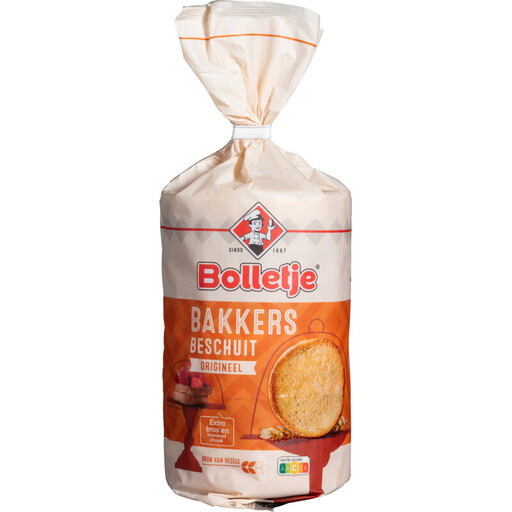 Image unavailable
A classic rusk for anyone looking for a base for toppings that’s described as extra-large. The description doesn’t tell you how well it will hold up under moist toppings.
 Image unavailable
For anyone who wants to pair wholegrain rusks with a size described as extra-large. A darker appearance or larger size doesn’t prove that the rusk will be firmer under moist toppings.
 Image unavailable
A wholegrain option for toppings when an explicitly extra-large size isn’t essential. It’s best to add toppings with a high moisture content just before serving.
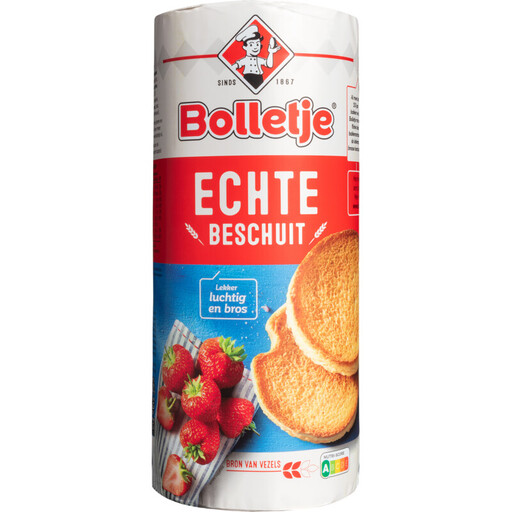 Image unavailable
A classic base when you want the toppings to take centre stage and a larger size isn’t essential. Check the current packaging for allergen information before serving to guests.
No. Don’t treat the term as a measurement in millimetres. Product descriptions such as extra-large, large and crisp, or robust can help you find different varieties, but they don’t tell you how much weight or moisture a rusk can handle. Compare the serving size per rusk if it’s stated.
Start with a variety described as extra-large or robust if you want more room for toppings, but don’t assume it’s guaranteed to stay firm. Add hummus, cream cheese or other moist toppings just before serving.
Read the allergen information on the packaging you choose. The seed and grain varieties described contain wheat and sesame, among other ingredients; depending on the product, egg and other grains may also be listed.
You can’t tell from the product category alone. Check the ingredients list on the individual pack if you want to know whether baker’s salt is listed.
Store rusks in a dry place and seal the packaging or storage tin tightly. Check the storage instructions on the packaging for the variety you’ve bought.