For cooking several trays at once, choose a built-in oven that fits the available housing and explicitly offers a fan setting for cooking on multiple levels. If you don’t have a suitable housing unit, a freestanding fan oven is likely to be a better choice. The stated capacity in litres doesn’t tell you how much usable tray space there is. Measure your trays and check the accessories supplied and installation requirements for the exact model; the Consumers’ Association also distinguishes between oven capacity and usable space.
Which oven is right for you?
Workshop cook using several trays
You want to roast multiple portions at once, so look for enough tray space and oven settings for cooking on several levels. The Consumers’ Association points out that usable space can differ from the capacity in litres; Bosch states that model HBG578BB3 has a fan setting for up to three shelf levels.
Workshop host without built-in housing
You’re cooking somewhere a freestanding oven would be more suitable, so you’ll need to consider its external dimensions, power connection and clearance for heat to escape. Inventum and Princess offer freestanding options in the models mentioned; the Fire Service stresses that appliances need room to dissipate heat.
Cook who wants to control the recipe
You want to select the right oven setting and temperature during the class and check how the parsnips are cooking. The Netherlands Nutrition Centre offers recipe advice for roasting parsnips and explains how a fan setting circulates heat around the oven.
What should you look for when choosing?
Start by considering your workshop space: built-in housing, a freestanding setup or the need for microwave functions. Then assess the usable tray space and controls.
Built-in oven with a fan setting for multiple levels
Best for: a suitable built-in housing unit and workshops where you want to use several trays at once.
Bear in mind: the housing dimensions and ventilation; the stated capacity in litres doesn’t guarantee that your trays will fit.
Freestanding fan oven
Best for: a workshop space without suitable built-in housing, provided there’s room for a separate oven.
Bear in mind: the external dimensions, heat clearance and power connection at the venue.
Combination microwave with fan oven
Best for: anyone who also needs microwave functions and is happy with the available oven settings and shelf positions.
Bear in mind: the Consumers’ Association notes that combination microwaves may have fewer oven settings or shelf positions than conventional ovens.
| Consideration |
What to look for when buying |
Who should pay particular attention? |
| Space for the portions you’re planning |
Measure your trays or dishes and check the internal dimensions, trays supplied and permitted shelf levels. The Consumers’ Association points out that capacity in litres isn’t the same as usable space. |
If I want to roast several portions at once during a workshop, I need to know whether my trays and food will actually fit. Around 33% of consumers prioritise having enough space for their trays. |
| An oven that suits your workshop space |
Check the external or housing dimensions, power connection and installation instructions. Leave room for heat to escape, as advised by the Fire Service. |
At a venue without a built-in oven, I need to know in advance where an appliance can be safely placed and connected. Around 25% of consumers base their choice mainly on the setup. |
| A cooking process you can monitor |
Compare the available oven settings, temperature controls and timer. The Netherlands Nutrition Centre explains how a fan setting circulates heat around the oven. |
If I want to follow the recipe and check that the food is cooked during the class, having the right settings matters. Around 25% of consumers put control over the cooking process first. |
| Energy use and cleaning |
Where the information is available, compare the energy use per cycle for the same heating setting. The European Commission provides this information for ovens covered by the EU label. |
After repeated use, I also want to consider energy use and cleaning, without choosing an unnecessarily large oven for every workshop. Around 17% of consumers prioritise these practical considerations. |
Commonly overlooked buying considerations
-
Choosing based only on capacity in litres
The capacity in litres doesn’t tell you exactly how much room there is for your baking tray or oven dish. The Consumers’ Association points out that the usable oven space may be smaller than the stated capacity.
Measure your tray or dish and compare it with the internal dimensions, accessories supplied and permitted shelf positions for the exact model.
If the oven doesn’t come with suitable trays, you may need to roast the food in several batches.
-
Assuming a combination microwave is as spacious as a conventional oven
A combination microwave may have fewer oven settings or shelf positions than a conventional oven, which can affect how you prepare food for your workshop.
Check the fan setting, tray size and available shelf levels for the specific model.
-
Setting up a freestanding oven without checking its surroundings
Electrical appliances need room to dissipate heat. The power connection also needs to be suitable for the workshop venue.
Follow the placement instructions and check the available space and power connection at the venue in advance. The Fire Service recommends plugging high-power appliances directly into a wall socket wherever possible.
-
Assuming similar model codes refer to the same model
A similar brand name or part of a model code doesn’t prove that you’re looking at the same version.
Compare the full model code and check the specifications and accessories supplied with the exact version you’re considering.
Brands to consider
Bosch
For built-in model HBG578BB3, Bosch lists 3D Hotair for cooking on up to three shelf levels.
- The manufacturer describes a fan setting for cooking on multiple levels.
- This is a model specification, not an independent test of roasted parsnips. Check the tray size, housing dimensions and accessories for the version you choose.
ETNA
ETNA says that built-in model OM272ZT combines turbo fan cooking with five shelf positions and a capacity of 72 litres.
- The manufacturer lists five shelf positions for this model.
- ETNA lists one enamelled baking tray as included; five shelf positions don’t mean that five trays are included or that they’re all suitable for your food at once.
Inventum
Inventum lists a capacity of 60 litres, a fan setting and a baking tray as included with the freestanding OV607B.
- The freestanding design may be suitable when there’s no built-in housing unit.
- The stated capacity doesn’t tell you how many parsnips will fit on the tray. Inventum also notes that this model doesn’t have a defrost function.
Princess
For the freestanding oven 112754, Princess lists a capacity of 45 litres, a fan setting, top and bottom heat, and a timer.
- The manufacturer lists a baking tray and three shelf levels.
- Check the internal dimensions and permitted setup for your portions. The timer can be set for up to 60 minutes.
NEFF
For built-in model B4ACE4AG3, NEFF describes Circo Therm for cooking on three levels and a slide-and-hide oven door.
- The manufacturer lists one enamelled baking tray and a roasting pan.
- The door is only practical if you have enough space; the multi-level specification isn’t an independent test of cooking parsnips.
Ovens on Joybuy for workshops
This selection includes built-in ovens with fan settings for multiple levels and a freestanding oven. Check that the tray size and installation requirements suit your workshop venue.
 No image available
Bosch HBA514BB3 built-in oven, 71 l, 3D fan cooking
May suit workshops where you want to use several shelf levels and have suitable built-in housing.
The product information lists a capacity of 71 l and 3D fan cooking on up to three levels. The controls are described as a display and dial. Check the housing dimensions and tray space before installation.
View on Joybuy
 No image available
Bosch HBG536EB4 built-in oven, 71 l, 3D fan cooking
An option to consider if you have suitable built-in housing and want to use several oven levels.
The product information lists a capacity of 71 l and cooking on up to three levels. Accessories listed include an Air Fry tray, universal tray, combination grid and telescopic rails. Check the housing dimensions and whether the tray space suits your portions.
View on Joybuy
 No image available
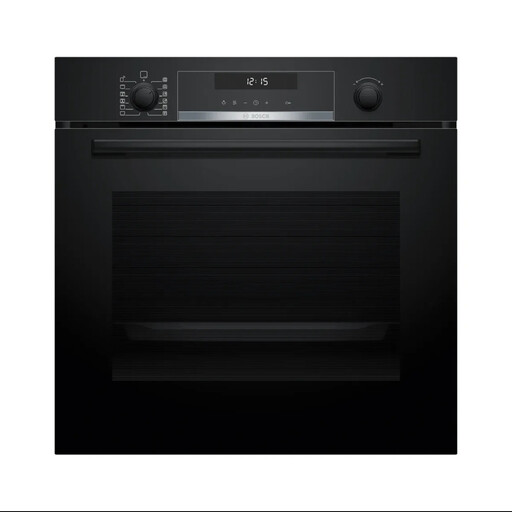
Bosch HBA534BB3 Serie 4 built-in oven, 71 l, 3D fan cooking, black
Could suit a workshop space with suitable built-in housing where you want to use several oven levels.
The product information lists a capacity of 71 l and cooking on up to three levels. The controls are described as a display and rotary knobs. Check the housing and tray dimensions before choosing.
View on Joybuy
 No image available
Bosch HBG578EB7 electric built-in oven, 71 l, Air Fry function
A built-in option to consider if the housing fits and you want a range of oven settings.
The product information lists a capacity of 71 l, a temperature range of 30–275 °C and cooking on up to three levels. Features include fan cooking, top and bottom heat, and Air Fry. Check the installation requirements for the exact model.
View on Joybuy
 No image available
Wiggo WMO-E4562H(B) freestanding mini oven with hob, 45 l
May suit a workshop space without built-in housing, provided there’s enough room for the oven and for heat to escape.
The product information lists a capacity of 45 litres, convection and top and bottom heating. Check the tray space and follow the placement instructions for the freestanding oven.
View on Joybuy
Frequently asked questions
What temperature should you use for parsnips?
Follow the recipe and take your chosen oven setting into account. The Netherlands Nutrition Centre uses 180 °C in a recipe for parsnips with other vegetables; this isn’t a fixed setting for every oven or batch. When adapting a conventional recipe for a fan oven, the Netherlands Nutrition Centre generally recommends reducing the temperature by around 10% and checking that the food is cooked through at the end.
How can you check whether a built-in oven will fit?
Measure both the housing unit and the baking tray or oven dish you want to use. Then check the required housing dimensions, internal space and installation instructions for the exact model; capacity in litres isn’t the same as usable tray space.
Can you plug a freestanding oven into an extension lead?
Check the manual and the power connection at the workshop venue. The Fire Service recommends plugging high-power appliances directly into a wall socket wherever possible, rather than using a cable reel or extension block. Make sure the appliance also has room to dissipate heat.
What does the energy label tell you about energy use?
For household ovens covered by the rules, the EU label gives details including capacity and energy use per cycle for conventional and fan settings. The European Commission excludes portable ovens from these oven labelling rules. Compare suitable models using the same heating setting; the energy rating alone won’t tell you how much energy a workshop will use.
What rules apply if you sell food during workshops?
If your activity meets the criteria for a food business, the Netherlands Food and Consumer Product Safety Authority says you must register the business and handle food safely. Calling something a ‘cookery workshop’ doesn’t in itself determine whether a particular organiser falls under these rules; assess the specific activity.


