
Cooking with a large soup pan
You want to blend your soup in the pan and would rather not transfer the whole batch. The Consumentenbond describes blending soup in the pan with a stick blender.


If your parsnip soup is already cooking in a large pan, a stick blender is a practical choice: you can blend it in the pan without having to transfer the soup. A blender jug is suitable only if the instructions for that exact model allow you to blend soup at its temperature and in the quantity you need. A heated soup maker can combine cooking and blending, but its hot-food capacity may mean you need to make several batches.
You want to blend your soup in the pan and would rather not transfer the whole batch. The Consumentenbond describes blending soup in the pan with a stick blender.
You want to consider how easy the blender is to use and the results it produces, without assuming that a higher wattage alone will give you a smoother soup. The Consumentenbond highlights blending performance and ease of use as factors to consider.
You’re considering a soup maker, but want to check first that its hot-food capacity suits the quantity of soup you need. For the Blendforce Cook BL5768F0, Tefal lists a separate capacity for hot recipes.
A good fit if: the soup is already in a pan and you don’t want to divide it between several blender jugs.
Keep in mind: you operate the blender yourself. Follow the instructions for your model and place the blending foot in the soup before switching it on.
A good fit if: you want to work in batches and the manufacturer confirms that the exact model can blend soup at the temperature you need.
Keep in mind: the jug’s capacity alone doesn’t mean you can put boiling-hot soup in it. Check the permitted fill level, too.
A good fit if: you want to cook ingredients in the appliance and value automatic soup programmes.
Keep in mind: the working capacity for hot food may be lower than the jug’s total capacity, so you may need to make several batches.
| What to consider | What should you check? | Who is this important for? |
|---|---|---|
| Quantity of soup | Consider your pan and blending foot in relation to the way you cook. For a jug appliance, check the permitted quantity for hot recipes. | If I’m making one large pan for everyone, I don’t want to transfer the soup unnecessarily or work in small batches. Around 36% of consumers say blending the full quantity is their top priority. |
| Texture you want | Where available, look at blending tests for the exact model and consider how easy it is to use; wattage alone doesn’t prove that it will produce a smooth result. | I want to control how smooth the soup is, so I look at blending performance and ease of use. Around 29% of consumers put their preferred blending result first. |
| Handling hot soup | Read the temperature instructions and maximum fill level for the exact blender jug. With a stick blender, place the blending foot in the soup before switching it on. | When I’m blending hot soup, I want to know how to use the appliance correctly and keep splashes to a minimum. Around 21% of consumers make safe handling of hot soup their top priority. |
| Cooking and cleaning | Check the hot-food capacity, available soup programmes and cleaning instructions for the exact model. | I want to keep the number of steps to a minimum and know which parts I’ll need to clean after cooking. Around 14% of consumers put cooking convenience or easy cleaning first. |
According to Tefal, the Blendforce Cook BL5768F0 has a capacity of 1.2 litres for hot recipes and up to 1.5 litres for cold recipes. These capacity figures aren’t interchangeable.
Plan your meal around the hot-food capacity of the exact model and the quantity of soup you want to make.
A lower capacity for hot recipes may mean making extra batches.
Philips gives different temperature instructions for different models. So you can’t assume a blender jug is suitable for hot soup based on the brand or capacity alone.
Before buying or using it, check the instructions for the exact model and follow the stated temperature and fill limits.
Using a jug outside the instructions for your model could damage it.
The stated wattage or an extra attachment doesn’t, on its own, tell you how well a blender will blend this soup. A chopper or whisk is also designed for tasks other than blending soup.
Start with the way you plan to prepare your soup and, where available, compare blending tests for the exact model. Choose accessories for tasks you’ll actually use them for.
Accessories for tasks you won’t use can mean unnecessary clutter in your cupboard.
Bosch describes its stick blenders as suitable for blending in the pan. According to Bosch, the ErgoMixx MSM66120 has a detachable metal blending foot and 12 speed settings.
MultiQuick stick blenders are available in a range of sets. Braun lists a chopper, whisk and coffee and spice grinder among the accessories for the MQ 9138XI.
The Blendforce Cook BL5768F0 is a cooking blender. Tefal lists programmes for smooth and chunky soup.
Philips offers both stick blenders and SoupMakers. The 3000 Series HR2521/40 is listed for uses including soup, while the SoupMaker HR2204/80R1 has automatic programmes.
These product picks are stick blenders for blending soup in the pan, so you don’t have to transfer it to a blender jug first.
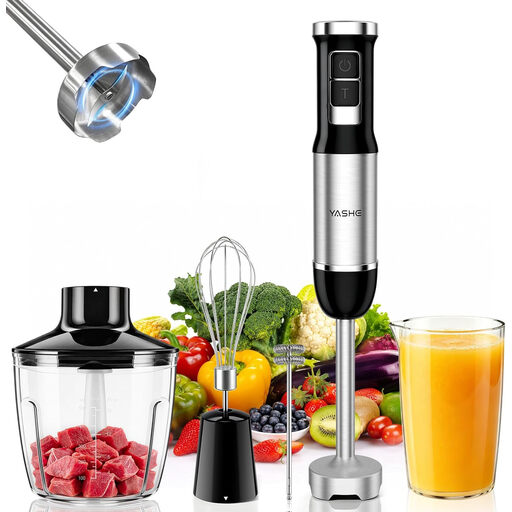 Image unavailable
A stick blender is suitable for blending in the pan, without transferring the soup to a separate jug.
The product name lists 5-in-1, six speeds and a turbo function.
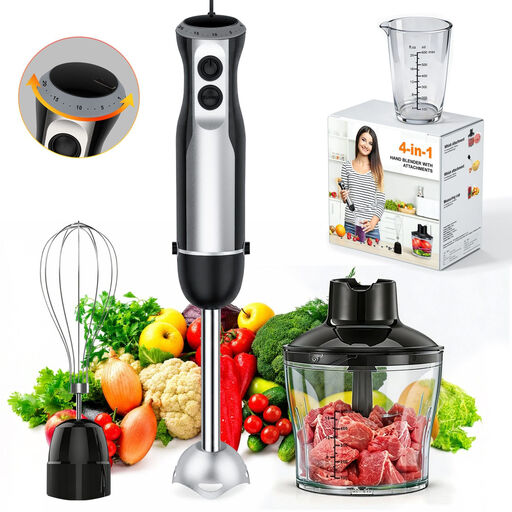 Image unavailable
A stick blender is suitable for blending in the pan, without transferring the soup to a separate jug.
The product name lists 1000 W, 4-in-1, 20 speeds and a turbo function.
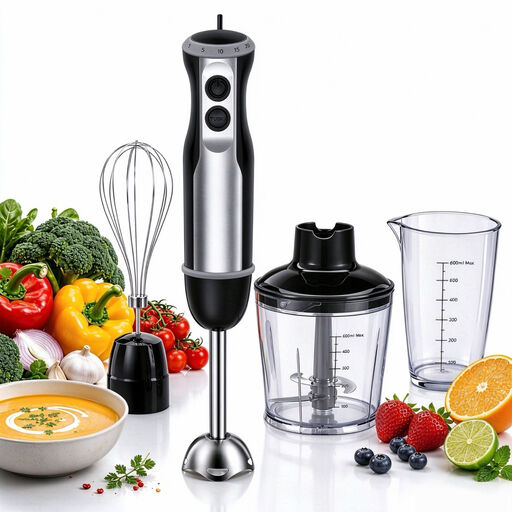 Image unavailable
A stick blender is suitable for blending in the pan, without transferring the soup to a separate jug.
The product name lists six speeds and a turbo function.
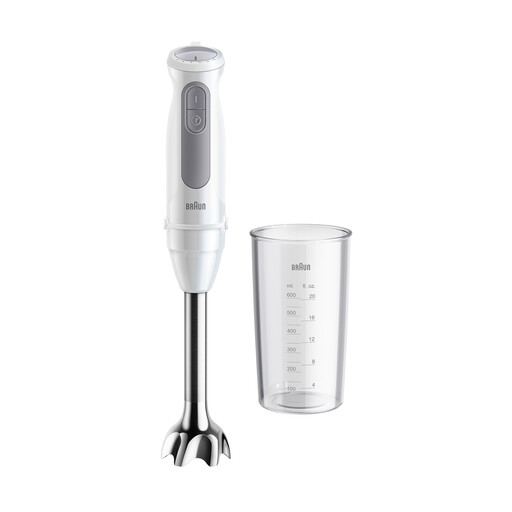 Image unavailable
A stick blender is suitable for blending in the pan, without transferring the soup to a separate jug.
The product name lists the white version.
 Image unavailable
A stick blender is suitable for blending in the pan, without transferring the soup to a separate jug.
The product name lists 800 W and variable speed control.
Not based on the word ‘blender’ alone. Check the instructions for the exact jug and the temperature of the soup. Philips says to let soup cool to below 60 °C for models HR2512/90, HR2511/90 and HR2510/90, but recommends using only cold or room-temperature liquids with models HR3756/00, HR3752/00 and HR3868/00. These instructions don’t automatically apply to other models.
The Consumentenbond advises placing the blending foot on the bottom of the pan or bowl before switching the blender on. Also follow the instructions for your chosen model.
The Rijksoverheid states that electrical appliances placed on the market in the EU must have a CE mark, and that safety warnings should be included in the instructions. Check the product information and instructions for the specific item you’re considering.
In the Netherlands, the seller is responsible if a product doesn’t meet what you could reasonably expect. This right is separate from the manufacturer’s warranty or any extra warranty you may have bought; it doesn’t mean every blender has a set warranty period.
According to ACM ConsuWijzer, ordinary online purchases generally come with a statutory cooling-off period of up to 14 days after delivery. Check which exceptions and returns terms apply to your purchase. The cooling-off period is separate from your statutory rights if a product is faulty.