
Cook who blends soup in the pan
Makes small batches of parsnip soup on the hob and wants to blend it straight in the pan rather than transfer the hot soup.


If you’re making parsnip soup in a saucepan and want to avoid transferring it, a hand blender is the most straightforward choice. A jug blender is an option if you’d rather blend the soup separately; choose a soup maker if you want to heat and blend in one appliance. With a blender or soup maker, always check the temperature and portion limits for the exact model.
Makes small batches of parsnip soup on the hob and wants to blend it straight in the pan rather than transfer the hot soup.
Puts the desired texture first and checks whether the chosen blender is suitable for the temperature of the soup.
Wants to heat and blend in one appliance, as long as the recommended quantity suits the portions needed for a small household.
Choose this option: if you want to blend the soup in the cooking pan without transferring it to a separate jug.
Bear in mind: hot soup can splash while blending, and you’ll need to follow the cleaning instructions for the blending foot.
Choose this option: if you want to blend the soup separately in a jug.
Bear in mind: you’ll need to transfer the soup, and the manual must confirm that the intended volume and temperature are suitable.
Choose this option: if you want to heat and blend the ingredients in the same appliance.
Bear in mind: the jug capacity doesn’t tell you the minimum amount of soup you can make, so check the fill limits.
| What to consider | What to look for | Which consumers? |
|---|---|---|
| Blending in the pan | Check that the blending foot is suitable for your preparation and find out how to prevent splashing. | If I don’t want to transfer hot soup, blending it in the cooking pan is my priority. Around 36% of consumers share this main priority. |
| Temperature and volume | Check the manual for the exact model to find out which temperatures and quantities are allowed. | Those who care most about the texture they want need to know whether the appliance is suitable for the soup and portion size. Around 29% of consumers put their preferred texture first. |
| Preparing everything in one appliance | Check both the minimum and maximum fill levels, as well as which programmes are suitable. | If I’d rather heat and blend in one appliance, the quantity it can hold needs to suit my meal. Around 21% of consumers consider this their first choice. |
| Storage and cleaning | Check the dimensions, removable parts and cleaning instructions; only choose accessories you’ll use. | In a small kitchen, I want to store as few parts as possible and be able to clean the blender easily after use. Around 14% of consumers make this their top priority. |
Temperature limits vary by model. Philips recommends using cold or room-temperature ingredients with the HR3756/00, HR3752/00 and HR3868/00; this guidance doesn’t automatically apply to other models.
Before buying or using a blender, check the manual for the exact model, including instructions on quantities and the lid.
The stated 1.2-litre capacity of the Philips HR2204/80R1 doesn’t confirm the minimum amount of soup it can make.
Compare the minimum and maximum fill levels with the portions you usually make.
You don’t need a chopper or whisk if you’re only going to use the appliance to blend soup.
Choose accessories based on other dishes you genuinely plan to make.
Extra attachments also need to be stored and cleaned.
Offers both a hand blender for blending in the pan and a soup maker that heats and blends in one appliance.
The ErgoMixx MSM66120 is a hand blender with a removable metal blending foot and several speed settings.
The MultiQuick 5 MQ50236M is a hand blender with adjustable speed and additional chopping and whisking attachments.
Offers a hand blender with the Quickchef HB659838 and a jug blender with the Blendforce II BL438831.
This Joybuy selection includes jug blenders and hand blenders for soup. Check that the temperature, portion size and operating time are suitable for your preparation with the exact model.
 Image unavailable
A jug blender for anyone who wants to blend soup separately in a jug.
1200 W; 2-litre jug capacity and 1.5 litres usable capacity. The product description lists six blades, three automatic programmes and a cleaning programme. Check the manual for the permitted temperature and quantity.
 Image unavailable
A hand blender for anyone who wants to blend soup in the pan while minimising splashes.
The product description lists 25 speeds, a turbo function and a chopper with three texture settings. The product warning advises against processing boiling liquids.
 Image unavailable
A hand blender for anyone who wants to blend soup in the pan and use the included accessories too.
1000 W rated power and a maximum of 1200 W; 700 ml measuring beaker and 500 ml chopper. The instructions limit continuous use to one minute, followed by a one-minute rest.
 Image unavailable
A hand blender for anyone who wants to blend soup and adjust the speed.
The product description lists twenty speeds, a turbo function, splash protection and removable parts. It also states that the parts are dishwasher-safe.
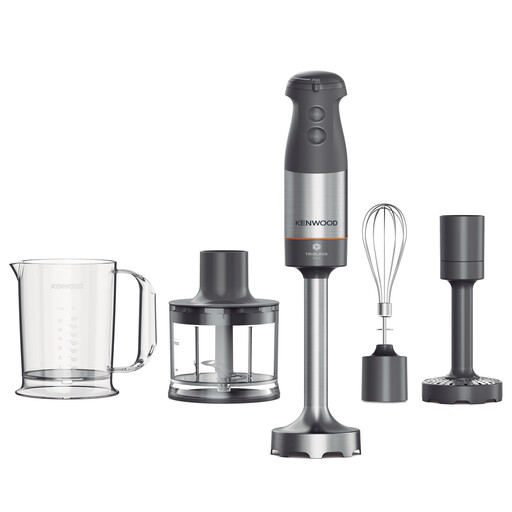 Image unavailable
A hand blender for anyone who wants to blend soup and use the included attachments for other preparations too.
1000 W. The product description lists a blending foot that is 35% wider, plus accessories including a chopper and a masher. The XL foot is described as suitable for larger quantities.
No. Don’t assume that all blenders are suitable for hot ingredients. Philips recommends using cold or room-temperature ingredients with the HR3756/00, HR3752/00 and HR3868/00. Check the manual for the exact model before transferring warm soup.
Follow the cleaning instructions for the exact model, and don’t immerse the motor unit if the manufacturer advises against it. The product information for the Braun MQ50236M recommends unplugging it after use, not immersing the motor unit and taking care around the sharp blades.
According to the Voedingscentrum, leftovers should be cooled quickly and stored in a sealed container in the fridge or freezer. Don’t leave them out of the fridge for more than two hours. General guidance is to keep leftovers for two days in the fridge or three months in the freezer.
Not automatically. According to the Dutch government, there is no fixed statutory warranty period in the Netherlands. If a product doesn’t meet expectations when used normally, the retailer is responsible for offering an appropriate solution. Check whether paid extra cover actually gives you anything more.
According to the Netherlands Food and Consumer Product Safety Authority, CE marking is required for electric hand blenders, jug blenders and soup makers sold in the Netherlands. CE marking doesn’t mean that every appliance has been independently tested; check the marking and model information.