For quick photography without changing lenses, choose a compact camera with a fixed lens; for birds on the far side of the pond, a bridge camera offers more built-in telephoto reach. A mirrorless camera is a good fit if you want to choose a lens yourself beforehand, but the standard zoom lens in the Canon EOS R50 kit is not a long telephoto lens for bird photography. In changeable light, sensor size alone is no guarantee of better photos: consider the complete camera-and-lens combination and the conditions you’ll be photographing in.
Who takes photos at a park pond?
Quick pond walker
You want to take your camera with you and capture a wide view or a close-up straight away, without changing lenses. A fixed lens and comfortable controls matter more to you than maximum telephoto reach. The Consumers’ Association lists size and ease of use as factors to consider when choosing a camera.
Bird photographer from the path
Your subject is often on the far side of the pond. You’re looking for optical telephoto reach, but you also want to be able to aim and hold the camera at your chosen zoom setting. The Consumers’ Association lists zoom range as a factor to consider.
Photographer in changeable light
You take photos of the pond as a whole, as well as in the shade or later in the day. You want to weigh up the sensor and lens combination in advance, without assuming that one camera specification on its own determines the result.
What should you look for when choosing?
Compact camera with a fixed lens
Choose this option: if you want to move from a wide view to a closer subject during a short walk, without changing lenses. Sony lists a 24–200 mm 35mm-equivalent focal length for the RX100 VII.
Bear in mind: its telephoto reach is shorter than that of the bridge cameras mentioned here, so a bird on the far side of the pond won’t automatically fill the frame.
Bridge camera with superzoom
Choose this option: if you mainly want to frame birds or details further across the water from an accessible spot, without fitting a separate telephoto lens. Panasonic lists a 20–1200 mm 35mm-equivalent focal length at 4:3 for the FZ82D; Nikon lists 125× optical zoom up to 3000 mm 35mm equivalent for the P1100.
Bear in mind: having lots of telephoto reach won’t automatically make it easier to take photos in low light or follow moving birds. You’ll also need to consider how easy it is to aim and hold the camera at high zoom settings.
Mirrorless camera with your chosen lens
Choose this option: if you want to choose a lens for wide views or distant subjects before setting off, with the option to change lenses later. Canon lists tracking for subjects including birds, and support for RF and RF-S lenses, on the EOS R50.
Bear in mind: the Canon RF-S 18–45 mm kit lens covers approximately 29–72 mm in 35mm-equivalent terms on an EOS R APS-C camera, so check exactly which lens is included in the kit.
| What to consider |
What should you check? |
Who is this important for? |
| Getting started quickly |
Try the controls and viewfinder; check whether the lens you want is already fitted. |
If I want to start taking photos straight away on a short walk, I don’t want to change lenses or work out the menus first. Around 36% of consumers say being able to get started quickly is their main consideration. |
| Birds on the far side |
Compare the telephoto end in 35mm-equivalent terms; try aiming at the distance you expect to shoot from. |
When I want to frame a bird further across the water from the path, I look for enough telephoto reach and the ability to keep following the subject. Around 29% of consumers prioritise distant subjects. |
| Changeable light |
Check the sensor size and lens aperture at the zoom setting you use; compare the complete combination. |
If I also take photos in the shade or later in the day, I want to weigh up the lens and camera as a whole rather than choosing on zoom alone. Around 21% of consumers prioritise photography in changeable light. |
| Portable complete kit |
Check the full kit, including the fitted lens and any included accessories. |
If I want to take my camera on a walk without carrying too many separate parts, I look at the complete kit rather than just the camera body. Around 14% of consumers give a compact, complete kit top priority. |
Common buying pitfalls
-
Comparing only the highest zoom factor
A zoom factor doesn’t tell you where the wide-angle and telephoto ranges start and end. Zooming in a lot can also make it harder to keep a subject in the frame.
Compare the wide-angle and telephoto ends in 35mm-equivalent terms, and try the zoom setting you want to use.
-
Assuming a mirrorless camera body or standard kit comes with a lens for bird photography
The Canon RF-S 18–45 mm kit lens covers approximately 29–72 mm in 35mm-equivalent terms on an EOS R APS-C camera; it’s not the same as a long telephoto lens.
Check which lens is included in the exact kit and whether it suits the distance at which you want to photograph birds. You may need a separate telephoto lens.
-
Confusing image stabilisation with freezing a moving bird
The stated stabilisation on the Panasonic FZ82D compensates for camera movement; it doesn’t prove that subject movement will disappear.
Consider focus and shooting conditions separately, especially when photographing birds in motion.
-
Assuming a camera described or tested previously is available to buy now
A test or product page doesn’t tell you what’s currently in stock. The Consumers’ Association describes its 2025 camera test as out of date; Panasonic lists the FZ82D variants shown on its Dutch product page as unavailable.
Use tests to learn about the features they cover, and check current availability separately.
Relevant camera brands and models
Sony
The RX100 VII is a compact camera with a fixed lens for anyone who wants to take wide shots of a pond and moderately zoomed-in shots without changing lenses.
- Sony specifies a 24–200 mm 35mm-equivalent focal length and a type 1.0 sensor measuring 13,2 × 8,8 mm.
- Its telephoto end is shorter than that of the bridge cameras mentioned here; that alone doesn’t determine which camera takes better photos.
Panasonic
The LUMIX FZ82D is a bridge camera with a fixed superzoom lens, designed for wide pond views and more distant subjects.
- Panasonic specifies a 20–1200 mm 35mm-equivalent focal length at 4:3, optical image stabilisation and a type 1/2,3 sensor.
- The Dutch product page lists the variants shown as unavailable; this doesn’t tell you whether they’re available elsewhere. The specifications page gives conflicting weights, so don’t use it as the basis for a weight comparison.
Canon
The EOS R50 is a mirrorless camera for anyone who wants to choose a lens in advance and perhaps change it later.
- Canon specifies an APS-C sensor, an RF/RF-S mount and tracking for subjects including birds.
- The RF-S 18–45 mm kit lens covers approximately 29–72 mm in 35mm-equivalent terms. Check which lens is included in the exact kit; this standard zoom isn’t a long telephoto lens for bird photography.
Nikon
The COOLPIX P1100 is a camera with a fixed superzoom lens for anyone who wants lots of built-in telephoto reach without a separate telephoto lens.
- Nikon lists 125× optical zoom, up to 3000 mm in 35mm-equivalent terms and a type 1/2,3 sensor.
- The 250× Dynamic Fine Zoom listed by Nikon isn’t the same as 250× optical zoom. Its maximum reach doesn’t prove that you’ll get more sharp shots of moving birds.
Cameras at Joybuy
Joybuy product picks for photography around a park pond.
 No image available
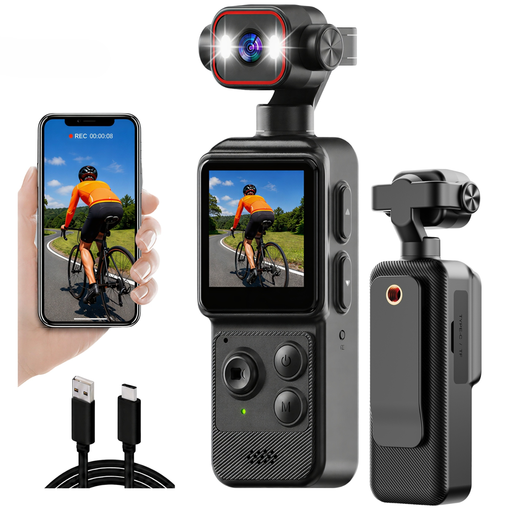
Mini Action Camera 4K with clip
The stated 140° field of view suits anyone looking to capture a wide view of a pond; check in advance that you can attach the camera where you want it.
The product title lists a 1,54-inch display, app control, LED light and a 1200 mAh battery.
View at Joybuy
 No image available
DJI Osmo Pocket 4 Standard Combo
An option for anyone looking for a pocket camera; check that the stated zoom and screen size suit the way you frame your shots at the pond.
The product title lists a 1-inch CMOS sensor, 2× lossless zoom, 3-axis stabilisation, 107 GB of built-in storage and a 2-inch rotating screen.
View at Joybuy
 No image available
Komery W6
The stated 12× optical zoom is useful if you want to frame a more distant subject; check that the range suits the distance to the far side of the pond.
The product title also mentions 4K video and Wi-Fi.
View at Joybuy
 No image available
Songdian 5K digital camera
The stated 10× optical zoom may be useful if you want to frame a distant subject; check that the range suits where you’ll be standing.
The product title mentions 56 MP and front and rear cameras.
View at Joybuy
 No image available
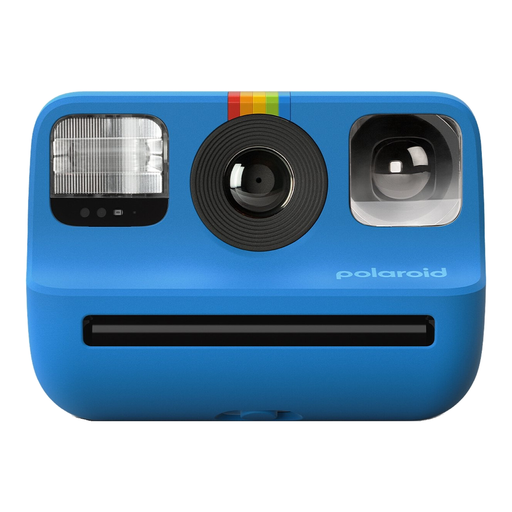
Polaroid Go Gen 2 - Blue
For anyone who wants to take an instant camera along for photos on the go; you’ll need to load Polaroid Go film into the camera before use.
The product information lists a built-in rechargeable battery, flash and self-timer.
View at Joybuy
Frequently asked questions
Do I need the same amount of zoom for a wide view of the pond and a bird on the far side?
No, you’ll want different fields of view. A shorter focal length takes in more of the surroundings, while a longer one frames the scene more tightly. The Consumers’ Association therefore recommends looking at both the wide-angle and telephoto ends in millimetres, rather than just the zoom factor.
What can I get ready in advance if I only have a short time to take photos?
Decide in advance what you want to photograph first. If you have a mirrorless camera, fit the lens you want to use before you set off. Check the battery and memory card, and familiarise yourself with the viewfinder and controls before you leave, so you don’t have to work out the menus when you get there.
Can I stand anywhere around a park pond to take a photo?
There isn’t one general rule that applies to every city park. Check the signs and access rules set by the park’s managing authority. The rules described by Staatsbosbeheer apply to its own nature reserves and don’t automatically apply to all city parks.
Can I share park photos publicly if passers-by are recognisable?
Not automatically. According to the Dutch Data Protection Authority, the exception for personal or household use doesn’t apply when recognisable images are published more widely or for business purposes; a legal basis under the GDPR is then required. This isn’t a general statement about consent for every individual photo.
Do I have a cooling-off period if I buy a camera online?
For many applicable distance sales from a business, you have 14 days to change your mind, according to the Dutch Government. Check the terms that apply to your specific purchase; an online purchase from a private seller isn’t covered by this situation.


